-
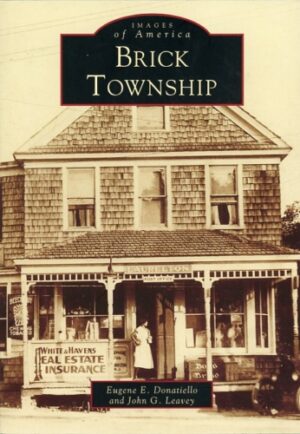 By Eugene E. Donatiello & John G. Leavey: In 1850, when the New Jersey Legislature created Ocean County, they also created Brick Township among a region of virgin woodlands. The new township was named after its most prominent resident, Joseph W. Brick, the industrious and successful owner of Bergen Iron Works. As his and other local industries expanded, more and more people began to call Brick their home. Brick Township records these founders and the events and places that helped them shape our community. By 1920, parts of the new township had declared their independence, and the remaining parts of Brick began to evolve into a resort community. The summer tourists, farmers, home builders and shipbuilders, anglers, hunters, tavern and innkeepers, merchants, and others helped fashion Brick into an intimate but prosperous community. Brick continued to be a quiet, rural, resort area into the 1950s, when the Garden State Parkway opened, and residential and commercial development created dramatic growth in year-round residents, and it became a thriving suburban community. Brick Township captures scenes of life in Brick from 1850 to the 1950s and beyond; from the early European settlers to the suburbanites who now call Brick their home; from the thriving poultry industry to area resorts; from Joseph Brick to our friends and family who live among us today.
-
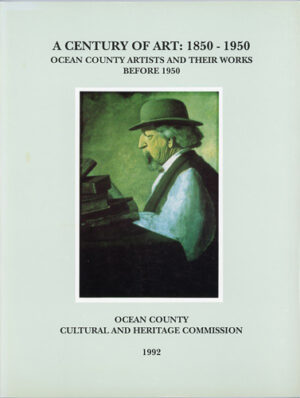 By Pauline S. Miller & Marilyn R. Kralik: At least seventy noteworthy artists lived and worked in Ocean County between 1850 and 1950. The book serves as an introduction to some of those artists. In some cases, there is documentation on the artist but examples of their work could not be located. In other cases, the authors have included works by known artists but could locate little or no information about the creator of the work. Included are both professional and amateur artists.
-
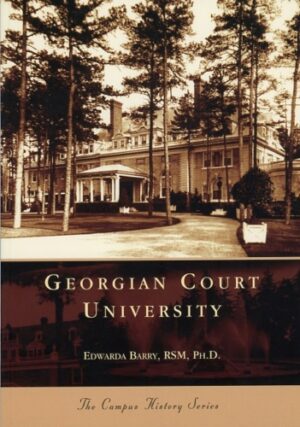 By Edwarda Barry, RSM, Ph.D.: Georgian Court University is a pictorial history of the university from its founding in 1908 by the Sisters of Mercy under the title College of Mount St. Mary. Originally located in Plainfield, the school relocated in 1924 to a former country estate of millionaire George Jay Gould in Lakewood. Retaining the estate title at the request of the Gould family, the Sisters of Mercy renamed the school Georgian Court College. With continuous growth of enrollment, programs, technology, and personnel, the college was designated Georgian Court University by the state in 2004. This centennial book, using the mission of the university as its theme, captures the traditional commitments of the university: a comprehensive liberal arts program in the Roman Catholic tradition; an environment conducive to the cultural, social, and spiritual growth of the entire university community; the core values of justice, respect, integrity, compassion, and service; and a special concern for women.
-
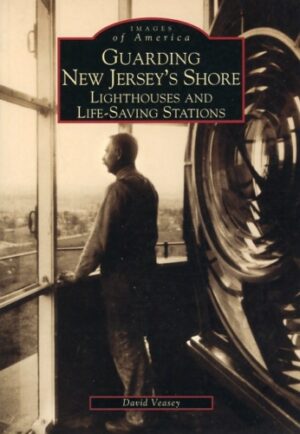 By David Veasey: From the seventeenth to the twentieth century, New Jersey's low-lying, sandy coast has been the site of thousands of shipwrecks as ships bound for New York City or Philadelphia foundered on its offshore shoals. As coastal and international trade dramatically increased after the War of 1812, the federal government was forced to increase safety aids to mariners. To ensure their safe passage, a series of lighthouses was built and the U.S. Life-Saving Service was created. More than two centuries of the history of New Jersey's treacherous coast are preserved in Guarding New Jersey's Shore: Lighthouses and Life-Saving Stations. Gathered from a wide array of sources, more than 200 historic photographs and fascinating, documented text combine to create the only illustrated history of the state's thirty-eight lighthouses and forty-one life-saving stations. Sandy Hook, built in 1764, is the nation's oldest operating lighthouse. Navesink's Twin Lights was the first lighthouse to use electricity and was the home of Marconi's early radio experiments. From the Statue of Liberty in New York Harbor, which once served as a lighthouse, to Cape May Point, and up the Delaware Bay and River, the fascinating story of protecting mariners from perils "Down the Shore" is presented and preserved in Guarding New Jersey's Shore: Lighthouses and Life-Saving Stations.
-
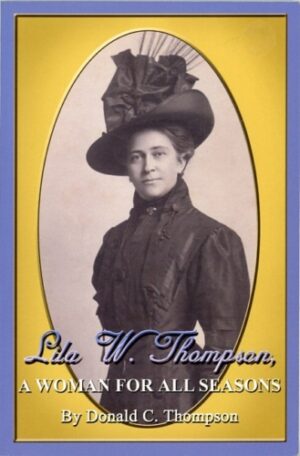 By Donald Thompson: A New Jersey farm girl, one of sixteen children, became known as 'The Mother of the Legislature." Follow her career in politics, election campaigns, service in the New Jersey Legislature and beyond, while nurturing her family and involving herself in lodges, church, and community. Lila was a ground breaker. She celebrated many firsts at a time when women had just begun to exercise their right to vote. Yet her life full of accolades and tributes ended in tragedy. Although his grandmother died before he was born, Donald Thompson always felt her powerful legacy and spirit to be guiding forces in his life. In researching material for this book, he realized he did not have to create a famous grandmother, as the public records and living witnesses proved she was all that and more. Anyone interested in women's leadership in the early days of women's suffrage will find this book filled with down to earth details.
-
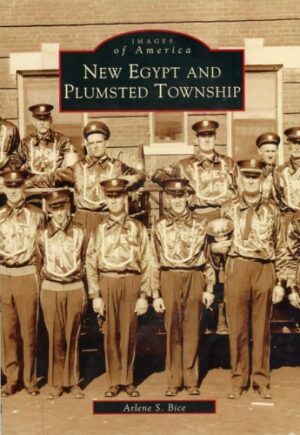 By Arlene S. Bice: New Egypt and Plumsted Township is a collection of unique vintage photographs, many of which have never before been published. Beginning with Quaker Clement Plumstead of London, who was granted twenty-seven hundred acres in 1699, this history shows the progression of the township to the mid-1900s. At the end of the nineteenth century, railroad transportation brought visitors to New Egypt, which blossomed with hotels, guesthouses, the Isis Theatre, and carnivals on Oakford Lake. Among the images are views of Harker's Grove, a favorite spot for picnics and dancing on the pavilion; Sunday concerts held by local talent in New Egypt; and the open space that has made hunting, fishing, and other outdoor activities popular pastimes for locals and visitors alike.
-
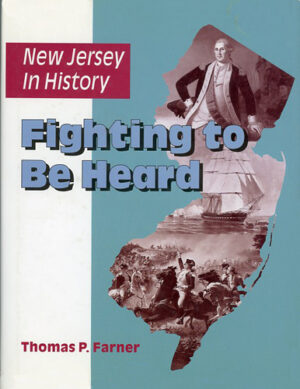 By Thomas P. Farmer: Encompassing two centuries of war, politics, intrigue, heroics, tragedy and celebration, the personalities, quirky episodes and indelible moments that make up New Jersey’s rich fabric are numerous. New Jersey’s unsurpassed history finally gets its due!
-
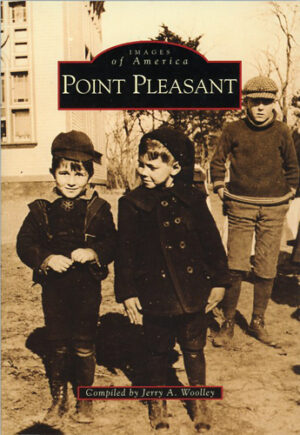 By Jerry A. Woolley: Point Pleasant and Point Pleasant Beach have always been two of New Jersey's most dynamic coastal communities. Visit the history and photographs of their pasts. Since the development of photography in the mid-nineteenth century, the camera has been used as a tool of both discovery and preservation. Photographs bring alive our image of the past, and can open a floodgate of memories and nostalgia or inspire curiosity and a sense of history. The scenic beauty and simple charm of the area remains undisturbed today, and it is easy to see why it has been a popular tourist destination for more than two centuries. The last one hundred years have also seen the formation and development of several important industries in the region, including shipbuilding and commercial fishing. This combination of business and recreation, of modern industry and Old World charm is why Point Pleasant and Point Pleasant Beach remain two of the most vivacious and magnetic communities on the coast of New Jersey.
-
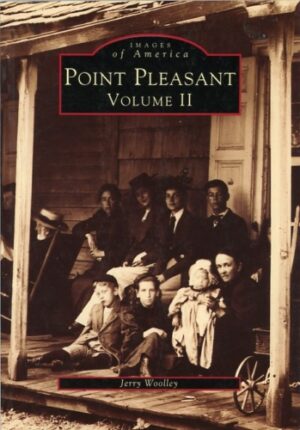 By Jerry A. Woolley: In Point Pleasant Volume II, historian Jerry Woolley continues the detailed look at Point Pleasant, Point Pleasant Beach, and Bay Head that he began in Volume I. While still maintaining a historical perspective, Woolley has also included more recent photographs to give us a more contemporary view of the area. Bounded by the Manasquan River on the north, the Atlantic Ocean on the east, and Barnegat Bay and Beaver Dam Creek to the south, Point Pleasant's uniquely aquatic environment has long been one of the area's major attractions. Woolley provides the reader with an intriguing look at the many waterfront faces of Point Pleasant.
-
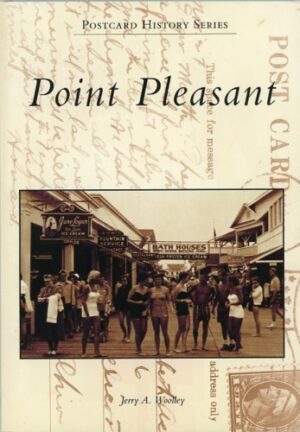 By Jerry A. Woolley: Point Pleasant is a fascinating look at the New Jersey shore communities of Point Pleasant and Point Pleasant Beach during the heyday of the picture postcard. Rare and historical postcards illustrate the region's early grand hotels and majestic summer cottages that helped make Point Pleasant one of New Jersey's top seaside resorts. Explore neighborhoods and downtown shops, the Manasquan River, and, of course, the beach and boardwalk that made Point Pleasant Beach famous.
-
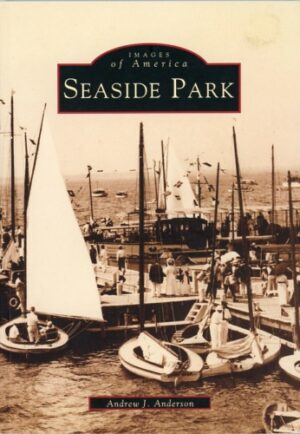 By Andrew J. Anderson: Seaside Park, located on the Barnegat Barrier Island in Ocean County, New Jersey, was incorporated in 1898. Experience the rich history of Seaside Park through the enchanting images within this pictorial history to take you back in time to the Seaside Park of long ago. Many of Seaside Park’s over 200 images have never before been seen by the public. Stroll by the grand hotels representative of the late gilded age, once the main attraction for vacationers from Philadelphia and New York. Ride the long-forgotten Pennsylvania Railroad, which carried passengers and freight into Seaside Park from 1881 until the end of World War II.
-
 Colporteur Reports to the American Tract Survey 1841-1846: This is a transcription of the early church records of New Jersey. It can give insight into early church activities.
-
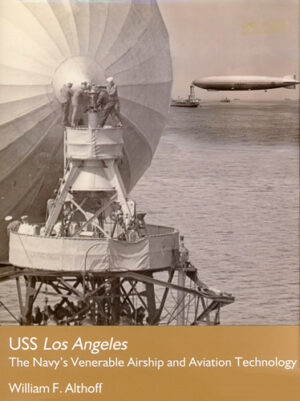 By William F. Althoff: This is a comprehensive history of an important airship that recorded 300 flights and 4,000 hours of flying. Learn about the unique contributions and technical developments in lighter than air travel made by the USS Los Angeles.
-
 By Donna Lee Sharp Albertson & Louise Ann Barton: Discover why the Pine Barrens is such a wonderful place for both summer and winter vacation experiences. Try your hand at original Piney recipes or enjoy reading some Piney poetry and Piney tall tales. Learn about the many vacation activities and cultural events. Discover where mermaids keep their tea cups and what it takes to be born “a REAL Piney”.
-
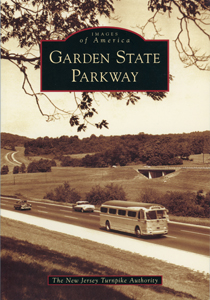 By The New Jersey Turnpike Authority: The Garden State Parkway has transformed the lives of New Jersey residents since opening in 1954. Spanning 173 miles from Cape May to the New York State line, it has fostered tourism to the Jersey Shore and given commuters an easier way to get to work. Gov. Alfred E. Driscoll had envisioned the impact a new highway could have on the state, and a large team of planners, engineers, and contractors made it happen. In 1952, the legislature created the New Jersey Highway Authority to ensure the funding and completion of the $330-million parkway and to self-sufficiently operate the roadway through toll revenue. Garden State Parkway shows how this iconic roadway gained its place in history and continues to combine safe transportation in a parklike setting with the scenic beauty of New Jersey.
-
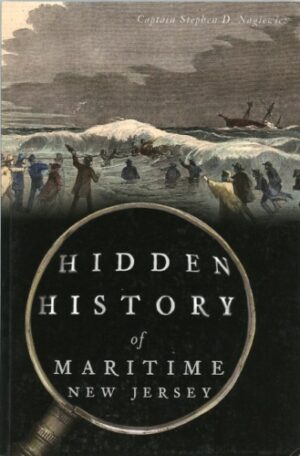 By Captain Stephen J. Nagiewicz: An estimated three thousand shipwrecks lie off the coast of New Jersey - but these icy waters hold more mysteries than sunken hulls. Ancient arrowheads found on the shoreline of Sandy Hook reveal Native American settlement before the land was flooded by melting glaciers. In 1854, 240 passengers of the New Era clipper ship met their fate off Deal Beach. Nobody knows what happened to two hydrogen bombs the United States Air Force lost near Atlantic City in 1957. Lessons from such tragic wrecks and dangerous missteps urged the development of safer ships and the U.S. Coast Guard. Captain Stephen D. Nagiewicz uncovers curious tales of storms, heroism and oddities from New Jersey's maritime past.
-
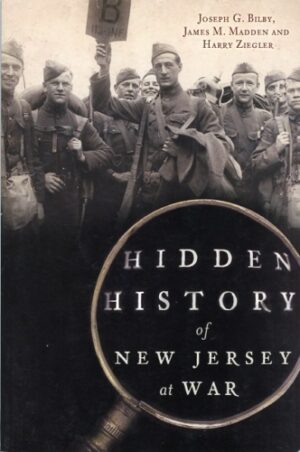 By Joseph G. Bilby, James M. Madden and Harry Ziegler: This book is a series of essays that deal with various little-known aspects of the state’s military experience, beginning with Henry Hudson’s first contact with New Jersey’s Native Americans in 1609 through the War for Independence up to and including the Cold War. There are tales of generals and privates, soldiers and civilians, heroism and blundering, on the war front and the home front, that capture how the state’s citizens coped with the struggles of war.
-
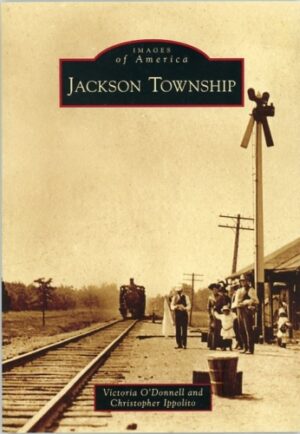 By Victoria O’Donnell & Christopher Ippolito: Jackson Township was named after the legendary "Old Hickory," Pres. Andrew Jackson. For many years, the township was largely recognized by its small villages. Each of these villages had similar features--a church, general store, tavern, mill, and iconic one-room schoolhouse--which nurtured the small community and formed the foundation of modern Jackson. Mills, small farms, and horse breeding in the 19th century transitioned to cranberry bogs and chicken farms in the first half of the 20th century. As transportation became more advanced after World War II, people began to travel outside of town for work, and the once-thriving villages of industry disappeared. Today, Jackson Township, covering 100.4 square miles, is the largest municipality in Ocean County and the third largest in the state of New Jersey.
-
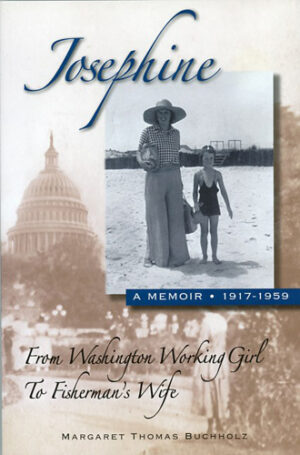 By Margaret Thomas Buchholz: During World War I, before women had the right to vote in America, a young Josephine Lehman Thomas answered the patriotic call from Washington, D.C. and became one of the pioneering ''government girls”. leaving her home in Michigan for adventure in the nation's capital. Through explored diaries and letters, her daughter, Margaret Thomas Buchholz, gives us an amazing chronicle of a trailblazing woman. Josephine worked for legendary journalist Lowell Thomas and traveled the world until the Great Depression dropped her and her new family, struggling to get by, on an island off the coast of New Jersey. This fascinating personal history reveals the optimism of the early 20th Century, the emerging professional woman, the thrill of travel and a sense of success, followed by the crash of the economy, losing everything, and ultimately happiness in a simple life by the sea.
-
 By Karen F. Rilley, Andrew Coulis, & Peter H. Stemmer: Our country's first national reserve, the Pine Barrens, harbors a wonderful secret unknown to most outsiders. This 1.1-million-acre treasure trove of pitch pine and sugar sand is home to many rare species and almost 17 trillion gallons of the purest water on earth. It was in this forest that men like Leland Champion logged trees and built sawmills. It was along these waterways that craftsmen like Gary Giberson made prized decoys. And it was in these woods that Stanley Switlik built a tower from which Amelia Earhart jumped, testing his parachute so it could be used in World War II. These woods yielded inventors whose products we enjoy today. They include cultivated blueberries, cranberry sauce, and Welch's grape juice. It was here that Bob Buchanan reached for the mooring lines as the Hindenburg ended its final, fatal voyage. It was here in Buzby's General Store that John McPhee penned his classic book.
-
 By John Bailey Lloyd: The companion books by John Bailey Lloyd—Eighteen Miles of History, Six Miles At Sea, and Two Centuries of History—contain hundreds of photographs, illustrations and maps of the Island’s past. Here in large postcards are selections of 22 of the most compelling photographs from those books. Within these images you will find a unique shore resort that is wider, more innocent, less developed and perhaps more romantic—the perfect Long Beach Island of collective memory.
-
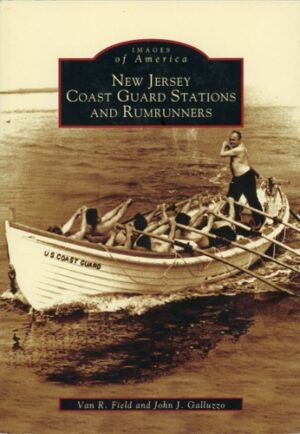 By Van R. Field & John J. Galluzzo: With its many inlets, points, and coves, the coast of New Jersey stood out as a haven for rumrunners brazenly thumbing their nose at the federal government during Prohibition. New Jersey was also recognized as the birthplace of the federal government's shore-based units of the United States Coast Guard, the organization charged at that time with stopping the flow of "demon rum" into America. With its vivid images, New Jersey Coast Guard Stations and Rumrunners revives the days when New Jersey's "coasties" stood toe-to-toe with the rumrunners of the 1920s and 1930s.
-
 By Richard J. Garlipp, Jr.: In the 18th and 19th centuries, covered bridges dotted the landscape of New Jersey, providing safe passage to travelers. Forty-five covered bridges once crossed waterways in all corners of the state. Perhaps the most extraordinary examples of these wooden bridges were found along the western border, crossing the Delaware River into neighboring Pennsylvania. These bridges were feats of construction and engineering but were ultimately unable to prevent the inevitable fate of almost all the covered bridges of the state, namely ice, floods, and fire as well as the development of new materials and technology. Today, only one covered bridge survives in New Jersey. The Green Sergeant's covered bridge in Hunterdon County was constructed over the Wickecheoke Creek in 1872 and has stood the test of time. New Jersey's Covered Bridges showcases the rich transportation history of these structures and pictorially honors the lost ones.
-
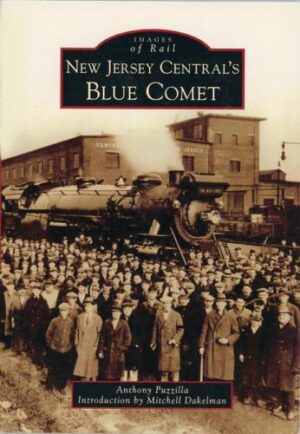 By Anthony Puzzilla: The legendary Blue Comet train no longer streaks through the pines of New Jersey. However, its memory still lives on through timeless images and the sustained efforts of historical societies and preservation organizations. The Garden State's Blue Comet passenger train service operated from 1929 to 1941, on a route from the New York metropolitan area to Atlantic City. This book contains memorable images, many from private archival photograph collections, showing the remarkable history of this classic train and of the many hardworking, dedicated people who made it all possible.
-
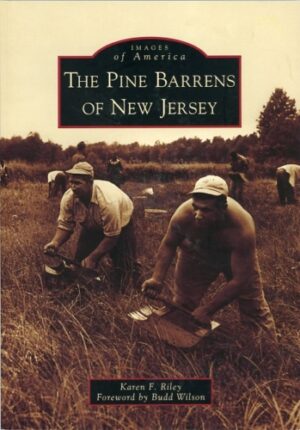 By Karen F. Riley: The Pine Barrens of New Jersey cover 22 percent of the most densely populated state in the country. The name came from early settlers who thought the area was a vast wasteland, but it is anything but barren. Underneath this incredible natural resource lies almost 17 trillion gallons of some of the purest water on earth. The charcoal industry began here, cranberry production, cultivated blueberries were developed in this area. You’ll uncover many forgotten ghost towns but the people who lived and worked there are the real story.
-
Out of stock
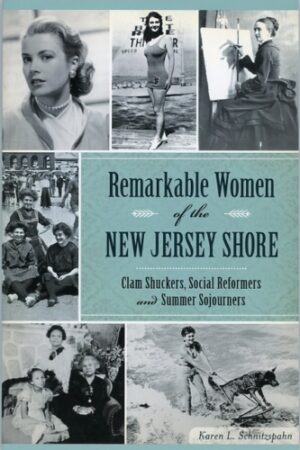 By Karen L. Schnitzspahn: History is everywhere along the New Jersey Shore, from the lighthouses that dot the coast to the Victorian grandeur of Cape May. Less visible are the stories of the women who helped shape that past. Trailblazing young women in Belmar and Wildwood became lifeguards, proving that women were just as capable as men. Cindy Zipf has worked tirelessly for more than thirty years to stop ocean pollution and protect marine life. Theatrical stars, pioneering politicians, a Titanic survivor and a cosmetics entrepreneur all called the Jersey Shore home. Even several first ladies vacationed in towns along the coast. While countless women have contributed to the region's past, local author Karen L. Schnitzspahn chronicles some of the most intriguing stories of the remarkable women of the Jersey Shore.
-
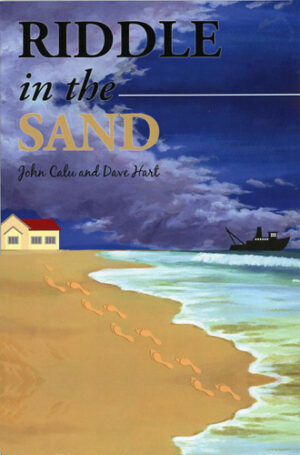 By John Calu and Dave Hart: With time running out, three intrepid summer adventurers, Kelly Martin, Geoffrey Martin, and Danny Windsor find themselves drawn into the epicenter of controversy as Mayor Dillard C. Webb, coping with unpopular beach closings, riots and demonstrations, must do battle with power mongers and political mercenaries in order to solve this Riddle in the Sand. This is a work of fiction.
-
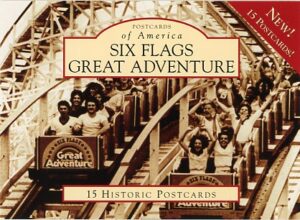 Compiled by Harry Applegate & Thomas Benton: Six Flage Great Adventure boasts a rich history. In this collection of vintage-photograph postcards, the authors explore the park’s past. Contains 15 Historic Postcards.
-
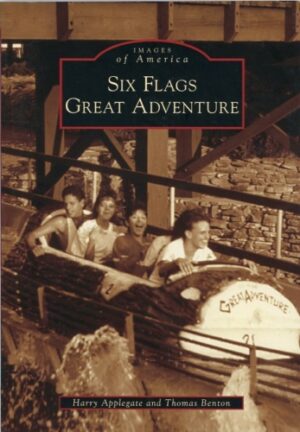 By Harry Applegate & Thomas Benton: In 1977, Great Adventure (in Jackson Township, NJ) became a member of the Six Flags family of theme parks and has grown since with bigger and better attractions.
-
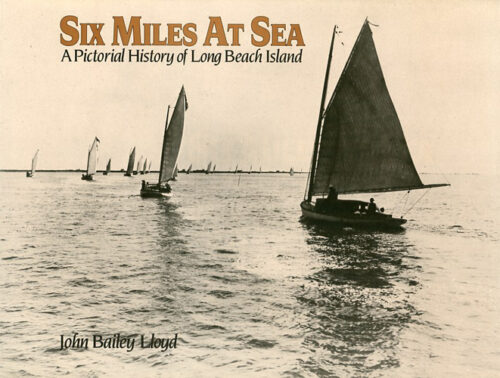 By John Bailey Lloyd: Travel back to Edwardian Beach Haven. You will discover the origins of Barnegat Light House and learn about the fortitude of the men of the U.S. Lifesaving Service. Hurricanes and nor’easters have created “new inlets” and caused the disappearance of Tucker’s Island. You’ll travel the first automobile highways to the Shore—or take the train to one of the grand old hotels and you will find out the origin of that enduring phrase, “Six Miles At Sea”.
-
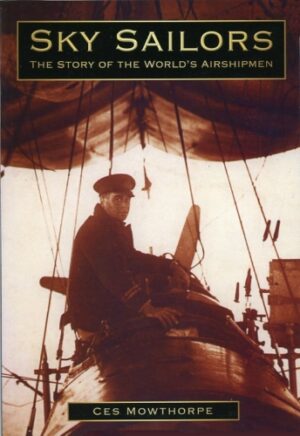 By Ces Mowthorpe: The story of the sky sailors - the men who pioneered a mode of air transport that today is virtually forgotten. During the first two decades of aviation pioneering (c.1890-1910), airshipmen greatly outnumbered aeroplane pioneers. But the great innovations in heavier-than-air aircraft, the advent of two world wars, and the bad publicity brought about by a few horrific airship disasters, Hindenburg and Shenandoah to mention two, changed the picture completely.
-
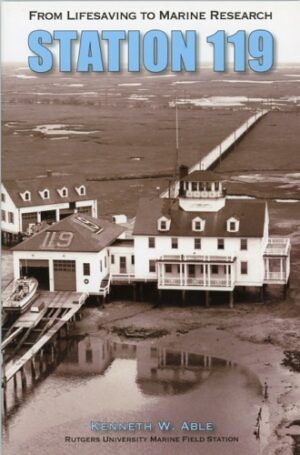 By Kenneth W. Able, PhD.: Station 119 is the story of the mission of the men and women who work at the Rutgers University Marine Field Station. It is also the story of the station itself. While the station now may play a role in saving the planet, it began with a mission of saving lives. This is the fascinating history of a remote former Coast Guard station near Little Egg Inlet on the Jersey Shore and its reincarnation as a marine research facility. The station is now staffed by scientists and students studying the environment in the Jacques Cousteau National Estuarine Research Reserve (JCNERR), near Long Beach Island.
-
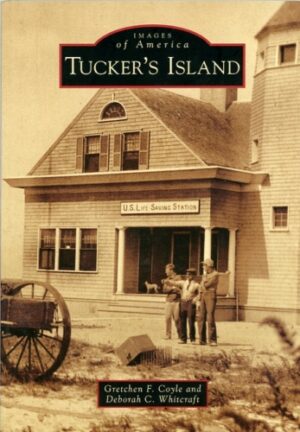 By Gretchen F. Coyle & Deborah C. Whitcraft: Once located between Great Bay and Little Egg Harbor, along the New Jersey coast, Tucker's Island disappeared into the Atlantic Ocean. Sand dunes and native foliage once covered its eight miles. For generations, the Rider family kept the light illuminated, and the US Life-Saving Service provided aid to ships in distress. Two hotels were constructed by island men with building materials salvaged from local shipwrecks. Visitors arrived by sail or steam, and the popularity of Tucker's Island inspired real estate agents to sell worthless lots to unsuspecting buyers eager for their own piece of the shore. Storms battered the vulnerable island; the lighthouse toppled in 1927, the life-saving station washed away, and in 1932, the island was removed from tax records.
-
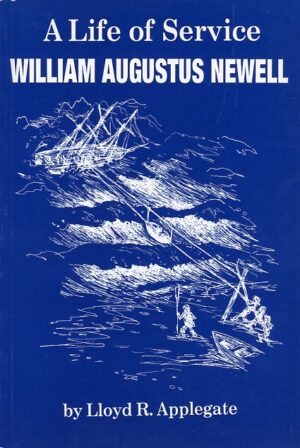 By Lloyd R. Applegate: During his varied political career, William Augustus Newell served as governor of both New Jersey (1857-1860) and the Territory of Washington (1880-1884). His interests and talents ranged from medicine and agriculture to several terms in Congress. He was a friend of the Lincolns, and was appointed as an Indian inspector in the northwest. Of greatest benefit to those of us along the Jersey coast was his persistence in bringing about legislation that established life-saving stations along our coast.
-
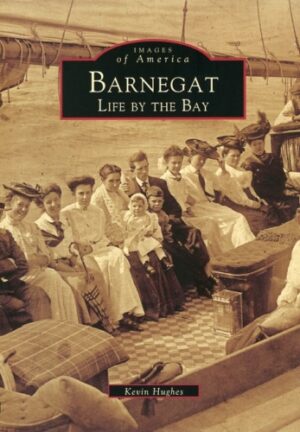 By Kevin Hughes: Learn about life by the bay as the historic residents of Barnegat come alive through the use of images and photographs.
-
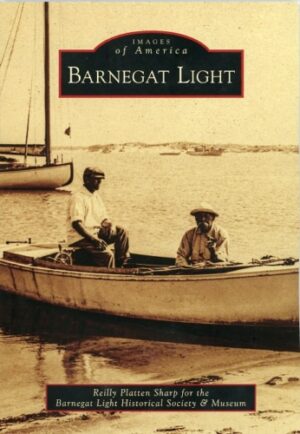 By Reilly Platten Sharp: At the mouth of Barnegat Inlet, Native Americans, whalers, pirates, fisherman, and revolutionaries once fished, fought, and died on Barnegat Light’s shores. Before the current lighthouse was designed in 1856 by Gettysburg General George Meade, the dangerous offshore shoals claimed many lives.
Call Us Today! (732) 341-1880