-
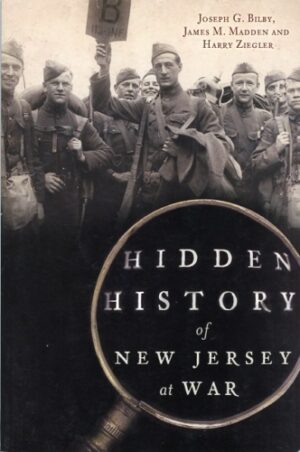 By Joseph G. Bilby, James M. Madden and Harry Ziegler: This book is a series of essays that deal with various little-known aspects of the state’s military experience, beginning with Henry Hudson’s first contact with New Jersey’s Native Americans in 1609 through the War for Independence up to and including the Cold War. There are tales of generals and privates, soldiers and civilians, heroism and blundering, on the war front and the home front, that capture how the state’s citizens coped with the struggles of war.
-
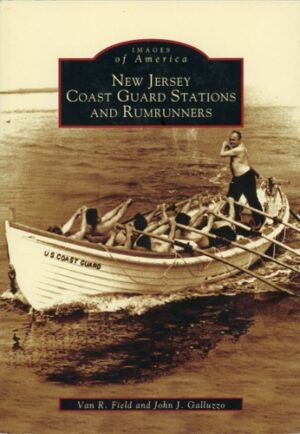 By Van R. Field & John J. Galluzzo: With its many inlets, points, and coves, the coast of New Jersey stood out as a haven for rumrunners brazenly thumbing their nose at the federal government during Prohibition. New Jersey was also recognized as the birthplace of the federal government's shore-based units of the United States Coast Guard, the organization charged at that time with stopping the flow of "demon rum" into America. With its vivid images, New Jersey Coast Guard Stations and Rumrunners revives the days when New Jersey's "coasties" stood toe-to-toe with the rumrunners of the 1920s and 1930s.
-
 By Richard J. Garlipp, Jr.: In the 18th and 19th centuries, covered bridges dotted the landscape of New Jersey, providing safe passage to travelers. Forty-five covered bridges once crossed waterways in all corners of the state. Perhaps the most extraordinary examples of these wooden bridges were found along the western border, crossing the Delaware River into neighboring Pennsylvania. These bridges were feats of construction and engineering but were ultimately unable to prevent the inevitable fate of almost all the covered bridges of the state, namely ice, floods, and fire as well as the development of new materials and technology. Today, only one covered bridge survives in New Jersey. The Green Sergeant's covered bridge in Hunterdon County was constructed over the Wickecheoke Creek in 1872 and has stood the test of time. New Jersey's Covered Bridges showcases the rich transportation history of these structures and pictorially honors the lost ones.
-
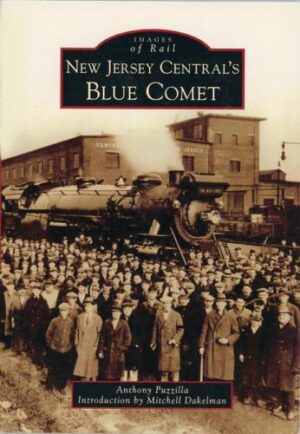 By Anthony Puzzilla: The legendary Blue Comet train no longer streaks through the pines of New Jersey. However, its memory still lives on through timeless images and the sustained efforts of historical societies and preservation organizations. The Garden State's Blue Comet passenger train service operated from 1929 to 1941, on a route from the New York metropolitan area to Atlantic City. This book contains memorable images, many from private archival photograph collections, showing the remarkable history of this classic train and of the many hardworking, dedicated people who made it all possible.
-
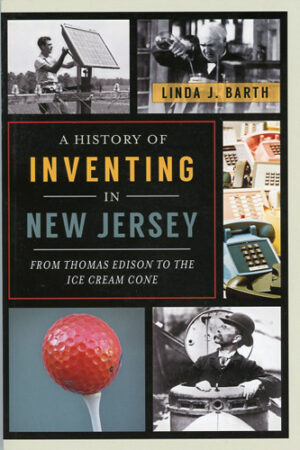 By Linda Barth: Many Americans are familiar with Thomas Edison's "invention factory" in Menlo Park, where he patented the phonograph, the light bulb and more than one thousand other items. New Jerseyans brought sound and music to movies and built the very first drive-in theater. In addition to the first cultivated blueberry, tasty treats like ice cream cones and M&Ms are also Jersey natives. Iconic aspects of American life, like the batting cage, catcher's mask and even professional baseball itself, started in New Jersey. Life would be a lot harder without the vacuum cleaner, plastic and Band-Aids, and many important advances in medicine and surgery were also developed here. Join author Linda Barth as she explores groundbreaking, useful, fun and even silly inventions and their New Jersey roots.
-
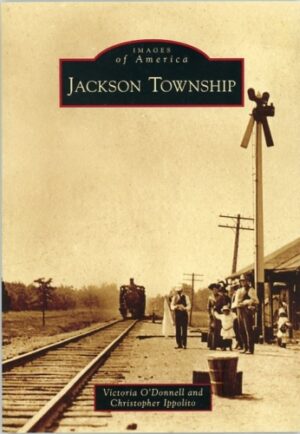 By Victoria O’Donnell & Christopher Ippolito: Jackson Township was named after the legendary "Old Hickory," Pres. Andrew Jackson. For many years, the township was largely recognized by its small villages. Each of these villages had similar features--a church, general store, tavern, mill, and iconic one-room schoolhouse--which nurtured the small community and formed the foundation of modern Jackson. Mills, small farms, and horse breeding in the 19th century transitioned to cranberry bogs and chicken farms in the first half of the 20th century. As transportation became more advanced after World War II, people began to travel outside of town for work, and the once-thriving villages of industry disappeared. Today, Jackson Township, covering 100.4 square miles, is the largest municipality in Ocean County and the third largest in the state of New Jersey.
-
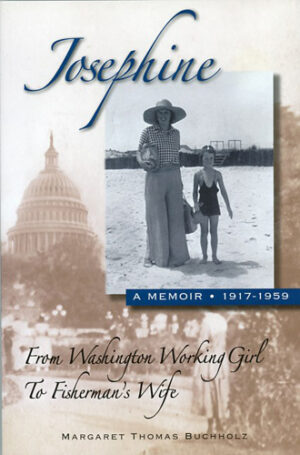 By Margaret Thomas Buchholz: During World War I, before women had the right to vote in America, a young Josephine Lehman Thomas answered the patriotic call from Washington, D.C. and became one of the pioneering ''government girls”. leaving her home in Michigan for adventure in the nation's capital. Through explored diaries and letters, her daughter, Margaret Thomas Buchholz, gives us an amazing chronicle of a trailblazing woman. Josephine worked for legendary journalist Lowell Thomas and traveled the world until the Great Depression dropped her and her new family, struggling to get by, on an island off the coast of New Jersey. This fascinating personal history reveals the optimism of the early 20th Century, the emerging professional woman, the thrill of travel and a sense of success, followed by the crash of the economy, losing everything, and ultimately happiness in a simple life by the sea.
-
Out of stock
 By Louise Ann Barton: Does the Jersey Devil really exist or did the legend spring up from tales told around campfires? Did the stories become more embellished with every generation? Read the book and decide for yourself.
-
 By Karen F. Rilley, Andrew Coulis, & Peter H. Stemmer: Our country's first national reserve, the Pine Barrens, harbors a wonderful secret unknown to most outsiders. This 1.1-million-acre treasure trove of pitch pine and sugar sand is home to many rare species and almost 17 trillion gallons of the purest water on earth. It was in this forest that men like Leland Champion logged trees and built sawmills. It was along these waterways that craftsmen like Gary Giberson made prized decoys. And it was in these woods that Stanley Switlik built a tower from which Amelia Earhart jumped, testing his parachute so it could be used in World War II. These woods yielded inventors whose products we enjoy today. They include cultivated blueberries, cranberry sauce, and Welch's grape juice. It was here that Bob Buchanan reached for the mooring lines as the Hindenburg ended its final, fatal voyage. It was here in Buzby's General Store that John McPhee penned his classic book.
-
 By John Bailey Lloyd: The companion books by John Bailey Lloyd—Eighteen Miles of History, Six Miles At Sea, and Two Centuries of History—contain hundreds of photographs, illustrations and maps of the Island’s past. Here in large postcards are selections of 22 of the most compelling photographs from those books. Within these images you will find a unique shore resort that is wider, more innocent, less developed and perhaps more romantic—the perfect Long Beach Island of collective memory.
-
 Edited by Margaret Thomas Buchholz: For half a century, one Island publication, The Beachcomber, featured literary stories, observations, and essays that captured the essence of this Jersey Shore sandbar. More than 60 of these stories, from the 1930s to the beginning of the 21st century have been selected for inclusion in this anthology. From sailing to fishing to surfing; storms and beachcombings; natural history and environment; childhoods at the beach; beach parties and summer jobs; and blown-up beached whale and shark attacks; you will enjoy all of the stories.
-
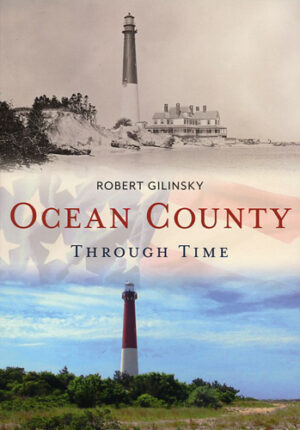 By Robert Gilinsky: Ocean County was born on February 15, 1850 when she was chartered and officially annexed from Monmouth County taking well over half of that county’s land but only a fraction of its population. Ocean County is the second largest county in New Jersey. Over the past several decades, it has led the state in population growth. Long know for its beautiful beaches and pristine pine barrens, it has undergone major changes, some positive and other not so positive.
-
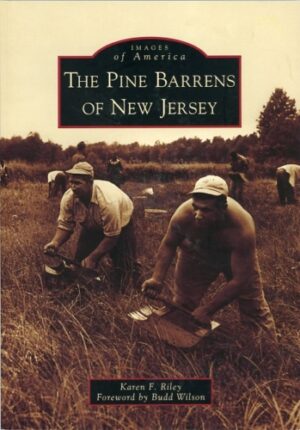 By Karen F. Riley: The Pine Barrens of New Jersey cover 22 percent of the most densely populated state in the country. The name came from early settlers who thought the area was a vast wasteland, but it is anything but barren. Underneath this incredible natural resource lies almost 17 trillion gallons of some of the purest water on earth. The charcoal industry began here, cranberry production, cultivated blueberries were developed in this area. You’ll uncover many forgotten ghost towns but the people who lived and worked there are the real story.
-
Out of stock
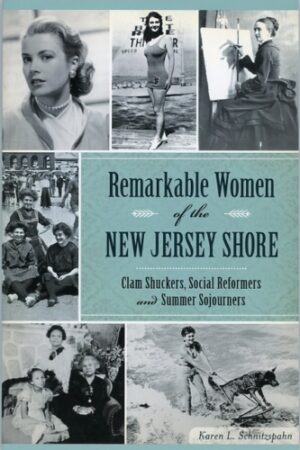 By Karen L. Schnitzspahn: History is everywhere along the New Jersey Shore, from the lighthouses that dot the coast to the Victorian grandeur of Cape May. Less visible are the stories of the women who helped shape that past. Trailblazing young women in Belmar and Wildwood became lifeguards, proving that women were just as capable as men. Cindy Zipf has worked tirelessly for more than thirty years to stop ocean pollution and protect marine life. Theatrical stars, pioneering politicians, a Titanic survivor and a cosmetics entrepreneur all called the Jersey Shore home. Even several first ladies vacationed in towns along the coast. While countless women have contributed to the region's past, local author Karen L. Schnitzspahn chronicles some of the most intriguing stories of the remarkable women of the Jersey Shore.
-
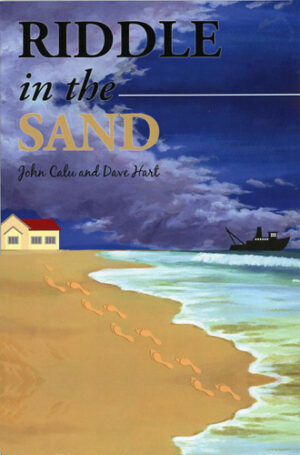 By John Calu and Dave Hart: With time running out, three intrepid summer adventurers, Kelly Martin, Geoffrey Martin, and Danny Windsor find themselves drawn into the epicenter of controversy as Mayor Dillard C. Webb, coping with unpopular beach closings, riots and demonstrations, must do battle with power mongers and political mercenaries in order to solve this Riddle in the Sand. This is a work of fiction.
-
 Compiled by Harry Applegate & Thomas Benton: Six Flage Great Adventure boasts a rich history. In this collection of vintage-photograph postcards, the authors explore the park’s past. Contains 15 Historic Postcards.
-
 By Harry Applegate & Thomas Benton: In 1977, Great Adventure (in Jackson Township, NJ) became a member of the Six Flags family of theme parks and has grown since with bigger and better attractions.
-
 By John Bailey Lloyd: Travel back to Edwardian Beach Haven. You will discover the origins of Barnegat Light House and learn about the fortitude of the men of the U.S. Lifesaving Service. Hurricanes and nor’easters have created “new inlets” and caused the disappearance of Tucker’s Island. You’ll travel the first automobile highways to the Shore—or take the train to one of the grand old hotels and you will find out the origin of that enduring phrase, “Six Miles At Sea”.
-
 By Ces Mowthorpe: The story of the sky sailors - the men who pioneered a mode of air transport that today is virtually forgotten. During the first two decades of aviation pioneering (c.1890-1910), airshipmen greatly outnumbered aeroplane pioneers. But the great innovations in heavier-than-air aircraft, the advent of two world wars, and the bad publicity brought about by a few horrific airship disasters, Hindenburg and Shenandoah to mention two, changed the picture completely.
-
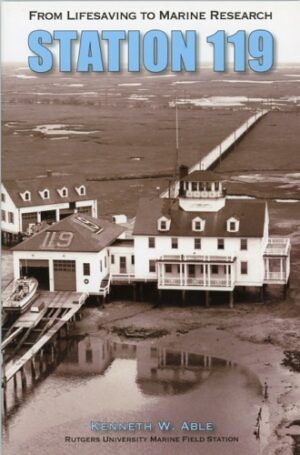 By Kenneth W. Able, PhD.: Station 119 is the story of the mission of the men and women who work at the Rutgers University Marine Field Station. It is also the story of the station itself. While the station now may play a role in saving the planet, it began with a mission of saving lives. This is the fascinating history of a remote former Coast Guard station near Little Egg Inlet on the Jersey Shore and its reincarnation as a marine research facility. The station is now staffed by scientists and students studying the environment in the Jacques Cousteau National Estuarine Research Reserve (JCNERR), near Long Beach Island.
-
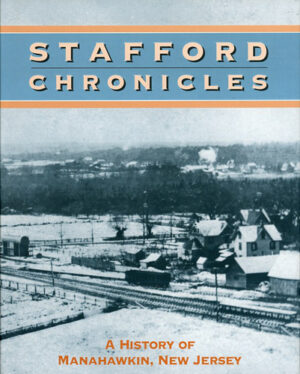 Stafford Chronicles—A History of Manahawkin, N.J.: This pictorial history explores a shore town whose coastal traditions and roots go back to before the Revolutionary War. Readers will relive the days of the Tuckerton and Long Beach Railroads: visit with world-renowned decoy carver Hurley Conklin; and discover the 3 “Docs”—Cramer, Hillard, and Lane. The book contains a remarkable collection of essays, reminiscences, memories, and photographs.
-
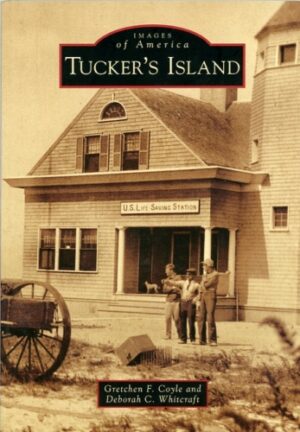 By Gretchen F. Coyle & Deborah C. Whitcraft: Once located between Great Bay and Little Egg Harbor, along the New Jersey coast, Tucker's Island disappeared into the Atlantic Ocean. Sand dunes and native foliage once covered its eight miles. For generations, the Rider family kept the light illuminated, and the US Life-Saving Service provided aid to ships in distress. Two hotels were constructed by island men with building materials salvaged from local shipwrecks. Visitors arrived by sail or steam, and the popularity of Tucker's Island inspired real estate agents to sell worthless lots to unsuspecting buyers eager for their own piece of the shore. Storms battered the vulnerable island; the lighthouse toppled in 1927, the life-saving station washed away, and in 1932, the island was removed from tax records.
-
 By Lloyd R. Applegate: During his varied political career, William Augustus Newell served as governor of both New Jersey (1857-1860) and the Territory of Washington (1880-1884). His interests and talents ranged from medicine and agriculture to several terms in Congress. He was a friend of the Lincolns, and was appointed as an Indian inspector in the northwest. Of greatest benefit to those of us along the Jersey coast was his persistence in bringing about legislation that established life-saving stations along our coast.
-
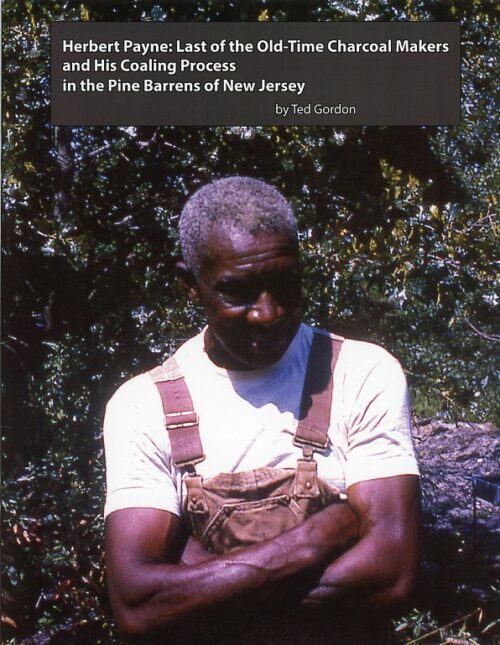 By Ted Gordon: Charcoal making was a major industry in the Pine Barrens. Herbert Payne was one of the last Charcoal Makers in the area. Learn about Mr. Payne as well as the history of this amazing industry through photos and text.
-
 By William S. Dewey: Discover a wealth of information about the Pineland communities of Manchester, Whiting, and Lakehurst. A resident of the areas, Mr. Dewey has done extensive research into the development of industries in the area and the people who brought those industries to life. Included are a description of railroad development, two railroad maps, and two early railroad timetables.
-
Out of stock
 By Patricia Florio: Explore the life and times of John Frederick Peto (1854-1907). Learn about the studio and home he built in Island Heights, New Jersey. The intact home offers intriguing insight into his life as the artist in the red house.
-
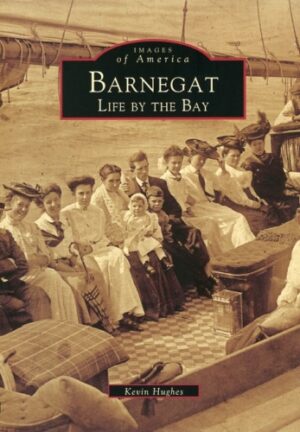 By Kevin Hughes: Learn about life by the bay as the historic residents of Barnegat come alive through the use of images and photographs.
-
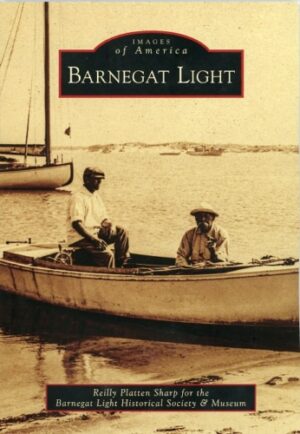 By Reilly Platten Sharp: At the mouth of Barnegat Inlet, Native Americans, whalers, pirates, fisherman, and revolutionaries once fished, fought, and died on Barnegat Light’s shores. Before the current lighthouse was designed in 1856 by Gettysburg General George Meade, the dangerous offshore shoals claimed many lives.
-
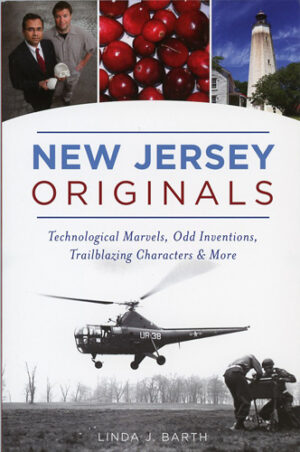 By Linda Barth: Rutgers and Princeton played the first college football game in 1869. The Apollo space suit was developed by Abraham Spanel. The first beer can was created by The American Can Company and Kreuger Brewing Company. These are only a few of the many innovations and breakthroughs that have occurred in New Jersey.
-
 By Jerry A. Woolley: Point Pleasant Volume I and Volume II have captivated audiences, and now, in this new addition to the Images of America series, author Jerry Woolley offers us a third volume of images to help us connect with our past. In Point Pleasant Volume III, we are invited to take a stroll down memory lane and see the area's residents at work and at play, boating and fishing, and simply relaxing on the beach. Also featured within these pages are a variety of snapshots of the places and events that have given this community its Old-World familiarity. It’s no wonder that Point Pleasant and Point Pleasant Beach have been popular tourist destinations for more than two centuries.
-
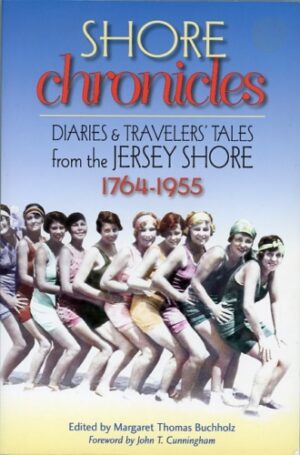 Edited by Margaret Buchholz: Covering the period from 1764 to 1955, this book contains a collection of personal accounts of visits to the Jersey Shore. Included are writings by John J. Audubon, Walt Whitman, Robert Louis Stevenson, and Arthur Conan Doyle.
-
 Edited by James B. Kirk II: A vanished world and an example of a “good life” lived through a single year of a Jersey Shore sea captain is revealed in this fascinating interpreted account.
-
 Edited by Margaret Thomas Buchholz: In this curated selection of great writing from "The Sandpaper", "The Beachcomber", and other publications, the shared experience that is LBI is presented for locals and visitors alike.
-
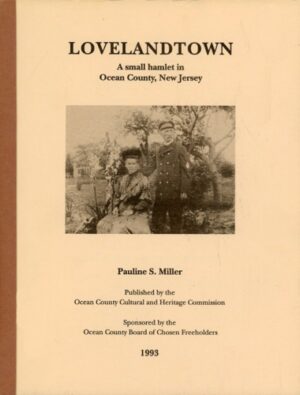 By Pauline S. Miller: The story of a small hamlet in Ocean County. Esther Loveland Kinsley shares her recollections of the town established by her grandfather, John E. Loveland.
-
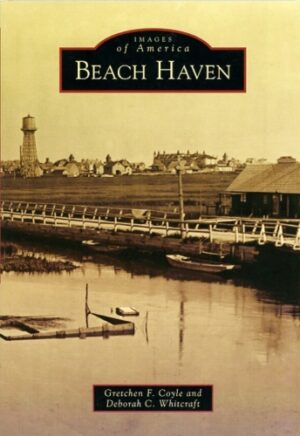 By Gretchen F. Coyle & Deborah C. Whitcraft (Images of America): Founded in 1874, Beach Haven was designed as one of the first summer seashore resorts for wealthy Philadelphians. Beach Haven’s boardwalk was one and a quarter miles long. A steamboat, connected with the Tuckerton Railroad, brought visitors to the island.
-
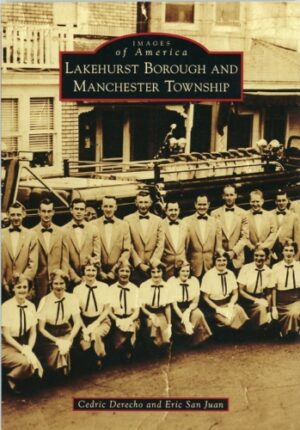 By Cedric Derecho and Erik Juan: The village of Manchester began life as a railroad town founded by William Torrey. By the early 20th century, the village had become the borough of Lakehurst and the surrounding community broke off into what is currently Manchester Township, consisting of the areas of Whiting, Ridgeway, and Pine Lake.
Call Us Today! (732) 341-1880