-
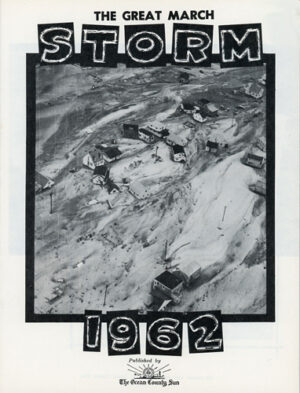 By The Ocean County Sun (newspaper): The New Jersey shore areas are vulnerable to the wrath of nature. This book contains the story and photos of the March 1962 storm that devastated the area.
 -
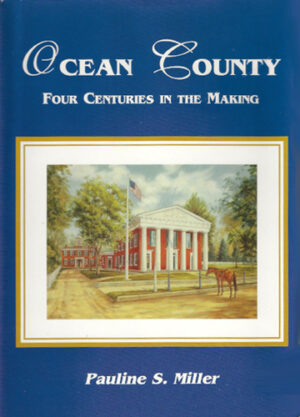 By Pauline S. Miller: The four centuries of Ocean County are divided into three distinct sections that help define the time periods of growth. Part I: 1614-1850 covers those years of the Native American occupation, activities of the whalers, smugglers, and privateers; the ventures of the early settlers building their sawmills and homes in the pines and along the streams; the beginning of the pinelands industries, and the War of 1812. Part II: 1850-1950 reveals, for the first time, the founding father of Ocean County, Joel Haywood. It records the development of the county government, the creation of townships and boroughs, the expansion of the barrier island, the impact of the railroad era, the Civil War, World War I, the Ku Klux Klan, the Great Depression, and World War II. Part III: 1950-2000 deals with the county’s renaissance, growth of county government, schools, churches, and higher education, chicken farms giving way to housing developments, the state’s first nuclear power plant, the impact of big industries located in the county, the population surge, medical care and the effect of local women on the county’s political scene. An extensive index is part of this book.
 -
Out of stock
 By Patricia Florio: Explore the life and times of John Frederick Peto (1854-1907). Learn about the studio and home he built in Island Heights, New Jersey. The intact home offers intriguing insight into his life as the artist in the red house.
 -
Out of stock
 By Lee Gant Thorn: This recipe book and almanac was written to give the reader an insight into the birth several centuries ago of what is now the village of Tuckerton and how it grew. It will introduce you to the forefathers, the history making events, and the struggles that shaped the town. It will tell you of today’s goings-on and the plans for the future. On the most part the gentle mood of nostalgia in this book is true. At times it is presented as witnessed, remembered and related by one John Ortley Tucker, who is a totally fictional character. However, as Mr. Tucker rambles on, the actual tales of Tuckerton and its people are revealed and relived.
 -
 By Joseph G. Bilby, James M. Madden, & Harry Ziegler: Explore the lesser-known stories that make up New Jersey's compelling hidden history. Uncover the meaning of "Jersey Blues", celebrate some of the state's bravest Revolutionary and Civil War soldiers and investigate Jersey City's most infamous ghost. From the inferno that engulfed Asbury Park, to the benevolent side of Frank Hague, to the equestrienne who plunged forty feet into a pool of water on horseback in Atlantic City, rediscover these and many other events from New Jersey's storied past.
 -
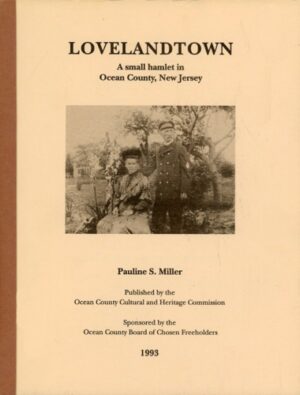 By Pauline S. Miller: The story of a small hamlet in Ocean County. Esther Loveland Kinsley shares her recollections of the town established by her grandfather, John E. Loveland.
 -
Out of stock
 By R. Marilyn Schmidt: Because of their often perceived or actual isolated location, Pine Barrens folk grew much of their food, particularly fruits and vegetables. People of the pines knew how to live off the land. During the Great Depression, these residents suffered little hardship. Gardens supplied vegetables which were eaten fresh, dried or canned in contrast to today’s freezing. Root cellars, a rarity today, enabled folks to keep potatoes, cabbages, carrots, beets, squash, and other vegetables and fruits to provide food throughout the winter. Little food was purchased. Necessities such as sugar, molasses, salt, pepper, flour, and cornmeal were available at the local general store. Today many people in the pines continue the old traditions. Cakes are still baked from scratch, gardens are maintained and yes, some people still keep chickens. The traditions of yesteryear continue today. Recipes included here are historic and interesting dishes including products commonly available or locally grown. They are culled from old time literature, - magazines, newspapers, books - and friends both old and new. Many were handed down from generation to generation. Enjoy these dishes and have them become a part of your history, as well.
 -
 By William J. Lewis: Deep within the heart of the New Jersey Pine Barrens, the Piney people have built a vibrant culture and industry from working the natural landscape around them. Foraging skills learned from the local Lenapes were passed down through generations of Piney families who gathered many of the same wild floral products that became staples of the Philadelphia and New York dried flower markets. Important figures, such as John Richardson, have sought to lift the Pineys from rural poverty by recording and marketing their craftsmanship. As the state government sought to preserve the Pine Barrens and develop the region, Piney culture was frequently threatened and stigmatized. Author and advocate William J. Lewis charts the history of the Pineys, what being a Piney means today and their legacy among the beauty of the Pine Barrens.
 -
Out of stock
 By Ray Fisk & Leslee Ganss: What is the authentic Long Beach Island? With its rich history, family attachments that go back generations, memories of carefree summers, spectacular sunrises and sunsets, beach, ocean and bay, there is so much that is timeless and true. All Things LBI celebrates this bond with vignettes of places, pleasures, and moments past and present and 480 images. The book includes storms, shipwrecks, natural history, nostalgia and the off-season.
 -
Out of stock
 By Cedric Derecho: A work of fiction about William Foulks, a real man who lived in Lakehurst, New Jersey in the late 1800s until 1961. The author writes in the first person with his own style as the voice of the main character growing up in Lakehurst.
 -
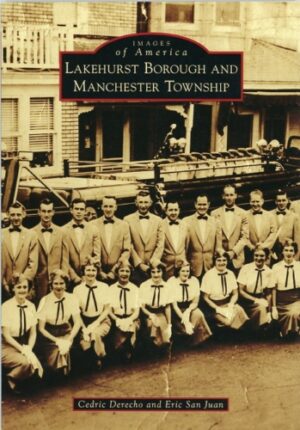 By Cedric Derecho and Erik Juan: The village of Manchester began life as a railroad town founded by William Torrey. By the early 20th century, the village had become the borough of Lakehurst and the surrounding community broke off into what is currently Manchester Township, consisting of the areas of Whiting, Ridgeway, and Pine Lake.
 -
 By William S. Dewey: Discover a wealth of information about the Pineland communities of Manchester, Whiting, and Lakehurst. A resident of the areas, Mr. Dewey has done extensive research into the development of industries in the area and the people who brought those industries to life. Included are a description of railroad development, two railroad maps, and two early railroad timetables.
Call Us Today! (732) 341-1880