-
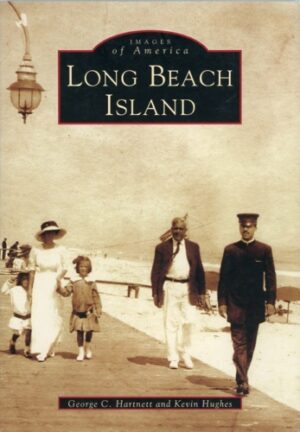 By George C. Hartnett & Kevin Hughes: Long Beach Island stretches for eighteen miles alongside the southern New Jersey mainland. A barrier island, it has a vivid history that includes wild game and bountiful fish, early whalers and tragic shipwrecks, paddle-wheel steamboats and grand hotels. With its rare and previously unpublished images, Long Beach Island portrays the unforgettable place that today is known for its white sandy beaches, fresh seafood, and bright red and white lighthouse. Shown are islanders engaged in pound fishing and salt hay harvesting, and, later, visitors crossing Barnegat Bay to the island resorts called Barnegat City and Beach Haven.
-
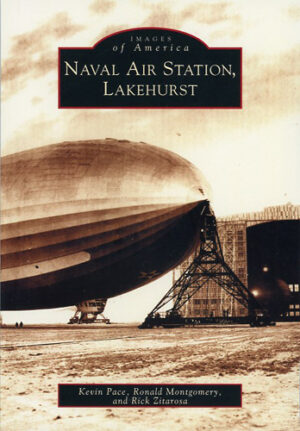 By Kevin Pace, Ronald Montgomery, & Rick Zitarosa: The naval air station in Lakehurst, New Jersey, has a rich and bittersweet history steeped in success and tainted with tragedy. The area evolved from a gas warfare proving ground during World War I to the focal point of lighter-than-air operations in the United States. Labeled one of the world's first international airports, Lakehurst quickly became a hub of lighter-than-air activity. Although the dirigibles are no longer active, it remains crucial in the operational support of naval aviation as the Naval Air Engineering Station, Lakehurst. Rare photographs and material from the archives of the Navy Lakehurst Historical Society chronicle more than eighty-five years of base activity. Offering a unique glimpse of the people, the machines, and the background against which it has all unfolded, this volume examines Lakehurst's vital contributions to the development of aviation and national defense. Naval Air Station, Lakehurst explores the construction of the giant hangars and support buildings for the airships of the U.S. Navy and the glory days of the German Zeppelin visits. The blimp programs from World War II through 1962 and the various schools and tenant commands turned the air station into a key component of naval aviation.
-
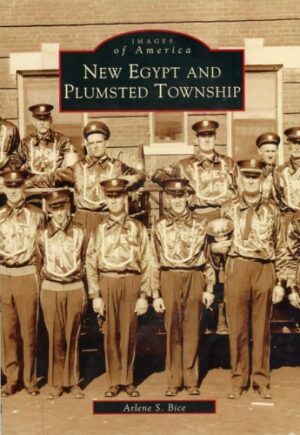 By Arlene S. Bice: New Egypt and Plumsted Township is a collection of unique vintage photographs, many of which have never before been published. Beginning with Quaker Clement Plumstead of London, who was granted twenty-seven hundred acres in 1699, this history shows the progression of the township to the mid-1900s. At the end of the nineteenth century, railroad transportation brought visitors to New Egypt, which blossomed with hotels, guesthouses, the Isis Theatre, and carnivals on Oakford Lake. Among the images are views of Harker's Grove, a favorite spot for picnics and dancing on the pavilion; Sunday concerts held by local talent in New Egypt; and the open space that has made hunting, fishing, and other outdoor activities popular pastimes for locals and visitors alike.
-
 By Thomas P. Farmer: Encompassing two centuries of war, politics, intrigue, heroics, tragedy and celebration, the personalities, quirky episodes and indelible moments that make up New Jersey’s rich fabric are numerous. New Jersey’s unsurpassed history finally gets its due!
-
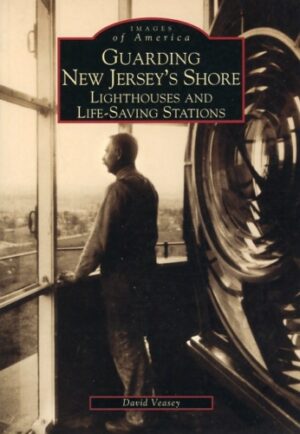 By David Veasey: From the seventeenth to the twentieth century, New Jersey's low-lying, sandy coast has been the site of thousands of shipwrecks as ships bound for New York City or Philadelphia foundered on its offshore shoals. As coastal and international trade dramatically increased after the War of 1812, the federal government was forced to increase safety aids to mariners. To ensure their safe passage, a series of lighthouses was built and the U.S. Life-Saving Service was created. More than two centuries of the history of New Jersey's treacherous coast are preserved in Guarding New Jersey's Shore: Lighthouses and Life-Saving Stations. Gathered from a wide array of sources, more than 200 historic photographs and fascinating, documented text combine to create the only illustrated history of the state's thirty-eight lighthouses and forty-one life-saving stations. Sandy Hook, built in 1764, is the nation's oldest operating lighthouse. Navesink's Twin Lights was the first lighthouse to use electricity and was the home of Marconi's early radio experiments. From the Statue of Liberty in New York Harbor, which once served as a lighthouse, to Cape May Point, and up the Delaware Bay and River, the fascinating story of protecting mariners from perils "Down the Shore" is presented and preserved in Guarding New Jersey's Shore: Lighthouses and Life-Saving Stations.
-
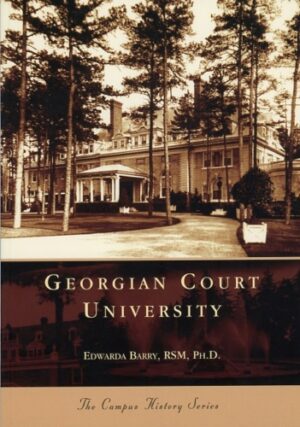 By Edwarda Barry, RSM, Ph.D.: Georgian Court University is a pictorial history of the university from its founding in 1908 by the Sisters of Mercy under the title College of Mount St. Mary. Originally located in Plainfield, the school relocated in 1924 to a former country estate of millionaire George Jay Gould in Lakewood. Retaining the estate title at the request of the Gould family, the Sisters of Mercy renamed the school Georgian Court College. With continuous growth of enrollment, programs, technology, and personnel, the college was designated Georgian Court University by the state in 2004. This centennial book, using the mission of the university as its theme, captures the traditional commitments of the university: a comprehensive liberal arts program in the Roman Catholic tradition; an environment conducive to the cultural, social, and spiritual growth of the entire university community; the core values of justice, respect, integrity, compassion, and service; and a special concern for women.
-
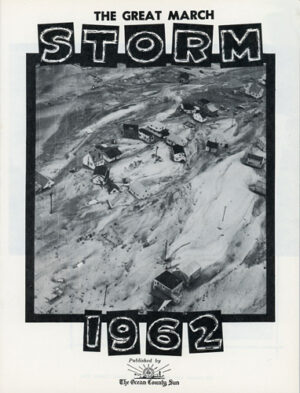 By The Ocean County Sun (newspaper): The New Jersey shore areas are vulnerable to the wrath of nature. This book contains the story and photos of the March 1962 storm that devastated the area.
-
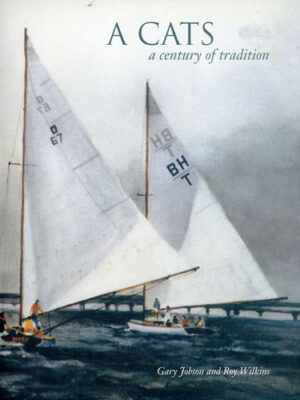 By Gary Jobson and Roy Wilkins: The mighty A Cats have sailed and raced on Barnegat Bay since the 1920s. These sturdy boats link the generations. Along with the tales of 40 sailors, over 200 photographs and illustrations showcase the past and the present.
-
Out of stock
 By Louise Ann Barton & Donna Lee Sharp Albertson: Join the authors for an old-fashioned Christmas in the Pine Barrens as this book takes you to the famous Albertson’s Farm for Christmas Dinner. Try you hand at these authentic Piney Signature Recipes for your own table. Lovers of poetry will enjoy reading the Piney Poems and those who enjoy tall tales will not be disappointed.
-
Out of stock
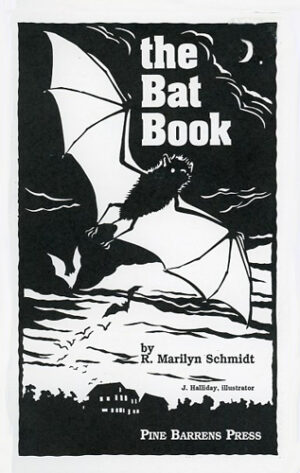 By R. Marilyn Schmidt: Find out about the types of bats that live in the northeastern United States. The book tells how to solve bat problems, as well as how to remove them from inside a house and bat proof a home. Want to cut down on insects? Installing a bat house may be a safe and non-chemical way to get results. The author has included a list of sources to locate more information about bats.
-
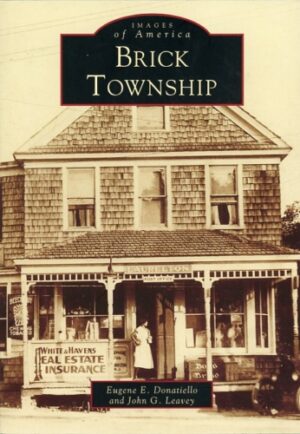 By Eugene E. Donatiello & John G. Leavey: In 1850, when the New Jersey Legislature created Ocean County, they also created Brick Township among a region of virgin woodlands. The new township was named after its most prominent resident, Joseph W. Brick, the industrious and successful owner of Bergen Iron Works. As his and other local industries expanded, more and more people began to call Brick their home. Brick Township records these founders and the events and places that helped them shape our community. By 1920, parts of the new township had declared their independence, and the remaining parts of Brick began to evolve into a resort community. The summer tourists, farmers, home builders and shipbuilders, anglers, hunters, tavern and innkeepers, merchants, and others helped fashion Brick into an intimate but prosperous community. Brick continued to be a quiet, rural, resort area into the 1950s, when the Garden State Parkway opened, and residential and commercial development created dramatic growth in year-round residents, and it became a thriving suburban community. Brick Township captures scenes of life in Brick from 1850 to the 1950s and beyond; from the early European settlers to the suburbanites who now call Brick their home; from the thriving poultry industry to area resorts; from Joseph Brick to our friends and family who live among us today.
-
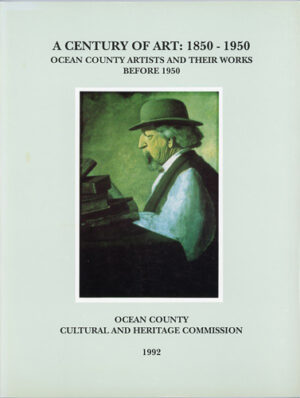 By Pauline S. Miller & Marilyn R. Kralik: At least seventy noteworthy artists lived and worked in Ocean County between 1850 and 1950. The book serves as an introduction to some of those artists. In some cases, there is documentation on the artist but examples of their work could not be located. In other cases, the authors have included works by known artists but could locate little or no information about the creator of the work. Included are both professional and amateur artists.
Call Us Today! (732) 341-1880