The following is a list of publications available from the Ocean County Historical Society. We’re proud that many of the titles available were created and published here. You can either order online, download our book order form and mail your order, or phone us at 732-341-1880. Visa and MasterCard are accepted. All prices are subject to a 6.625% NJ sales tax. Postage and handling on mail orders is $7 for the first item plus $3 for each additional item. Members, please place your order by phone to receive your 10% discount. You can choose books published by O.C.H.S., books published by other publishers, historical maps, and various other items available..
-
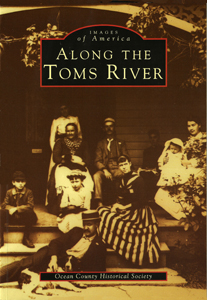 By Ocean County Historical Society: See the people, places and events that have defined the city of Toms River and its surrounding area since the early 1700s. Located on the banks of the river of the same name, Toms River was first settled in the early 1700s by loggers drawn to the dense forests on the river's banks. During the American Revolution, the village was a constant thorn in the side of the British, and it was attacked and burned to the ground in 1783. The arrival of the railroads in the late 1800s ushered in a new age of expansion which, spurred on by the construction of the Garden State Parkway in the decade after World War II, continues to this day. See for yourself how it all came about with over 200 carefully-selected photographs.
 -
 By William H. Fischer, owner and publisher of the New Jersey Courier: This is a reprint of the original work which relates history as written by those who lived just 34 years after the Civil War and 116 years after the American Revolution. Included are more than sixty biographies of men (no women!) who were prominent in the county and descriptions of some communities.
 -
 By Lawrence E. Barnes. DVM. MS & Carol Miller, MSW: This is an index from the New Jersey Courier, Toms River, New Jersey. It contains a listing of personnel engaged in the military forces of the United States from January 1, 1897 through December 1990. The index was completed in March 2006.
 -
 Compiled by Elizabeth Ann Grant: Information in this booklet stems from materials about the Soper family in Ocean County, New Jersey collected by James Wilson Soper before 1904. A genealogy written by the Reverend Clarence Woodmansee of Barnegat, New Jersey about the Soper genealogy as it related to the Woodmansee family is the basis for this compilation. The Reverend Woodmansee was known throughout Ocean County, New Jersey as the “Pastor of the Pines”. Other research, documentation and statistics are included.
 -
Out of stock
 Compiled by Elizabeth Ann Grant: These marriages, ranging from approximately the 1740s to the 1960s, were compiled from many different sources. The source for each marriage is listed in the book. The resources used are available at the Ocean County Historical Society Research Center. The purpose of this compilation was to gather all these many resources into one long date base that would enable the researcher to search with ease for any ancestor’s marriage record.
 -
 By Jack Cervetto—1908-1995: Jack Cervetto was not unique to having made a living in the pine barrens of New Jersey. What distinguishes him from hundreds of others is the fact that he reflected on his life in his later years and recorded his memories. He set goals for himself and his community, provided the leadership that was needed to accomplish a desired end, and was well-liked and respected by his associates, whether leading a deer hunt or debating an issue at a meeting of the Stafford Township Board of Education.
 -
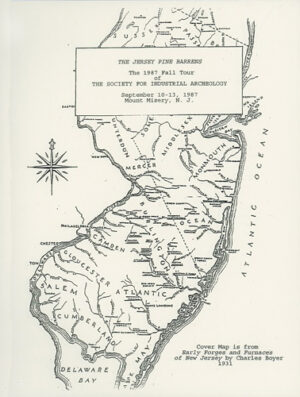 The 1987 Fall Tour of The Society For Industrial Archeology: The booklet provides an overview of the various industries which formed the culture of South Jersey. The first area covered of the southern part of New Jersey is the coastal area; fishing, oystering, and boat building. This includes the Atlantic shore and the Delaware Bay, which contain vast reaches of tidal marshes. The second area of investigation is that part of the outer coastal plain known as the Pine Barrens. A tract of at least 650,00 acres which supplied the mill seats and raw materials for iron, paper, glass, blueberries, and cranberries. In addition, the people who followed the bay, who worked the iron plantations; and who in later years became known as “Pineys” are included. Learn about at least three generations of the William Richards family who helped to create much of South Jersey’s history.
 -
 From the Ocean Emblem and New Jersey Courier January 1, 1861 thru January 3, 1867 Compiled by Larry Barnes DVM, MS & Betty Grant, RN: This is an alphabetical index to people and events in the Civil War. The people and events reference Ocean, Monmouth, and Burlington County residents found in local newspapers on file at Ocean County Historical Society Research Center.
 -
 Indexed by Lawrence E. Barnes, DVM, MS & Carol Miller, MSW: This index is divided into four sections. Section I contains entries from the New Jersey Courier, January 1917 to December 26, 1919. Section II contains entries from Ocean County Leader and The Beacon, Point Pleasant, New Jersey, January 4, 1918 to December 20, 1918. Section III is an Appendix of Personal Photographs published in Ocean County Leader and The Beacon on December 20, 1918. Section IV is an Index Code: Military Branch or Notation, and Index Code for Towns of Ocean County.
 -
 By Kent Mountford : A history of New Jersey's Barnegat Bay region, Closed Sea weaves a colorful tale of whalers and pirates, Revolutionary patriots and loyalists, fishermen and loggers, iron masters and lifesaving crews, sportsmen and holiday makers. Filled with historical anecdote and keen observations of sea and shore, it is a compelling portrait of Barnegat Bay and its history. With a naturalist's eye and a sailor's experience, environmental historian Kent Mountford describes the history of the Bay and its people, from the Lenni Lenape to 20th century summer vacationers. He opens our eyes to the Shore's past, its shifting inlets, disappearing islands, dangerous tides and shoals. Moving inland, he documents the Pinelands environment and the industries it has supported over the centuries. Closed Sea tells the remarkable history of a fascinating place, a place of great beauty, danger and opportunity, a place that has cast its spell on generations of people.
 -
 By Adelia Goble: This is a 2000 Ocean County Historical Society publication. If you have ever wondered what the life of a servant was like, this book will answer all of your questions. The book contains Adelia Goble’s personal writing about her life as a maid for Presbyterian Minister Rev. Spencer C. Dickson and his family from 1902 to 1908. Some of her diary’s entries are harsh, but the reader will come away with a better sense of the life of a servant in the beginning of the twentieth century.
 -
 By Ocean County Historical Society: A unique area exists along the western shores of Little Egg Harbor Bay and Great Bay between the communities of Manahawkin and New Gretna. These towns, located in the southern coastal section of New Jersey have a rich and charming history. From the beginning, the region was rich in natural resources, providing fish, clams, oysters, lumber, and cranberries for early settlers. The communities also enjoyed a temperate climate and navigable harbors, leading to the development of shipbuilding and trading as early industries. Because of the isolation of the Tuckerton area from the larger population centers of the state, its small-town flavor and way of life were allowed to endure. Many of the occupations of the settlers of the early 1700s survive to this day. Downshore from Manahawkin to New Gretna seeks to capture the charm of the little towns in this region, the character of the people who settled here, many of whose families still remain, and the lifestyle lived in harmony with this pastoral environment during the nineteenth and early twentieth centuries.
 -
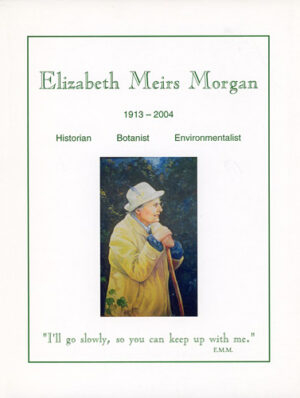 By Ocean County Historical Society: The Ocean County Historical Society is proud to present this collection of writings by and about Elizabeth Meirs Morgan. Within its pages you will find the story of a life dedicated to preserving the history and natural environment of Ocean County for future generations and to inform today’s population of the treasures that abound in Ocean County. Elizabeth wrote about the things she knew, the causes that she supported, topics that led her to further research—in essence, anything that interested her or that we (the reader and public) needed to know about.
 -
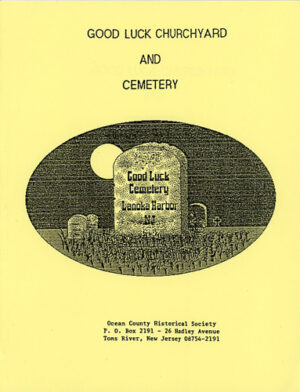 Compiled by Elizabeth Ann Grant: The church and burying ground are located in Lacey Township, Ocean County, New Jersey on the east side of Route 9 in the Murray Grove section of Lanoka Harbor, just north of Forked River. Many of the old settlers in and around Cedar Creek are buried here. The book contains an alphabetical listing of the stones in the cemetery. The list was compiled in June 1970 and includes the older section of the cemetery. There is background information about Good Luck (Potter’s) Churchyard and Cemetery, excerpts from Rose Grover Garthwaite’s Good Luck Settlement, and excerpts from Kobbe’s Jersey Coast and Pines, pages 70-71 (Original printing 1889 Gustave Kobbe).
 -
Out of stock
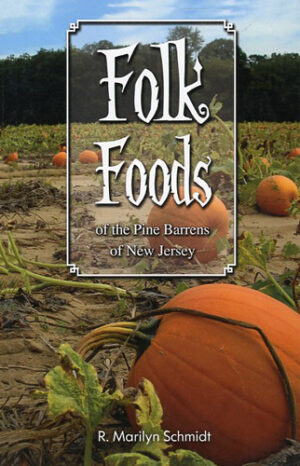 By R. Marilyn Schmidt: Because of their often perceived or actual isolated location, Pine Barrens folk grew much of their food, particularly fruits and vegetables. People of the pines knew how to live off the land. During the Great Depression, these residents suffered little hardship. Gardens supplied vegetables which were eaten fresh, dried or canned in contrast to today’s freezing. Root cellars, a rarity today, enabled folks to keep potatoes, cabbages, carrots, beets, squash, and other vegetables and fruits to provide food throughout the winter. Little food was purchased. Necessities such as sugar, molasses, salt, pepper, flour, and cornmeal were available at the local general store. Today many people in the pines continue the old traditions. Cakes are still baked from scratch, gardens are maintained and yes, some people still keep chickens. The traditions of yesteryear continue today. Recipes included here are historic and interesting dishes including products commonly available or locally grown. They are culled from old time literature, - magazines, newspapers, books - and friends both old and new. Many were handed down from generation to generation. Enjoy these dishes and have them become a part of your history, as well.
 -
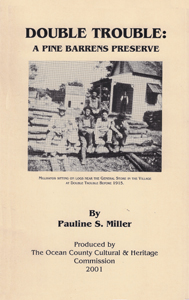 By Pauline S. Miller: This booklet about the historic village of Double Trouble is a brief informational guide to take you through the long history of a pinelands industrial village nestled in the Pine Barrens of New Jersey. This “gem” of a historic site and its unique botanical plants of native New Jersey flora is one of the best kept secrets in the state. Its isolation from any nearby town or village has kept this site in pristine native condition, except for the natural deterioration of buildings in the village. The old saw mill once again hums as it saws local cedar and cedar shingles. The cranberry sorting house and tiny one room school along with other building have been stabilized. Double Trouble State Park is located within the New Jersey Coastal Heritage Trail.
 -
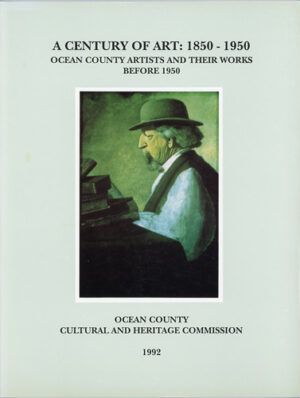 By Pauline S. Miller & Marilyn R. Kralik: At least seventy noteworthy artists lived and worked in Ocean County between 1850 and 1950. The book serves as an introduction to some of those artists. In some cases, there is documentation on the artist but examples of their work could not be located. In other cases, the authors have included works by known artists but could locate little or no information about the creator of the work. Included are both professional and amateur artists.
 -
 1616 New Jersey Hendrick’s Map This is an early Dutch map of the Jersey Coast and reflects the first exploration of Barnegat Bay. It shows early Indian settlements, the rivers feeding into the bay and locations like Little Egg Harbor, the Barnegat Inlet, and Sandy Hook. These locations, as we know them today, were recorded by Hendrick’s over 400 years ago 24" x 36"
 -
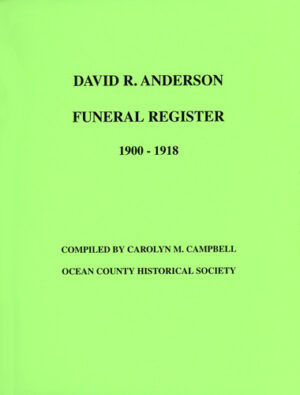 Compiled by Carolyn M. Campbell: Two books containing five hundred individual funeral records for the period 1900 to 1918 were kept by David R. Anderson, undertaker, in Bayville, New Jersey. The complete records of sixteen of the five hundred who died are included to illustrate the kinds of information contained in each report. The records of the remaining five hundred deaths have been abbreviated for this publication and only the most pertinent information has been included. This a great genealogical resource for family research.
 -
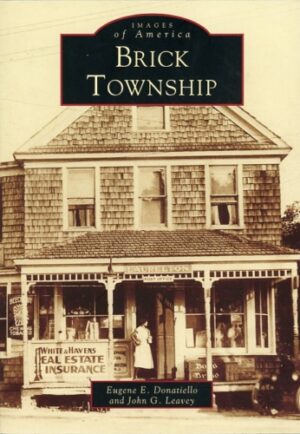 By Eugene E. Donatiello & John G. Leavey: In 1850, when the New Jersey Legislature created Ocean County, they also created Brick Township among a region of virgin woodlands. The new township was named after its most prominent resident, Joseph W. Brick, the industrious and successful owner of Bergen Iron Works. As his and other local industries expanded, more and more people began to call Brick their home. Brick Township records these founders and the events and places that helped them shape our community. By 1920, parts of the new township had declared their independence, and the remaining parts of Brick began to evolve into a resort community. The summer tourists, farmers, home builders and shipbuilders, anglers, hunters, tavern and innkeepers, merchants, and others helped fashion Brick into an intimate but prosperous community. Brick continued to be a quiet, rural, resort area into the 1950s, when the Garden State Parkway opened, and residential and commercial development created dramatic growth in year-round residents, and it became a thriving suburban community. Brick Township captures scenes of life in Brick from 1850 to the 1950s and beyond; from the early European settlers to the suburbanites who now call Brick their home; from the thriving poultry industry to area resorts; from Joseph Brick to our friends and family who live among us today.
 -
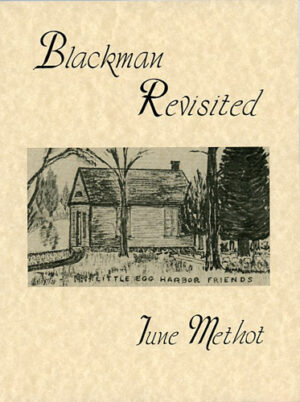 By June Methot: Over one hundred years ago Leah Blackman, a resident of Tuckerton, wrote a history of Little Egg Harbor Township which included genealogical information about numerous early settlers and old families of that area. June Methot, with the many sources available for research today, has updated that genealogical data with additions and corrections. This is an excellent resource for anyone searching for his/her roots in Southern Ocean County. Leah Blackman’s publication, The History of Little Egg Harbor Township, is out of print but may be available in libraries and/or research centers.
 -
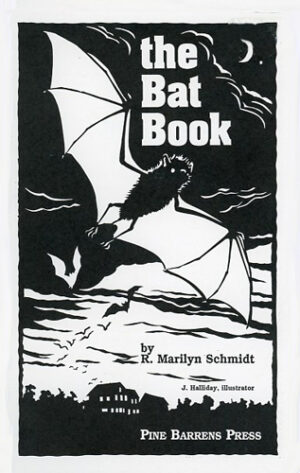 By R. Marilyn Schmidt: Find out about the types of bats that live in the northeastern United States. The book tells how to solve bat problems, as well as how to remove them from inside a house and bat proof a home. Want to cut down on insects? Installing a bat house may be a safe and non-chemical way to get results. The author has included a list of sources to locate more information about bats.
 -
 By Louise Ann Barton & Donna Lee Sharp Albertson: Join the authors for an old-fashioned Christmas in the Pine Barrens as this book takes you to the famous Albertson’s Farm for Christmas Dinner. Try you hand at these authentic Piney Signature Recipes for your own table. Lovers of poetry will enjoy reading the Piney Poems and those who enjoy tall tales will not be disappointed.
 -
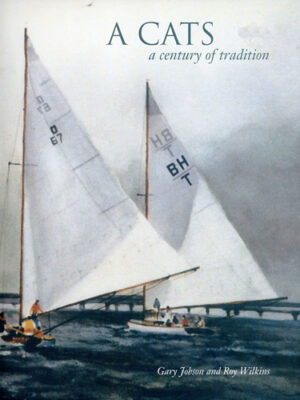 By Gary Jobson and Roy Wilkins: The mighty A Cats have sailed and raced on Barnegat Bay since the 1920s. These sturdy boats link the generations. Along with the tales of 40 sailors, over 200 photographs and illustrations showcase the past and the present.