-
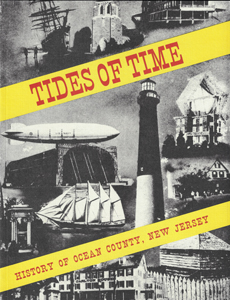 Compiled by the Ocean Conty Principal’s Council: Written by school pupils over a nine-year period and published by the Ocean County Principal’s Council in 1940, the book has a wealth of information about many of the communities in Ocean County, Its style is simple, direct, and concise. One hundred pictures enhance the narrative descriptions of people, places, and events in Ocean County. The book contains an index that will help the reader to locate specific information.
 -
 By Congregation B’nai Israel of Toms River: The egg farming industry owes much of its development in Toms River to the Jewish community. Jewish families share the stories of their immigration from various locations in the United States and Europe to the town of Toms River. Their many contributions added to the growth of the area.
 -
 By Brian Bovasso: Once a mosquito-infested marshland lying fifty-five feet west of the Lavallette mainland, West Point Island is now one of the most desirable locations on the Jersey Shore. Marketing the island is a realtor’s delight. You can own “your own piece of paradise”, in this “exclusive West Point Island Beach community”, enjoying “breathtaking views of Barnegat Bay”, in a “tranquil Bayfront setting”. The purpose of the book is to describe the people and events that made West Point Island’s history so different from that of its neighboring sedge islands.
 -
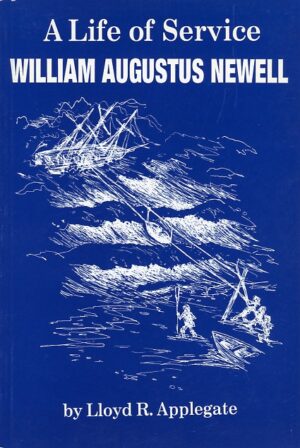 By Lloyd R. Applegate: During his varied political career, William Augustus Newell served as governor of both New Jersey (1857-1860) and the Territory of Washington (1880-1884). His interests and talents ranged from medicine and agriculture to several terms in Congress. He was a friend of the Lincolns, and was appointed as an Indian inspector in the northwest. Of greatest benefit to those of us along the Jersey coast was his persistence in bringing about legislation that established life-saving stations along our coast.
 -
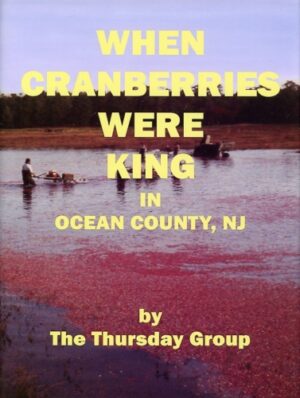 By The Thursday Group: Cranberry growing was a major industry in Ocean County. The history of cranberries begins with the Native Americans and progresses to the more recent growers and families of cranberry farmers. Learn about what a bog is and how to maintain a bog, the families and the locations of their farms as well as how World Wars and the Garden State Parkway effected the growth of the Cranberry industry in Ocean County.
 -
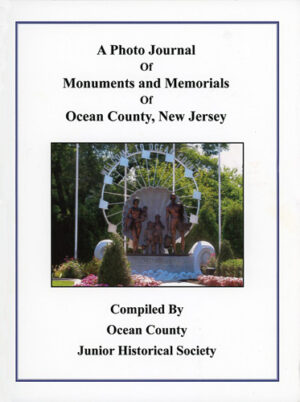 Compiled by Ocean County Junior Historical Society: Under the direction and guidance of retired educator, Barbara Moreau, the Ocean County Junior Historical Society traveled throughout Ocean County to photograph and document over 157 monuments and memorials that they discovered within the County. This booklet will help you to learn about and remember the people and events that these monuments and memorials honored.
 -
 By Robert Camp: During the years from 1933 to 1968 Toms River High School had many winning sports teams and was known as a sport powerhouse. Learn the names of the stars of those winning teams and the challenges that they faced during their games.
 -
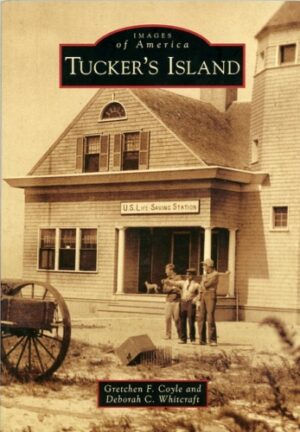 By Gretchen F. Coyle & Deborah C. Whitcraft: Once located between Great Bay and Little Egg Harbor, along the New Jersey coast, Tucker's Island disappeared into the Atlantic Ocean. Sand dunes and native foliage once covered its eight miles. For generations, the Rider family kept the light illuminated, and the US Life-Saving Service provided aid to ships in distress. Two hotels were constructed by island men with building materials salvaged from local shipwrecks. Visitors arrived by sail or steam, and the popularity of Tucker's Island inspired real estate agents to sell worthless lots to unsuspecting buyers eager for their own piece of the shore. Storms battered the vulnerable island; the lighthouse toppled in 1927, the life-saving station washed away, and in 1932, the island was removed from tax records.
 -
Out of stock
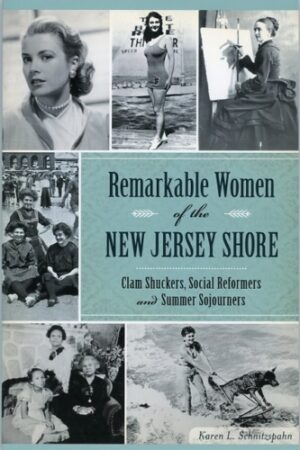 By Karen L. Schnitzspahn: History is everywhere along the New Jersey Shore, from the lighthouses that dot the coast to the Victorian grandeur of Cape May. Less visible are the stories of the women who helped shape that past. Trailblazing young women in Belmar and Wildwood became lifeguards, proving that women were just as capable as men. Cindy Zipf has worked tirelessly for more than thirty years to stop ocean pollution and protect marine life. Theatrical stars, pioneering politicians, a Titanic survivor and a cosmetics entrepreneur all called the Jersey Shore home. Even several first ladies vacationed in towns along the coast. While countless women have contributed to the region's past, local author Karen L. Schnitzspahn chronicles some of the most intriguing stories of the remarkable women of the Jersey Shore.
 -
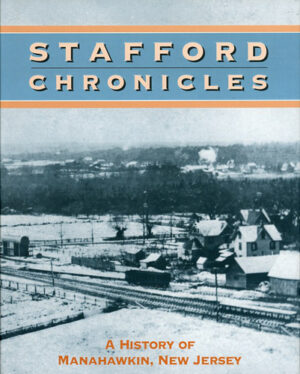 Stafford Chronicles—A History of Manahawkin, N.J.: This pictorial history explores a shore town whose coastal traditions and roots go back to before the Revolutionary War. Readers will relive the days of the Tuckerton and Long Beach Railroads: visit with world-renowned decoy carver Hurley Conklin; and discover the 3 “Docs”—Cramer, Hillard, and Lane. The book contains a remarkable collection of essays, reminiscences, memories, and photographs.
 -
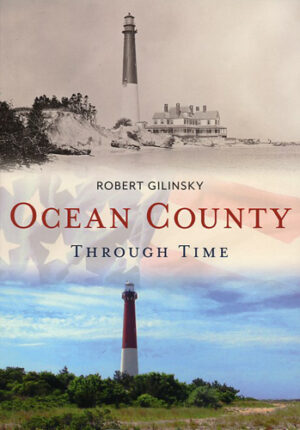 By Robert Gilinsky: Ocean County was born on February 15, 1850 when she was chartered and officially annexed from Monmouth County taking well over half of that county’s land but only a fraction of its population. Ocean County is the second largest county in New Jersey. Over the past several decades, it has led the state in population growth. Long know for its beautiful beaches and pristine pine barrens, it has undergone major changes, some positive and other not so positive.
 -
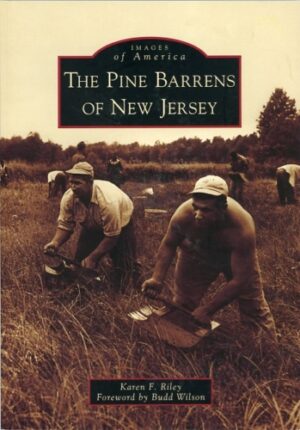 By Karen F. Riley: The Pine Barrens of New Jersey cover 22 percent of the most densely populated state in the country. The name came from early settlers who thought the area was a vast wasteland, but it is anything but barren. Underneath this incredible natural resource lies almost 17 trillion gallons of some of the purest water on earth. The charcoal industry began here, cranberry production, cultivated blueberries were developed in this area. You’ll uncover many forgotten ghost towns but the people who lived and worked there are the real story.
 -
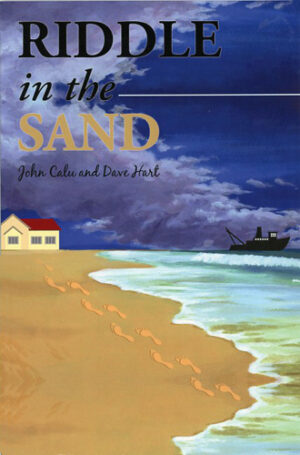 By John Calu and Dave Hart: With time running out, three intrepid summer adventurers, Kelly Martin, Geoffrey Martin, and Danny Windsor find themselves drawn into the epicenter of controversy as Mayor Dillard C. Webb, coping with unpopular beach closings, riots and demonstrations, must do battle with power mongers and political mercenaries in order to solve this Riddle in the Sand. This is a work of fiction.
 -
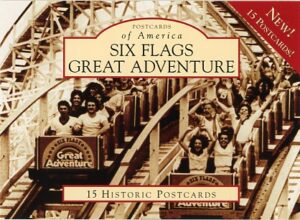 Compiled by Harry Applegate & Thomas Benton: Six Flage Great Adventure boasts a rich history. In this collection of vintage-photograph postcards, the authors explore the park’s past. Contains 15 Historic Postcards.
 -
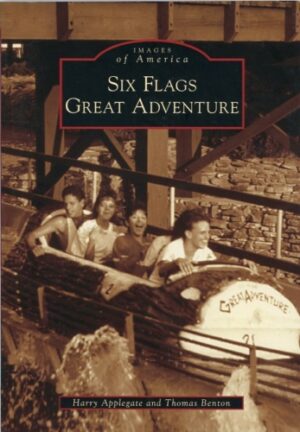 By Harry Applegate & Thomas Benton: In 1977, Great Adventure (in Jackson Township, NJ) became a member of the Six Flags family of theme parks and has grown since with bigger and better attractions.
 -
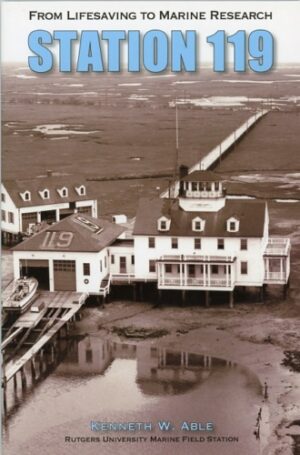 By Kenneth W. Able, PhD.: Station 119 is the story of the mission of the men and women who work at the Rutgers University Marine Field Station. It is also the story of the station itself. While the station now may play a role in saving the planet, it began with a mission of saving lives. This is the fascinating history of a remote former Coast Guard station near Little Egg Inlet on the Jersey Shore and its reincarnation as a marine research facility. The station is now staffed by scientists and students studying the environment in the Jacques Cousteau National Estuarine Research Reserve (JCNERR), near Long Beach Island.
 -
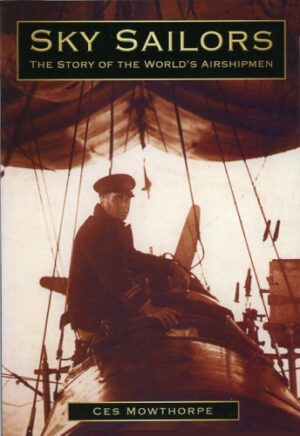 By Ces Mowthorpe: The story of the sky sailors - the men who pioneered a mode of air transport that today is virtually forgotten. During the first two decades of aviation pioneering (c.1890-1910), airshipmen greatly outnumbered aeroplane pioneers. But the great innovations in heavier-than-air aircraft, the advent of two world wars, and the bad publicity brought about by a few horrific airship disasters, Hindenburg and Shenandoah to mention two, changed the picture completely.
 -
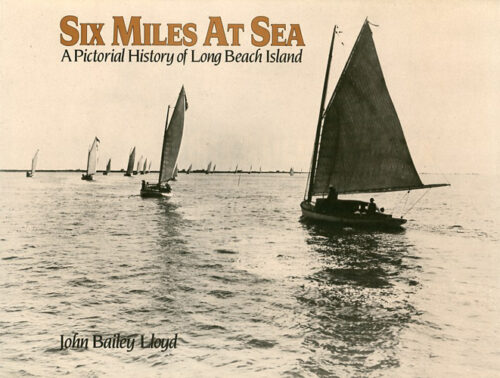 By John Bailey Lloyd: Travel back to Edwardian Beach Haven. You will discover the origins of Barnegat Light House and learn about the fortitude of the men of the U.S. Lifesaving Service. Hurricanes and nor’easters have created “new inlets” and caused the disappearance of Tucker’s Island. You’ll travel the first automobile highways to the Shore—or take the train to one of the grand old hotels and you will find out the origin of that enduring phrase, “Six Miles At Sea”.
 -
 By John Bailey Lloyd: The companion books by John Bailey Lloyd—Eighteen Miles of History, Six Miles At Sea, and Two Centuries of History—contain hundreds of photographs, illustrations and maps of the Island’s past. Here in large postcards are selections of 22 of the most compelling photographs from those books. Within these images you will find a unique shore resort that is wider, more innocent, less developed and perhaps more romantic—the perfect Long Beach Island of collective memory.
 -
 By Karen F. Rilley, Andrew Coulis, & Peter H. Stemmer: Our country's first national reserve, the Pine Barrens, harbors a wonderful secret unknown to most outsiders. This 1.1-million-acre treasure trove of pitch pine and sugar sand is home to many rare species and almost 17 trillion gallons of the purest water on earth. It was in this forest that men like Leland Champion logged trees and built sawmills. It was along these waterways that craftsmen like Gary Giberson made prized decoys. And it was in these woods that Stanley Switlik built a tower from which Amelia Earhart jumped, testing his parachute so it could be used in World War II. These woods yielded inventors whose products we enjoy today. They include cultivated blueberries, cranberry sauce, and Welch's grape juice. It was here that Bob Buchanan reached for the mooring lines as the Hindenburg ended its final, fatal voyage. It was here in Buzby's General Store that John McPhee penned his classic book.
 -
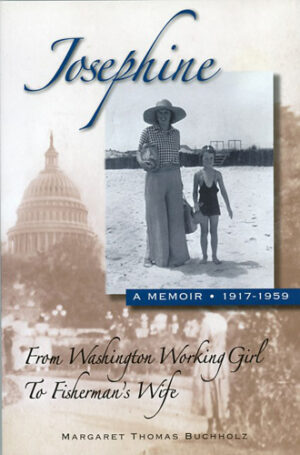 By Margaret Thomas Buchholz: During World War I, before women had the right to vote in America, a young Josephine Lehman Thomas answered the patriotic call from Washington, D.C. and became one of the pioneering ''government girls”. leaving her home in Michigan for adventure in the nation's capital. Through explored diaries and letters, her daughter, Margaret Thomas Buchholz, gives us an amazing chronicle of a trailblazing woman. Josephine worked for legendary journalist Lowell Thomas and traveled the world until the Great Depression dropped her and her new family, struggling to get by, on an island off the coast of New Jersey. This fascinating personal history reveals the optimism of the early 20th Century, the emerging professional woman, the thrill of travel and a sense of success, followed by the crash of the economy, losing everything, and ultimately happiness in a simple life by the sea.
 -
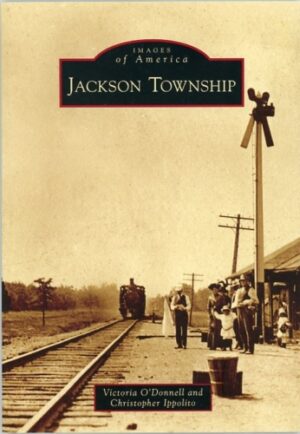 By Victoria O’Donnell & Christopher Ippolito: Jackson Township was named after the legendary "Old Hickory," Pres. Andrew Jackson. For many years, the township was largely recognized by its small villages. Each of these villages had similar features--a church, general store, tavern, mill, and iconic one-room schoolhouse--which nurtured the small community and formed the foundation of modern Jackson. Mills, small farms, and horse breeding in the 19th century transitioned to cranberry bogs and chicken farms in the first half of the 20th century. As transportation became more advanced after World War II, people began to travel outside of town for work, and the once-thriving villages of industry disappeared. Today, Jackson Township, covering 100.4 square miles, is the largest municipality in Ocean County and the third largest in the state of New Jersey.
 -
 By Robert H. Camp: This book contains a listing of those service members who died during World War II, Korea, and Viet Nam and are honored posthumously.
 -
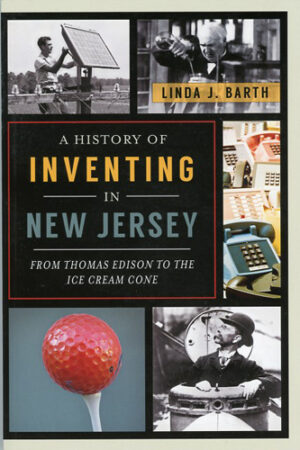 By Linda Barth: Many Americans are familiar with Thomas Edison's "invention factory" in Menlo Park, where he patented the phonograph, the light bulb and more than one thousand other items. New Jerseyans brought sound and music to movies and built the very first drive-in theater. In addition to the first cultivated blueberry, tasty treats like ice cream cones and M&Ms are also Jersey natives. Iconic aspects of American life, like the batting cage, catcher's mask and even professional baseball itself, started in New Jersey. Life would be a lot harder without the vacuum cleaner, plastic and Band-Aids, and many important advances in medicine and surgery were also developed here. Join author Linda Barth as she explores groundbreaking, useful, fun and even silly inventions and their New Jersey roots.
Call Us Today! (732) 341-1880