-
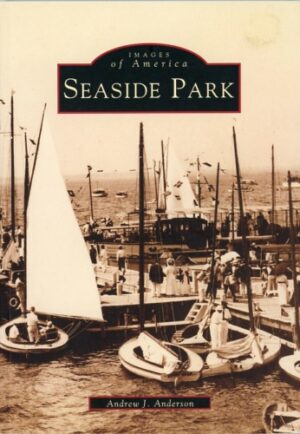 By Andrew J. Anderson: Seaside Park, located on the Barnegat Barrier Island in Ocean County, New Jersey, was incorporated in 1898. Experience the rich history of Seaside Park through the enchanting images within this pictorial history to take you back in time to the Seaside Park of long ago. Many of Seaside Park’s over 200 images have never before been seen by the public. Stroll by the grand hotels representative of the late gilded age, once the main attraction for vacationers from Philadelphia and New York. Ride the long-forgotten Pennsylvania Railroad, which carried passengers and freight into Seaside Park from 1881 until the end of World War II.
 -
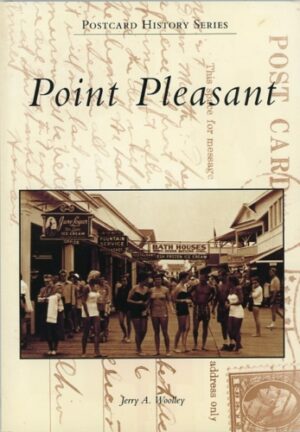 By Jerry A. Woolley: Point Pleasant is a fascinating look at the New Jersey shore communities of Point Pleasant and Point Pleasant Beach during the heyday of the picture postcard. Rare and historical postcards illustrate the region's early grand hotels and majestic summer cottages that helped make Point Pleasant one of New Jersey's top seaside resorts. Explore neighborhoods and downtown shops, the Manasquan River, and, of course, the beach and boardwalk that made Point Pleasant Beach famous.
 -
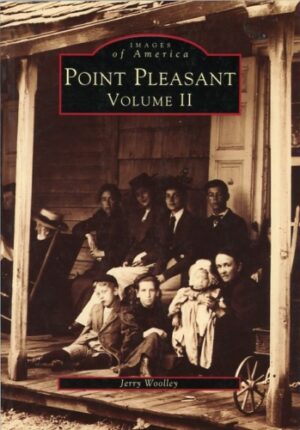 By Jerry A. Woolley: In Point Pleasant Volume II, historian Jerry Woolley continues the detailed look at Point Pleasant, Point Pleasant Beach, and Bay Head that he began in Volume I. While still maintaining a historical perspective, Woolley has also included more recent photographs to give us a more contemporary view of the area. Bounded by the Manasquan River on the north, the Atlantic Ocean on the east, and Barnegat Bay and Beaver Dam Creek to the south, Point Pleasant's uniquely aquatic environment has long been one of the area's major attractions. Woolley provides the reader with an intriguing look at the many waterfront faces of Point Pleasant.
 -
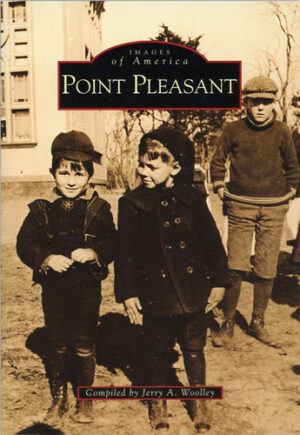 By Jerry A. Woolley: Point Pleasant and Point Pleasant Beach have always been two of New Jersey's most dynamic coastal communities. Visit the history and photographs of their pasts. Since the development of photography in the mid-nineteenth century, the camera has been used as a tool of both discovery and preservation. Photographs bring alive our image of the past, and can open a floodgate of memories and nostalgia or inspire curiosity and a sense of history. The scenic beauty and simple charm of the area remains undisturbed today, and it is easy to see why it has been a popular tourist destination for more than two centuries. The last one hundred years have also seen the formation and development of several important industries in the region, including shipbuilding and commercial fishing. This combination of business and recreation, of modern industry and Old World charm is why Point Pleasant and Point Pleasant Beach remain two of the most vivacious and magnetic communities on the coast of New Jersey.
 -
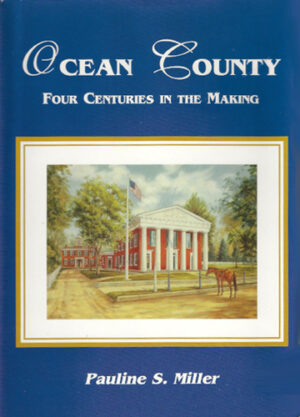 By Pauline S. Miller: The four centuries of Ocean County are divided into three distinct sections that help define the time periods of growth. Part I: 1614-1850 covers those years of the Native American occupation, activities of the whalers, smugglers, and privateers; the ventures of the early settlers building their sawmills and homes in the pines and along the streams; the beginning of the pinelands industries, and the War of 1812. Part II: 1850-1950 reveals, for the first time, the founding father of Ocean County, Joel Haywood. It records the development of the county government, the creation of townships and boroughs, the expansion of the barrier island, the impact of the railroad era, the Civil War, World War I, the Ku Klux Klan, the Great Depression, and World War II. Part III: 1950-2000 deals with the county’s renaissance, growth of county government, schools, churches, and higher education, chicken farms giving way to housing developments, the state’s first nuclear power plant, the impact of big industries located in the county, the population surge, medical care and the effect of local women on the county’s political scene. An extensive index is part of this book.
 -
 Locally produced recreation of the Toms River Blockhouse Battle of March 1782 narrated by former OCHS President Robert L. Garthwaite.
 -
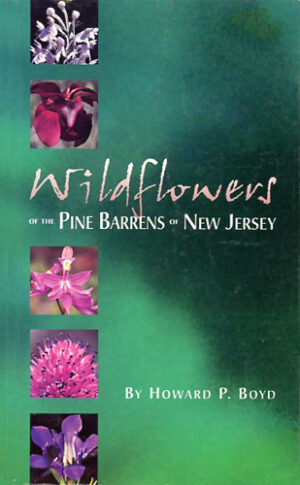 By Howard Boyd: A beautiful book containing color photographs of the most commonly seen wild flowers in the Pine Barrens. You will develop an ability to identify many of the unique flora of this unique area of Newl Jersey.
 -
 By Donna Lee Sharp Albertson & Louise Ann Barton: Discover why the Pine Barrens is such a wonderful place for both summer and winter vacation experiences. Try your hand at original Piney recipes or enjoy reading some Piney poetry and Piney tall tales. Learn about the many vacation activities and cultural events. Discover where mermaids keep their tea cups and what it takes to be born “a REAL Piney”.
 -
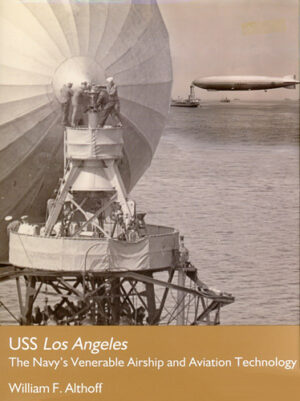 By William F. Althoff: This is a comprehensive history of an important airship that recorded 300 flights and 4,000 hours of flying. Learn about the unique contributions and technical developments in lighter than air travel made by the USS Los Angeles.
 -
 Colporteur Reports to the American Tract Survey 1841-1846: This is a transcription of the early church records of New Jersey. It can give insight into early church activities.
 -
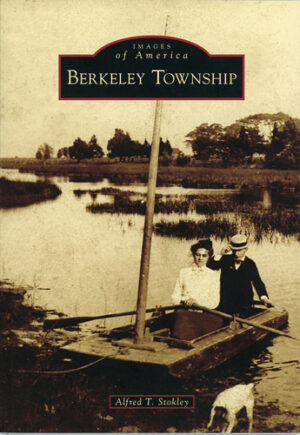 By Alfred T. Stokley: Incorporated in 1875, Berkeley Township was settled along the Barnegat Bay shoreline, dotted with homesteads and fishermen's shanties. The Central Railroad first brought summer tourists to the area for recreation in the late 19th century, and in the years to follow, many new attractions were established, including B.W. Sangor's lavish Royal Pines Hotel. Edward Crabbe established the village of Double Trouble in 1903 for lumber and cranberry production, and Sutton's Pavilion became Bayville's first fishing camp in 1905. Also in this era, George C. Crossly mined clay for terra-cotta products, using a narrow-gauge spur of the Pennsylvania Railroad. In 1928, Rudy Korman opened his restaurant and picnic grove, soon known as Korman's Corner. By the 1930s, Clover Cream Top Dairy was the largest in Bayville. In 1932, Dino the Dinosaur was built for a Sinclair Service Station and became a landmark. Historic Route 9 was used heavily through the middle of the 20th century, featuring roadside stands and tourist cabins. Berkeley Township showcases these landmarks and the rich recreational and commercial history of this Ocean County community.
 -
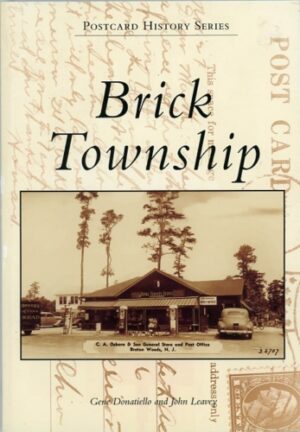 By Gene Donatiello & John Leavey: In 1850, the New Jersey Legislature created Ocean County and Brick Township, naming it for Joseph W. Brick, the industrious owner of Bergen Iron Works. At the beginning of the 20th century, Brick Township was a rural community. Up until the 1920s, postcards of the township were primarily architectural images. Brick Township contains updated images of familiar names and places: Emma Havens Young, for whom an elementary school has been named; the very popular Red Lion Tavern, later called the Red Lion Inn; the progression of four bridges crossing Barnegat Bay to the peninsula area of Brick Township; and Traders Cove Marina as it looked in the 1950s when it was called Pleasure Cove Marina. There are postcards from summer camps, such as Camp NEJECHO and Metedeconk Summer Camp, and from summer resorts, such as Breton Woods, Riviera Beach, and Normandy Beach.
Call Us Today! (732) 341-1880