-
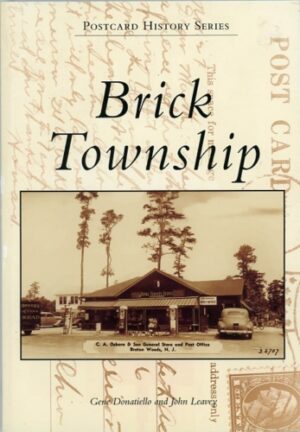 By Gene Donatiello & John Leavey: In 1850, the New Jersey Legislature created Ocean County and Brick Township, naming it for Joseph W. Brick, the industrious owner of Bergen Iron Works. At the beginning of the 20th century, Brick Township was a rural community. Up until the 1920s, postcards of the township were primarily architectural images. Brick Township contains updated images of familiar names and places: Emma Havens Young, for whom an elementary school has been named; the very popular Red Lion Tavern, later called the Red Lion Inn; the progression of four bridges crossing Barnegat Bay to the peninsula area of Brick Township; and Traders Cove Marina as it looked in the 1950s when it was called Pleasure Cove Marina. There are postcards from summer camps, such as Camp NEJECHO and Metedeconk Summer Camp, and from summer resorts, such as Breton Woods, Riviera Beach, and Normandy Beach.
 -
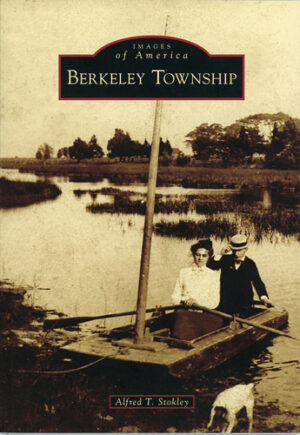 By Alfred T. Stokley: Incorporated in 1875, Berkeley Township was settled along the Barnegat Bay shoreline, dotted with homesteads and fishermen's shanties. The Central Railroad first brought summer tourists to the area for recreation in the late 19th century, and in the years to follow, many new attractions were established, including B.W. Sangor's lavish Royal Pines Hotel. Edward Crabbe established the village of Double Trouble in 1903 for lumber and cranberry production, and Sutton's Pavilion became Bayville's first fishing camp in 1905. Also in this era, George C. Crossly mined clay for terra-cotta products, using a narrow-gauge spur of the Pennsylvania Railroad. In 1928, Rudy Korman opened his restaurant and picnic grove, soon known as Korman's Corner. By the 1930s, Clover Cream Top Dairy was the largest in Bayville. In 1932, Dino the Dinosaur was built for a Sinclair Service Station and became a landmark. Historic Route 9 was used heavily through the middle of the 20th century, featuring roadside stands and tourist cabins. Berkeley Township showcases these landmarks and the rich recreational and commercial history of this Ocean County community.
 -
Out of stock
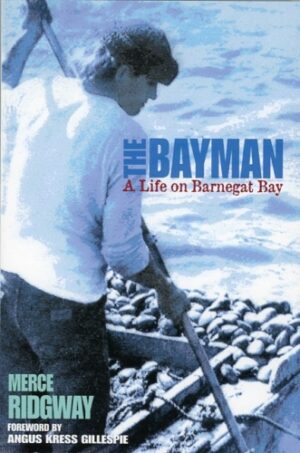 By Merce Ridgway: A native son of Barnegat Bay shares an insider’s chronicle of a culture that has all but disappeared. It is a story that celebrates the Shore and the Pine Barrens with music, folklore, philosophy and a genuine and deeply felt sensitivity.
 -
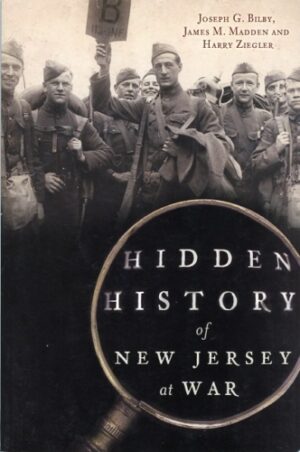 By Joseph G. Bilby, James M. Madden and Harry Ziegler: This book is a series of essays that deal with various little-known aspects of the state’s military experience, beginning with Henry Hudson’s first contact with New Jersey’s Native Americans in 1609 through the War for Independence up to and including the Cold War. There are tales of generals and privates, soldiers and civilians, heroism and blundering, on the war front and the home front, that capture how the state’s citizens coped with the struggles of war.
 -
Out of stock
 By Lee Gant Thorn: This recipe book and almanac was written to give the reader an insight into the birth several centuries ago of what is now the village of Tuckerton and how it grew. It will introduce you to the forefathers, the history making events, and the struggles that shaped the town. It will tell you of today’s goings-on and the plans for the future. On the most part the gentle mood of nostalgia in this book is true. At times it is presented as witnessed, remembered and related by one John Ortley Tucker, who is a totally fictional character. However, as Mr. Tucker rambles on, the actual tales of Tuckerton and its people are revealed and relived.
 -
 By Captain Stephen J. Nagiewicz: An estimated three thousand shipwrecks lie off the coast of New Jersey - but these icy waters hold more mysteries than sunken hulls. Ancient arrowheads found on the shoreline of Sandy Hook reveal Native American settlement before the land was flooded by melting glaciers. In 1854, 240 passengers of the New Era clipper ship met their fate off Deal Beach. Nobody knows what happened to two hydrogen bombs the United States Air Force lost near Atlantic City in 1957. Lessons from such tragic wrecks and dangerous missteps urged the development of safer ships and the U.S. Coast Guard. Captain Stephen D. Nagiewicz uncovers curious tales of storms, heroism and oddities from New Jersey's maritime past.
 -
 By The New Jersey Turnpike Authority: The Garden State Parkway has transformed the lives of New Jersey residents since opening in 1954. Spanning 173 miles from Cape May to the New York State line, it has fostered tourism to the Jersey Shore and given commuters an easier way to get to work. Gov. Alfred E. Driscoll had envisioned the impact a new highway could have on the state, and a large team of planners, engineers, and contractors made it happen. In 1952, the legislature created the New Jersey Highway Authority to ensure the funding and completion of the $330-million parkway and to self-sufficiently operate the roadway through toll revenue. Garden State Parkway shows how this iconic roadway gained its place in history and continues to combine safe transportation in a parklike setting with the scenic beauty of New Jersey.
 -
 By Ocean County Historical Society: This book is a reproduction of a book originally prepared for an Ocean County Historical Society Museum exhibition in 2003. The book is presented with color photographs, all of which are part of the Ocean County Historical Society collection. Editing was done to correct typographical errors, but phrasing is faithful to the original. Additional items from the Society’s collection have been added at the end of the publication.
 -
 By Robert H. Camp: This book contains a listing of those service members who died during World War II, Korea, and Viet Nam and are honored posthumously.
 -
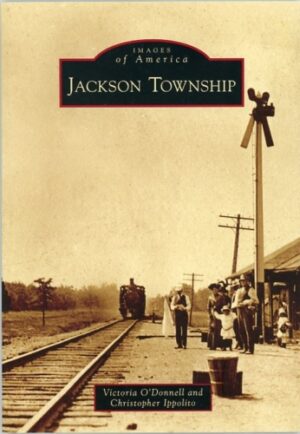 By Victoria O’Donnell & Christopher Ippolito: Jackson Township was named after the legendary "Old Hickory," Pres. Andrew Jackson. For many years, the township was largely recognized by its small villages. Each of these villages had similar features--a church, general store, tavern, mill, and iconic one-room schoolhouse--which nurtured the small community and formed the foundation of modern Jackson. Mills, small farms, and horse breeding in the 19th century transitioned to cranberry bogs and chicken farms in the first half of the 20th century. As transportation became more advanced after World War II, people began to travel outside of town for work, and the once-thriving villages of industry disappeared. Today, Jackson Township, covering 100.4 square miles, is the largest municipality in Ocean County and the third largest in the state of New Jersey.
 -
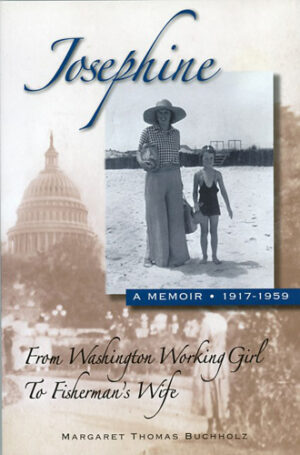 By Margaret Thomas Buchholz: During World War I, before women had the right to vote in America, a young Josephine Lehman Thomas answered the patriotic call from Washington, D.C. and became one of the pioneering ''government girls”. leaving her home in Michigan for adventure in the nation's capital. Through explored diaries and letters, her daughter, Margaret Thomas Buchholz, gives us an amazing chronicle of a trailblazing woman. Josephine worked for legendary journalist Lowell Thomas and traveled the world until the Great Depression dropped her and her new family, struggling to get by, on an island off the coast of New Jersey. This fascinating personal history reveals the optimism of the early 20th Century, the emerging professional woman, the thrill of travel and a sense of success, followed by the crash of the economy, losing everything, and ultimately happiness in a simple life by the sea.
 -
Out of stock
 By Louise Ann Barton: Does the Jersey Devil really exist or did the legend spring up from tales told around campfires? Did the stories become more embellished with every generation? Read the book and decide for yourself.
Call Us Today! (732) 341-1880