-
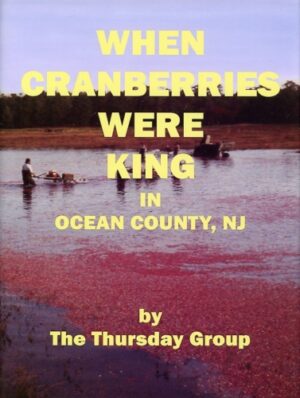 By The Thursday Group: Cranberry growing was a major industry in Ocean County. The history of cranberries begins with the Native Americans and progresses to the more recent growers and families of cranberry farmers. Learn about what a bog is and how to maintain a bog, the families and the locations of their farms as well as how World Wars and the Garden State Parkway effected the growth of the Cranberry industry in Ocean County.
 -
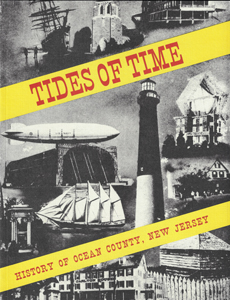 Compiled by the Ocean Conty Principal’s Council: Written by school pupils over a nine-year period and published by the Ocean County Principal’s Council in 1940, the book has a wealth of information about many of the communities in Ocean County, Its style is simple, direct, and concise. One hundred pictures enhance the narrative descriptions of people, places, and events in Ocean County. The book contains an index that will help the reader to locate specific information.
 -
 By Congregation B’nai Israel of Toms River: The egg farming industry owes much of its development in Toms River to the Jewish community. Jewish families share the stories of their immigration from various locations in the United States and Europe to the town of Toms River. Their many contributions added to the growth of the area.
 -
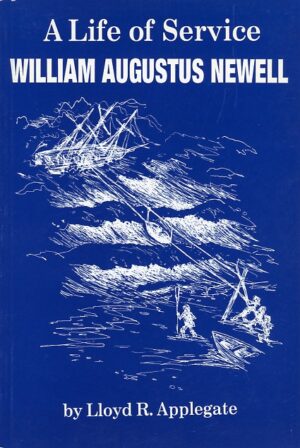 By Lloyd R. Applegate: During his varied political career, William Augustus Newell served as governor of both New Jersey (1857-1860) and the Territory of Washington (1880-1884). His interests and talents ranged from medicine and agriculture to several terms in Congress. He was a friend of the Lincolns, and was appointed as an Indian inspector in the northwest. Of greatest benefit to those of us along the Jersey coast was his persistence in bringing about legislation that established life-saving stations along our coast.
 -
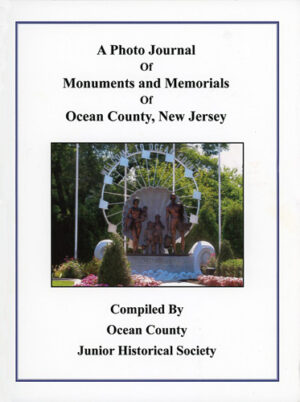 Compiled by Ocean County Junior Historical Society: Under the direction and guidance of retired educator, Barbara Moreau, the Ocean County Junior Historical Society traveled throughout Ocean County to photograph and document over 157 monuments and memorials that they discovered within the County. This booklet will help you to learn about and remember the people and events that these monuments and memorials honored.
 -
 By Brian Bovasso: Once a mosquito-infested marshland lying fifty-five feet west of the Lavallette mainland, West Point Island is now one of the most desirable locations on the Jersey Shore. Marketing the island is a realtor’s delight. You can own “your own piece of paradise”, in this “exclusive West Point Island Beach community”, enjoying “breathtaking views of Barnegat Bay”, in a “tranquil Bayfront setting”. The purpose of the book is to describe the people and events that made West Point Island’s history so different from that of its neighboring sedge islands.
 -
 By Robert Camp: During the years from 1933 to 1968 Toms River High School had many winning sports teams and was known as a sport powerhouse. Learn the names of the stars of those winning teams and the challenges that they faced during their games.
 -
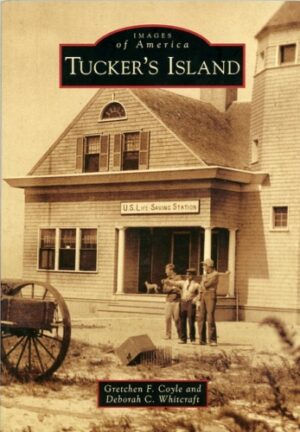 By Gretchen F. Coyle & Deborah C. Whitcraft: Once located between Great Bay and Little Egg Harbor, along the New Jersey coast, Tucker's Island disappeared into the Atlantic Ocean. Sand dunes and native foliage once covered its eight miles. For generations, the Rider family kept the light illuminated, and the US Life-Saving Service provided aid to ships in distress. Two hotels were constructed by island men with building materials salvaged from local shipwrecks. Visitors arrived by sail or steam, and the popularity of Tucker's Island inspired real estate agents to sell worthless lots to unsuspecting buyers eager for their own piece of the shore. Storms battered the vulnerable island; the lighthouse toppled in 1927, the life-saving station washed away, and in 1932, the island was removed from tax records.
 -
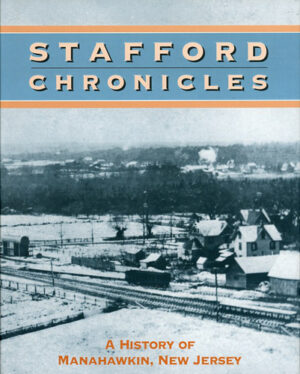 Stafford Chronicles—A History of Manahawkin, N.J.: This pictorial history explores a shore town whose coastal traditions and roots go back to before the Revolutionary War. Readers will relive the days of the Tuckerton and Long Beach Railroads: visit with world-renowned decoy carver Hurley Conklin; and discover the 3 “Docs”—Cramer, Hillard, and Lane. The book contains a remarkable collection of essays, reminiscences, memories, and photographs.
 -
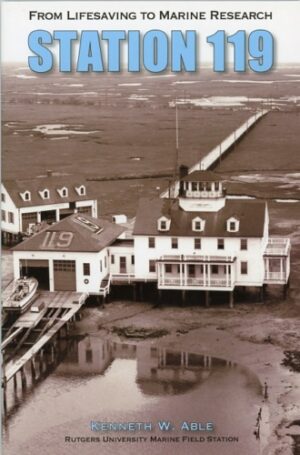 By Kenneth W. Able, PhD.: Station 119 is the story of the mission of the men and women who work at the Rutgers University Marine Field Station. It is also the story of the station itself. While the station now may play a role in saving the planet, it began with a mission of saving lives. This is the fascinating history of a remote former Coast Guard station near Little Egg Inlet on the Jersey Shore and its reincarnation as a marine research facility. The station is now staffed by scientists and students studying the environment in the Jacques Cousteau National Estuarine Research Reserve (JCNERR), near Long Beach Island.
 -
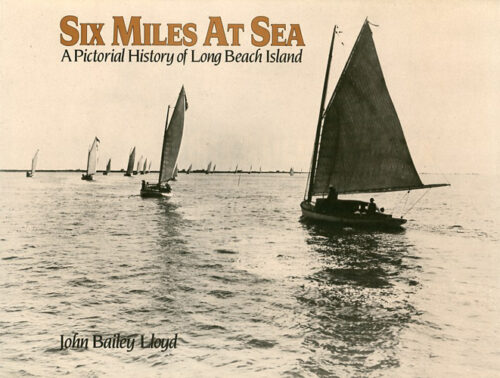 By John Bailey Lloyd: Travel back to Edwardian Beach Haven. You will discover the origins of Barnegat Light House and learn about the fortitude of the men of the U.S. Lifesaving Service. Hurricanes and nor’easters have created “new inlets” and caused the disappearance of Tucker’s Island. You’ll travel the first automobile highways to the Shore—or take the train to one of the grand old hotels and you will find out the origin of that enduring phrase, “Six Miles At Sea”.
 -
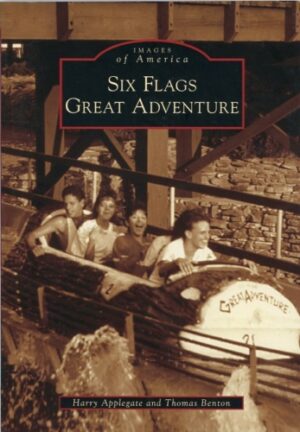 By Harry Applegate & Thomas Benton: In 1977, Great Adventure (in Jackson Township, NJ) became a member of the Six Flags family of theme parks and has grown since with bigger and better attractions.
Call Us Today! (732) 341-1880