-
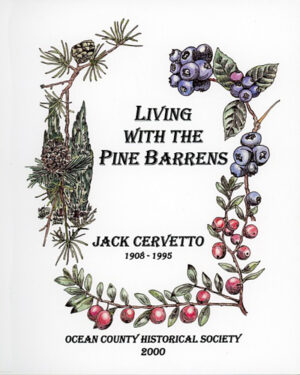 By Jack Cervetto—1908-1995: Jack Cervetto was not unique to having made a living in the pine barrens of New Jersey. What distinguishes him from hundreds of others is the fact that he reflected on his life in his later years and recorded his memories. He set goals for himself and his community, provided the leadership that was needed to accomplish a desired end, and was well-liked and respected by his associates, whether leading a deer hunt or debating an issue at a meeting of the Stafford Township Board of Education.
 -
Out of stock
 Compiled by Elizabeth Ann Grant: These marriages, ranging from approximately the 1740s to the 1960s, were compiled from many different sources. The source for each marriage is listed in the book. The resources used are available at the Ocean County Historical Society Research Center. The purpose of this compilation was to gather all these many resources into one long date base that would enable the researcher to search with ease for any ancestor’s marriage record.
 -
 Compiled by Elizabeth Ann Grant: Information in this booklet stems from materials about the Soper family in Ocean County, New Jersey collected by James Wilson Soper before 1904. A genealogy written by the Reverend Clarence Woodmansee of Barnegat, New Jersey about the Soper genealogy as it related to the Woodmansee family is the basis for this compilation. The Reverend Woodmansee was known throughout Ocean County, New Jersey as the “Pastor of the Pines”. Other research, documentation and statistics are included.
 -
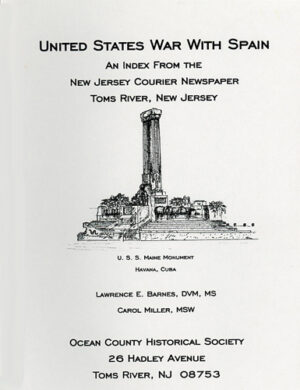 By Lawrence E. Barnes. DVM. MS & Carol Miller, MSW: This is an index from the New Jersey Courier, Toms River, New Jersey. It contains a listing of personnel engaged in the military forces of the United States from January 1, 1897 through December 1990. The index was completed in March 2006.
 -
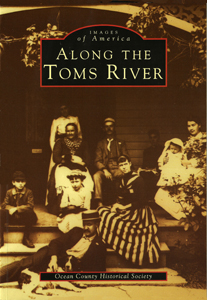 By Ocean County Historical Society: See the people, places and events that have defined the city of Toms River and its surrounding area since the early 1700s. Located on the banks of the river of the same name, Toms River was first settled in the early 1700s by loggers drawn to the dense forests on the river's banks. During the American Revolution, the village was a constant thorn in the side of the British, and it was attacked and burned to the ground in 1783. The arrival of the railroads in the late 1800s ushered in a new age of expansion which, spurred on by the construction of the Garden State Parkway in the decade after World War II, continues to this day. See for yourself how it all came about with over 200 carefully-selected photographs.
 -
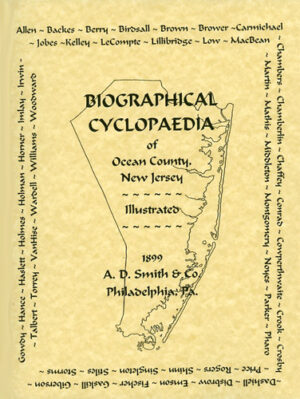 By William H. Fischer, owner and publisher of the New Jersey Courier: This is a reprint of the original work which relates history as written by those who lived just 34 years after the Civil War and 116 years after the American Revolution. Included are more than sixty biographies of men (no women!) who were prominent in the county and descriptions of some communities.
Call Us Today! (732) 341-1880