-
 By Robert H. Camp: This book contains a listing of those service members who died during World War II, Korea, and Viet Nam and are honored posthumously.
 -
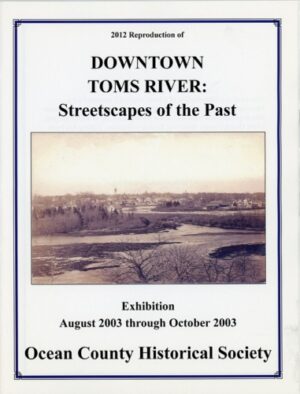 By Ocean County Historical Society: This book is a reproduction of a book originally prepared for an Ocean County Historical Society Museum exhibition in 2003. The book is presented with color photographs, all of which are part of the Ocean County Historical Society collection. Editing was done to correct typographical errors, but phrasing is faithful to the original. Additional items from the Society’s collection have been added at the end of the publication.
 -
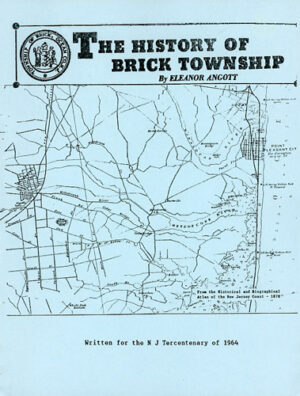 By Eleanor Angott: Written in 1964 as a series of newspaper articles for the New Jersey Tercentenary. The articles have been indexed and copied for this 1992 publication. It contains a comprehensive history of the area beginning in pre-revolutionary war times. The text is rich with family names, many of which are still common in the Brick Township of today. The publication contains an index.
 -
 By June Methot: Over one hundred years ago Leah Blackman, a resident of Tuckerton, wrote a history of Little Egg Harbor Township which included genealogical information about numerous early settlers and old families of that area. June Methot, with the many sources available for research today, has updated that genealogical data with additions and corrections. This is an excellent resource for anyone searching for his/her roots in Southern Ocean County. Leah Blackman’s publication, The History of Little Egg Harbor Township, is out of print but may be available in libraries and/or research centers.
 -
 Compiled by Carolyn M. Campbell: Two books containing five hundred individual funeral records for the period 1900 to 1918 were kept by David R. Anderson, undertaker, in Bayville, New Jersey. The complete records of sixteen of the five hundred who died are included to illustrate the kinds of information contained in each report. The records of the remaining five hundred deaths have been abbreviated for this publication and only the most pertinent information has been included. This a great genealogical resource for family research.
 -
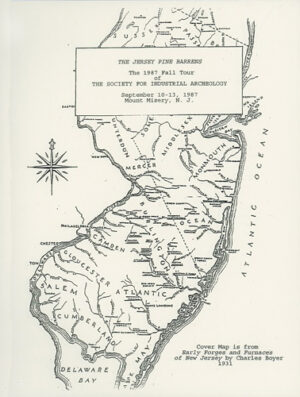 The 1987 Fall Tour of The Society For Industrial Archeology: The booklet provides an overview of the various industries which formed the culture of South Jersey. The first area covered of the southern part of New Jersey is the coastal area; fishing, oystering, and boat building. This includes the Atlantic shore and the Delaware Bay, which contain vast reaches of tidal marshes. The second area of investigation is that part of the outer coastal plain known as the Pine Barrens. A tract of at least 650,00 acres which supplied the mill seats and raw materials for iron, paper, glass, blueberries, and cranberries. In addition, the people who followed the bay, who worked the iron plantations; and who in later years became known as “Pineys” are included. Learn about at least three generations of the William Richards family who helped to create much of South Jersey’s history.
 -
 By Jack Cervetto—1908-1995: Jack Cervetto was not unique to having made a living in the pine barrens of New Jersey. What distinguishes him from hundreds of others is the fact that he reflected on his life in his later years and recorded his memories. He set goals for himself and his community, provided the leadership that was needed to accomplish a desired end, and was well-liked and respected by his associates, whether leading a deer hunt or debating an issue at a meeting of the Stafford Township Board of Education.
 -
Out of stock
 Compiled by Elizabeth Ann Grant: These marriages, ranging from approximately the 1740s to the 1960s, were compiled from many different sources. The source for each marriage is listed in the book. The resources used are available at the Ocean County Historical Society Research Center. The purpose of this compilation was to gather all these many resources into one long date base that would enable the researcher to search with ease for any ancestor’s marriage record.
 -
 Compiled by Elizabeth Ann Grant: Information in this booklet stems from materials about the Soper family in Ocean County, New Jersey collected by James Wilson Soper before 1904. A genealogy written by the Reverend Clarence Woodmansee of Barnegat, New Jersey about the Soper genealogy as it related to the Woodmansee family is the basis for this compilation. The Reverend Woodmansee was known throughout Ocean County, New Jersey as the “Pastor of the Pines”. Other research, documentation and statistics are included.
 -
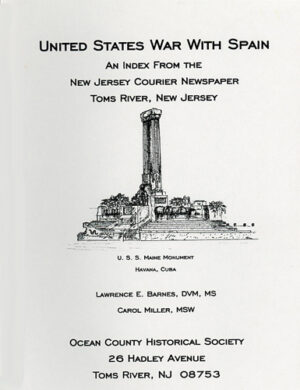 By Lawrence E. Barnes. DVM. MS & Carol Miller, MSW: This is an index from the New Jersey Courier, Toms River, New Jersey. It contains a listing of personnel engaged in the military forces of the United States from January 1, 1897 through December 1990. The index was completed in March 2006.
 -
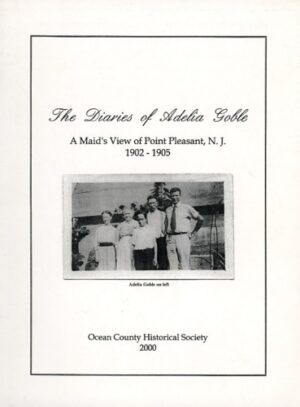 By Adelia Goble: This is a 2000 Ocean County Historical Society publication. If you have ever wondered what the life of a servant was like, this book will answer all of your questions. The book contains Adelia Goble’s personal writing about her life as a maid for Presbyterian Minister Rev. Spencer C. Dickson and his family from 1902 to 1908. Some of her diary’s entries are harsh, but the reader will come away with a better sense of the life of a servant in the beginning of the twentieth century.
 -
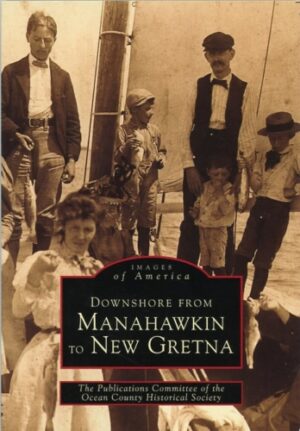 By Ocean County Historical Society: A unique area exists along the western shores of Little Egg Harbor Bay and Great Bay between the communities of Manahawkin and New Gretna. These towns, located in the southern coastal section of New Jersey have a rich and charming history. From the beginning, the region was rich in natural resources, providing fish, clams, oysters, lumber, and cranberries for early settlers. The communities also enjoyed a temperate climate and navigable harbors, leading to the development of shipbuilding and trading as early industries. Because of the isolation of the Tuckerton area from the larger population centers of the state, its small-town flavor and way of life were allowed to endure. Many of the occupations of the settlers of the early 1700s survive to this day. Downshore from Manahawkin to New Gretna seeks to capture the charm of the little towns in this region, the character of the people who settled here, many of whose families still remain, and the lifestyle lived in harmony with this pastoral environment during the nineteenth and early twentieth centuries.
Call Us Today! (732) 341-1880