-
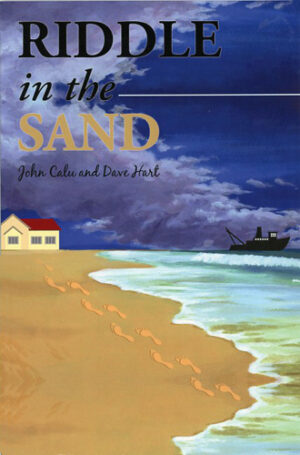 By John Calu and Dave Hart: With time running out, three intrepid summer adventurers, Kelly Martin, Geoffrey Martin, and Danny Windsor find themselves drawn into the epicenter of controversy as Mayor Dillard C. Webb, coping with unpopular beach closings, riots and demonstrations, must do battle with power mongers and political mercenaries in order to solve this Riddle in the Sand. This is a work of fiction.
 -
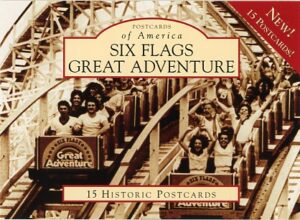 Compiled by Harry Applegate & Thomas Benton: Six Flage Great Adventure boasts a rich history. In this collection of vintage-photograph postcards, the authors explore the park’s past. Contains 15 Historic Postcards.
 -
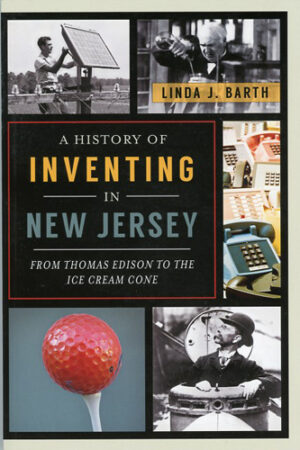 By Linda Barth: Many Americans are familiar with Thomas Edison's "invention factory" in Menlo Park, where he patented the phonograph, the light bulb and more than one thousand other items. New Jerseyans brought sound and music to movies and built the very first drive-in theater. In addition to the first cultivated blueberry, tasty treats like ice cream cones and M&Ms are also Jersey natives. Iconic aspects of American life, like the batting cage, catcher's mask and even professional baseball itself, started in New Jersey. Life would be a lot harder without the vacuum cleaner, plastic and Band-Aids, and many important advances in medicine and surgery were also developed here. Join author Linda Barth as she explores groundbreaking, useful, fun and even silly inventions and their New Jersey roots.
 -
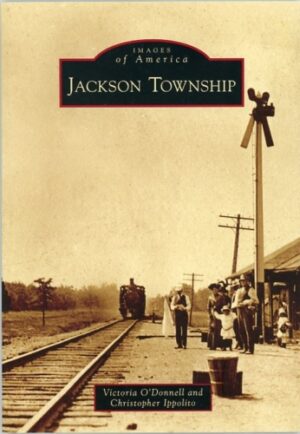 By Victoria O’Donnell & Christopher Ippolito: Jackson Township was named after the legendary "Old Hickory," Pres. Andrew Jackson. For many years, the township was largely recognized by its small villages. Each of these villages had similar features--a church, general store, tavern, mill, and iconic one-room schoolhouse--which nurtured the small community and formed the foundation of modern Jackson. Mills, small farms, and horse breeding in the 19th century transitioned to cranberry bogs and chicken farms in the first half of the 20th century. As transportation became more advanced after World War II, people began to travel outside of town for work, and the once-thriving villages of industry disappeared. Today, Jackson Township, covering 100.4 square miles, is the largest municipality in Ocean County and the third largest in the state of New Jersey.
 -
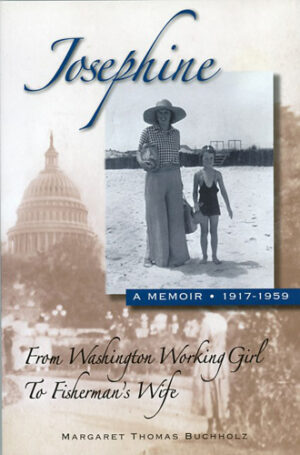 By Margaret Thomas Buchholz: During World War I, before women had the right to vote in America, a young Josephine Lehman Thomas answered the patriotic call from Washington, D.C. and became one of the pioneering ''government girls”. leaving her home in Michigan for adventure in the nation's capital. Through explored diaries and letters, her daughter, Margaret Thomas Buchholz, gives us an amazing chronicle of a trailblazing woman. Josephine worked for legendary journalist Lowell Thomas and traveled the world until the Great Depression dropped her and her new family, struggling to get by, on an island off the coast of New Jersey. This fascinating personal history reveals the optimism of the early 20th Century, the emerging professional woman, the thrill of travel and a sense of success, followed by the crash of the economy, losing everything, and ultimately happiness in a simple life by the sea.
 -
Out of stock
 By Louise Ann Barton: Does the Jersey Devil really exist or did the legend spring up from tales told around campfires? Did the stories become more embellished with every generation? Read the book and decide for yourself.
 -
 By Karen F. Rilley, Andrew Coulis, & Peter H. Stemmer: Our country's first national reserve, the Pine Barrens, harbors a wonderful secret unknown to most outsiders. This 1.1-million-acre treasure trove of pitch pine and sugar sand is home to many rare species and almost 17 trillion gallons of the purest water on earth. It was in this forest that men like Leland Champion logged trees and built sawmills. It was along these waterways that craftsmen like Gary Giberson made prized decoys. And it was in these woods that Stanley Switlik built a tower from which Amelia Earhart jumped, testing his parachute so it could be used in World War II. These woods yielded inventors whose products we enjoy today. They include cultivated blueberries, cranberry sauce, and Welch's grape juice. It was here that Bob Buchanan reached for the mooring lines as the Hindenburg ended its final, fatal voyage. It was here in Buzby's General Store that John McPhee penned his classic book.
 -
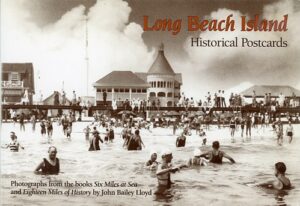 By John Bailey Lloyd: The companion books by John Bailey Lloyd—Eighteen Miles of History, Six Miles At Sea, and Two Centuries of History—contain hundreds of photographs, illustrations and maps of the Island’s past. Here in large postcards are selections of 22 of the most compelling photographs from those books. Within these images you will find a unique shore resort that is wider, more innocent, less developed and perhaps more romantic—the perfect Long Beach Island of collective memory.
 -
 Edited by Margaret Thomas Buchholz: For half a century, one Island publication, The Beachcomber, featured literary stories, observations, and essays that captured the essence of this Jersey Shore sandbar. More than 60 of these stories, from the 1930s to the beginning of the 21st century have been selected for inclusion in this anthology. From sailing to fishing to surfing; storms and beachcombings; natural history and environment; childhoods at the beach; beach parties and summer jobs; and blown-up beached whale and shark attacks; you will enjoy all of the stories.
 -
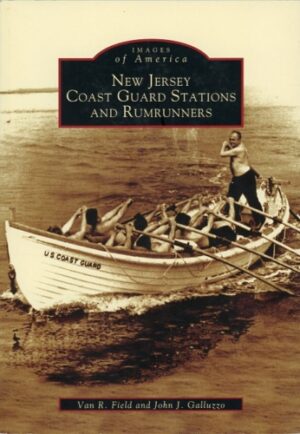 By Van R. Field & John J. Galluzzo: With its many inlets, points, and coves, the coast of New Jersey stood out as a haven for rumrunners brazenly thumbing their nose at the federal government during Prohibition. New Jersey was also recognized as the birthplace of the federal government's shore-based units of the United States Coast Guard, the organization charged at that time with stopping the flow of "demon rum" into America. With its vivid images, New Jersey Coast Guard Stations and Rumrunners revives the days when New Jersey's "coasties" stood toe-to-toe with the rumrunners of the 1920s and 1930s.
 -
 By Richard J. Garlipp, Jr.: In the 18th and 19th centuries, covered bridges dotted the landscape of New Jersey, providing safe passage to travelers. Forty-five covered bridges once crossed waterways in all corners of the state. Perhaps the most extraordinary examples of these wooden bridges were found along the western border, crossing the Delaware River into neighboring Pennsylvania. These bridges were feats of construction and engineering but were ultimately unable to prevent the inevitable fate of almost all the covered bridges of the state, namely ice, floods, and fire as well as the development of new materials and technology. Today, only one covered bridge survives in New Jersey. The Green Sergeant's covered bridge in Hunterdon County was constructed over the Wickecheoke Creek in 1872 and has stood the test of time. New Jersey's Covered Bridges showcases the rich transportation history of these structures and pictorially honors the lost ones.
 -
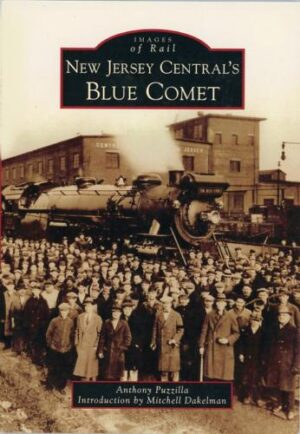 By Anthony Puzzilla: The legendary Blue Comet train no longer streaks through the pines of New Jersey. However, its memory still lives on through timeless images and the sustained efforts of historical societies and preservation organizations. The Garden State's Blue Comet passenger train service operated from 1929 to 1941, on a route from the New York metropolitan area to Atlantic City. This book contains memorable images, many from private archival photograph collections, showing the remarkable history of this classic train and of the many hardworking, dedicated people who made it all possible.
Call Us Today! (732) 341-1880