-
 By The New Jersey Turnpike Authority: The Garden State Parkway has transformed the lives of New Jersey residents since opening in 1954. Spanning 173 miles from Cape May to the New York State line, it has fostered tourism to the Jersey Shore and given commuters an easier way to get to work. Gov. Alfred E. Driscoll had envisioned the impact a new highway could have on the state, and a large team of planners, engineers, and contractors made it happen. In 1952, the legislature created the New Jersey Highway Authority to ensure the funding and completion of the $330-million parkway and to self-sufficiently operate the roadway through toll revenue. Garden State Parkway shows how this iconic roadway gained its place in history and continues to combine safe transportation in a parklike setting with the scenic beauty of New Jersey.
 -
 By Captain Stephen J. Nagiewicz: An estimated three thousand shipwrecks lie off the coast of New Jersey - but these icy waters hold more mysteries than sunken hulls. Ancient arrowheads found on the shoreline of Sandy Hook reveal Native American settlement before the land was flooded by melting glaciers. In 1854, 240 passengers of the New Era clipper ship met their fate off Deal Beach. Nobody knows what happened to two hydrogen bombs the United States Air Force lost near Atlantic City in 1957. Lessons from such tragic wrecks and dangerous missteps urged the development of safer ships and the U.S. Coast Guard. Captain Stephen D. Nagiewicz uncovers curious tales of storms, heroism and oddities from New Jersey's maritime past.
 -
Out of stock
 By Lee Gant Thorn: This recipe book and almanac was written to give the reader an insight into the birth several centuries ago of what is now the village of Tuckerton and how it grew. It will introduce you to the forefathers, the history making events, and the struggles that shaped the town. It will tell you of today’s goings-on and the plans for the future. On the most part the gentle mood of nostalgia in this book is true. At times it is presented as witnessed, remembered and related by one John Ortley Tucker, who is a totally fictional character. However, as Mr. Tucker rambles on, the actual tales of Tuckerton and its people are revealed and relived.
 -
 By Joseph G. Bilby, James M. Madden and Harry Ziegler: This book is a series of essays that deal with various little-known aspects of the state’s military experience, beginning with Henry Hudson’s first contact with New Jersey’s Native Americans in 1609 through the War for Independence up to and including the Cold War. There are tales of generals and privates, soldiers and civilians, heroism and blundering, on the war front and the home front, that capture how the state’s citizens coped with the struggles of war.
 -
Out of stock
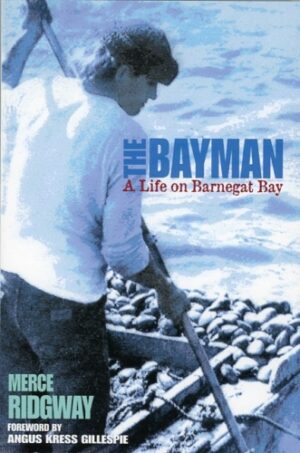 By Merce Ridgway: A native son of Barnegat Bay shares an insider’s chronicle of a culture that has all but disappeared. It is a story that celebrates the Shore and the Pine Barrens with music, folklore, philosophy and a genuine and deeply felt sensitivity.
 -
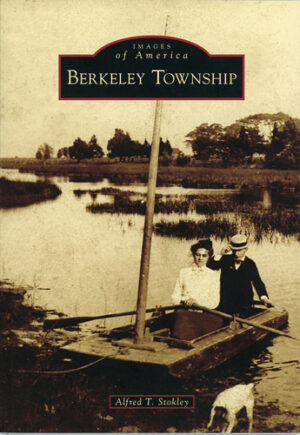 By Alfred T. Stokley: Incorporated in 1875, Berkeley Township was settled along the Barnegat Bay shoreline, dotted with homesteads and fishermen's shanties. The Central Railroad first brought summer tourists to the area for recreation in the late 19th century, and in the years to follow, many new attractions were established, including B.W. Sangor's lavish Royal Pines Hotel. Edward Crabbe established the village of Double Trouble in 1903 for lumber and cranberry production, and Sutton's Pavilion became Bayville's first fishing camp in 1905. Also in this era, George C. Crossly mined clay for terra-cotta products, using a narrow-gauge spur of the Pennsylvania Railroad. In 1928, Rudy Korman opened his restaurant and picnic grove, soon known as Korman's Corner. By the 1930s, Clover Cream Top Dairy was the largest in Bayville. In 1932, Dino the Dinosaur was built for a Sinclair Service Station and became a landmark. Historic Route 9 was used heavily through the middle of the 20th century, featuring roadside stands and tourist cabins. Berkeley Township showcases these landmarks and the rich recreational and commercial history of this Ocean County community.
 -
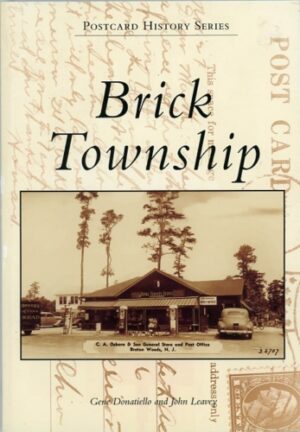 By Gene Donatiello & John Leavey: In 1850, the New Jersey Legislature created Ocean County and Brick Township, naming it for Joseph W. Brick, the industrious owner of Bergen Iron Works. At the beginning of the 20th century, Brick Township was a rural community. Up until the 1920s, postcards of the township were primarily architectural images. Brick Township contains updated images of familiar names and places: Emma Havens Young, for whom an elementary school has been named; the very popular Red Lion Tavern, later called the Red Lion Inn; the progression of four bridges crossing Barnegat Bay to the peninsula area of Brick Township; and Traders Cove Marina as it looked in the 1950s when it was called Pleasure Cove Marina. There are postcards from summer camps, such as Camp NEJECHO and Metedeconk Summer Camp, and from summer resorts, such as Breton Woods, Riviera Beach, and Normandy Beach.
 -
 By Ellen V. Fayer, Stan Fayer, & Walter A. Brower: Chatsworth, a small village in the New Jersey Pinelands, was known as Shamong until 1901. The community traces its beginning to the early 1700s, when settlers mined and forged bog iron to make cannonballs for the American Revolution, and farming was the primary source of income. In the mid-1800s, Chatsworth was a popular stopping point for stagecoach travelers to the Jersey Shore. The arrival of the railroad removed the remoteness of the village and captured the attention of people throughout the country. Prince Mario Ruspoli de Poggio-Suasa, an attaché of the Italian embassy in Washington, D.C., built an elegant villa at the lake. Soon after, the exquisite Chatsworth Country Club was built and counted among its membership a sitting vice president of the United States. It was during this period that Chatsworth played a dominant role in the development of the cranberry industry and began attracting hunters and others seeking recreational opportunities in the Pinelands. The cultivated blueberry industry also had its beginnings in Chatsworth in the 1930s.
 -
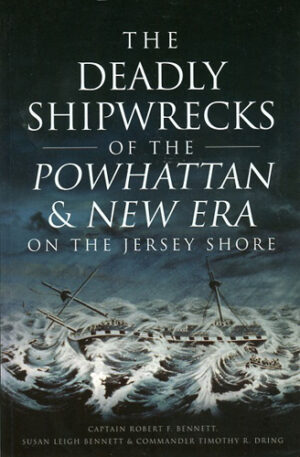 By Captain Robert Bennett, Susan Leigh Bennett, & Commander Timothy R. Dring: In 1854, two horrendous shipwrecks took place off the New Jersey coast. The Powhattan and the New Era were both American-flag sailing packet ships carrying hopeful European immigrants to new lives in America. The ships ran aground on the offshore sandbars along the shoreline between Sandy Hook and Little Egg Inlet, claiming the lives of many passengers and crew. The staggering casualties finally prompted calls from the public and politicians for reforms to the system for rescues that the federal government had in place. The tragedies ultimately resulted in changes that prevented countless similar deaths. This unique and gripping account offers minute-by-minute details of the deadly wrecks, their causes and their final outcomes.
 -
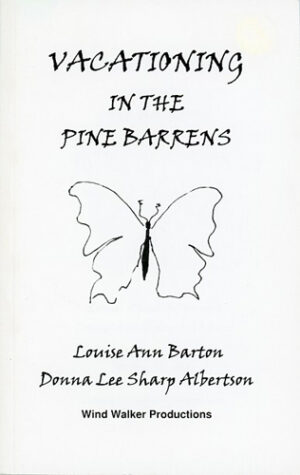 By Donna Lee Sharp Albertson & Louise Ann Barton: Discover why the Pine Barrens is such a wonderful place for both summer and winter vacation experiences. Try your hand at original Piney recipes or enjoy reading some Piney poetry and Piney tall tales. Learn about the many vacation activities and cultural events. Discover where mermaids keep their tea cups and what it takes to be born “a REAL Piney”.
 -
 By Howard Boyd: A beautiful book containing color photographs of the most commonly seen wild flowers in the Pine Barrens. You will develop an ability to identify many of the unique flora of this unique area of Newl Jersey.
 -
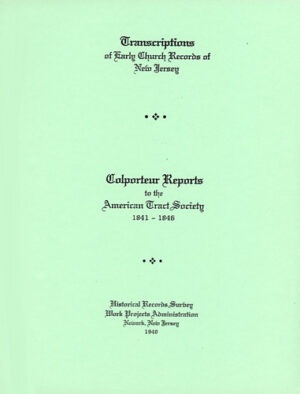 Colporteur Reports to the American Tract Survey 1841-1846: This is a transcription of the early church records of New Jersey. It can give insight into early church activities.
Call Us Today! (732) 341-1880