-
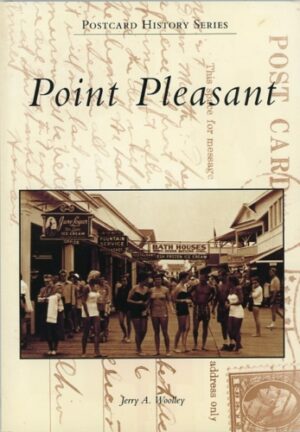 By Jerry A. Woolley: Point Pleasant is a fascinating look at the New Jersey shore communities of Point Pleasant and Point Pleasant Beach during the heyday of the picture postcard. Rare and historical postcards illustrate the region's early grand hotels and majestic summer cottages that helped make Point Pleasant one of New Jersey's top seaside resorts. Explore neighborhoods and downtown shops, the Manasquan River, and, of course, the beach and boardwalk that made Point Pleasant Beach famous.
 -
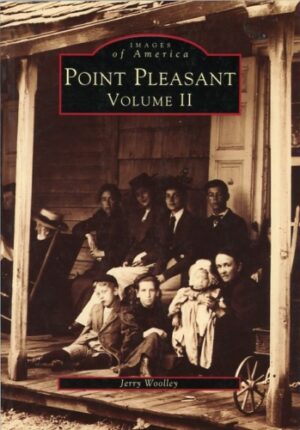 By Jerry A. Woolley: In Point Pleasant Volume II, historian Jerry Woolley continues the detailed look at Point Pleasant, Point Pleasant Beach, and Bay Head that he began in Volume I. While still maintaining a historical perspective, Woolley has also included more recent photographs to give us a more contemporary view of the area. Bounded by the Manasquan River on the north, the Atlantic Ocean on the east, and Barnegat Bay and Beaver Dam Creek to the south, Point Pleasant's uniquely aquatic environment has long been one of the area's major attractions. Woolley provides the reader with an intriguing look at the many waterfront faces of Point Pleasant.
 -
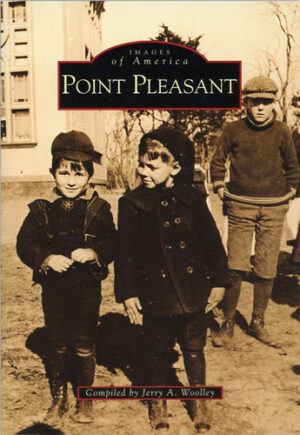 By Jerry A. Woolley: Point Pleasant and Point Pleasant Beach have always been two of New Jersey's most dynamic coastal communities. Visit the history and photographs of their pasts. Since the development of photography in the mid-nineteenth century, the camera has been used as a tool of both discovery and preservation. Photographs bring alive our image of the past, and can open a floodgate of memories and nostalgia or inspire curiosity and a sense of history. The scenic beauty and simple charm of the area remains undisturbed today, and it is easy to see why it has been a popular tourist destination for more than two centuries. The last one hundred years have also seen the formation and development of several important industries in the region, including shipbuilding and commercial fishing. This combination of business and recreation, of modern industry and Old World charm is why Point Pleasant and Point Pleasant Beach remain two of the most vivacious and magnetic communities on the coast of New Jersey.
 -
 By Thomas P. Farmer: Encompassing two centuries of war, politics, intrigue, heroics, tragedy and celebration, the personalities, quirky episodes and indelible moments that make up New Jersey’s rich fabric are numerous. New Jersey’s unsurpassed history finally gets its due!
 -
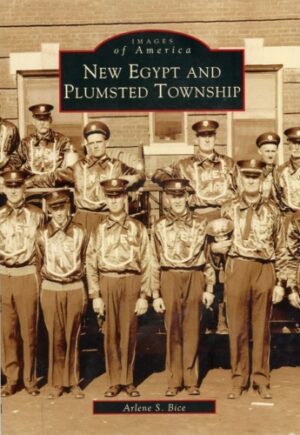 By Arlene S. Bice: New Egypt and Plumsted Township is a collection of unique vintage photographs, many of which have never before been published. Beginning with Quaker Clement Plumstead of London, who was granted twenty-seven hundred acres in 1699, this history shows the progression of the township to the mid-1900s. At the end of the nineteenth century, railroad transportation brought visitors to New Egypt, which blossomed with hotels, guesthouses, the Isis Theatre, and carnivals on Oakford Lake. Among the images are views of Harker's Grove, a favorite spot for picnics and dancing on the pavilion; Sunday concerts held by local talent in New Egypt; and the open space that has made hunting, fishing, and other outdoor activities popular pastimes for locals and visitors alike.
 -
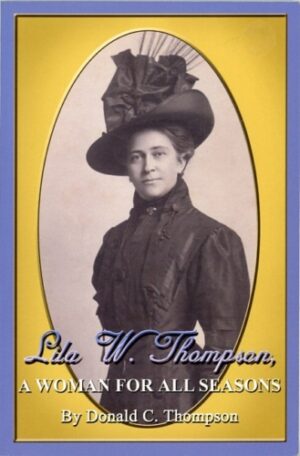 By Donald Thompson: A New Jersey farm girl, one of sixteen children, became known as 'The Mother of the Legislature." Follow her career in politics, election campaigns, service in the New Jersey Legislature and beyond, while nurturing her family and involving herself in lodges, church, and community. Lila was a ground breaker. She celebrated many firsts at a time when women had just begun to exercise their right to vote. Yet her life full of accolades and tributes ended in tragedy. Although his grandmother died before he was born, Donald Thompson always felt her powerful legacy and spirit to be guiding forces in his life. In researching material for this book, he realized he did not have to create a famous grandmother, as the public records and living witnesses proved she was all that and more. Anyone interested in women's leadership in the early days of women's suffrage will find this book filled with down to earth details.
 -
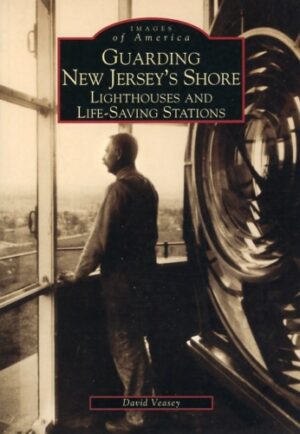 By David Veasey: From the seventeenth to the twentieth century, New Jersey's low-lying, sandy coast has been the site of thousands of shipwrecks as ships bound for New York City or Philadelphia foundered on its offshore shoals. As coastal and international trade dramatically increased after the War of 1812, the federal government was forced to increase safety aids to mariners. To ensure their safe passage, a series of lighthouses was built and the U.S. Life-Saving Service was created. More than two centuries of the history of New Jersey's treacherous coast are preserved in Guarding New Jersey's Shore: Lighthouses and Life-Saving Stations. Gathered from a wide array of sources, more than 200 historic photographs and fascinating, documented text combine to create the only illustrated history of the state's thirty-eight lighthouses and forty-one life-saving stations. Sandy Hook, built in 1764, is the nation's oldest operating lighthouse. Navesink's Twin Lights was the first lighthouse to use electricity and was the home of Marconi's early radio experiments. From the Statue of Liberty in New York Harbor, which once served as a lighthouse, to Cape May Point, and up the Delaware Bay and River, the fascinating story of protecting mariners from perils "Down the Shore" is presented and preserved in Guarding New Jersey's Shore: Lighthouses and Life-Saving Stations.
 -
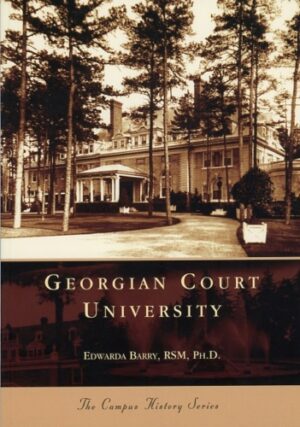 By Edwarda Barry, RSM, Ph.D.: Georgian Court University is a pictorial history of the university from its founding in 1908 by the Sisters of Mercy under the title College of Mount St. Mary. Originally located in Plainfield, the school relocated in 1924 to a former country estate of millionaire George Jay Gould in Lakewood. Retaining the estate title at the request of the Gould family, the Sisters of Mercy renamed the school Georgian Court College. With continuous growth of enrollment, programs, technology, and personnel, the college was designated Georgian Court University by the state in 2004. This centennial book, using the mission of the university as its theme, captures the traditional commitments of the university: a comprehensive liberal arts program in the Roman Catholic tradition; an environment conducive to the cultural, social, and spiritual growth of the entire university community; the core values of justice, respect, integrity, compassion, and service; and a special concern for women.
 -
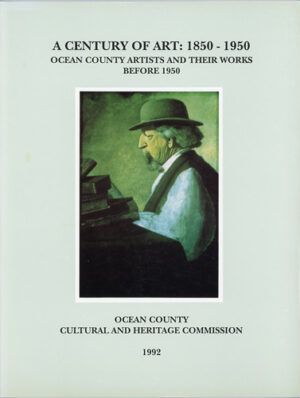 By Pauline S. Miller & Marilyn R. Kralik: At least seventy noteworthy artists lived and worked in Ocean County between 1850 and 1950. The book serves as an introduction to some of those artists. In some cases, there is documentation on the artist but examples of their work could not be located. In other cases, the authors have included works by known artists but could locate little or no information about the creator of the work. Included are both professional and amateur artists.
 -
 Compiled by Carolyn M. Campbell: Two books containing five hundred individual funeral records for the period 1900 to 1918 were kept by David R. Anderson, undertaker, in Bayville, New Jersey. The complete records of sixteen of the five hundred who died are included to illustrate the kinds of information contained in each report. The records of the remaining five hundred deaths have been abbreviated for this publication and only the most pertinent information has been included. This a great genealogical resource for family research.
 -
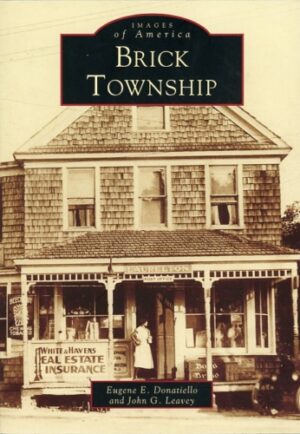 By Eugene E. Donatiello & John G. Leavey: In 1850, when the New Jersey Legislature created Ocean County, they also created Brick Township among a region of virgin woodlands. The new township was named after its most prominent resident, Joseph W. Brick, the industrious and successful owner of Bergen Iron Works. As his and other local industries expanded, more and more people began to call Brick their home. Brick Township records these founders and the events and places that helped them shape our community. By 1920, parts of the new township had declared their independence, and the remaining parts of Brick began to evolve into a resort community. The summer tourists, farmers, home builders and shipbuilders, anglers, hunters, tavern and innkeepers, merchants, and others helped fashion Brick into an intimate but prosperous community. Brick continued to be a quiet, rural, resort area into the 1950s, when the Garden State Parkway opened, and residential and commercial development created dramatic growth in year-round residents, and it became a thriving suburban community. Brick Township captures scenes of life in Brick from 1850 to the 1950s and beyond; from the early European settlers to the suburbanites who now call Brick their home; from the thriving poultry industry to area resorts; from Joseph Brick to our friends and family who live among us today.
 -
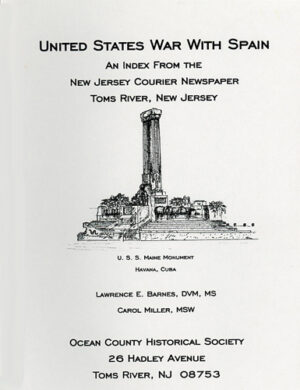 By Lawrence E. Barnes. DVM. MS & Carol Miller, MSW: This is an index from the New Jersey Courier, Toms River, New Jersey. It contains a listing of personnel engaged in the military forces of the United States from January 1, 1897 through December 1990. The index was completed in March 2006.
Call Us Today! (732) 341-1880