-
 By Gretchen F. Coyle and Deborah C. Whitcraft: It was the great disaster of the 1930s, a horrific experience for all those aboard the ill-fated liner sailing to New York from exotic, anything-goes Cuba. The luxurious ship was filled with passengers finding escape from the Great Depression but, the night before arrival, the ship was a scene of panic as a raging fire quickly spread, killing 137 and sending many overboard. The aftermath floated onto the beach at Asbury Park, where the Jersey Shore resort town filled with rescuers, press, and curiosity-seekers. The smoldering ship became a macabre tourist attraction, and the dramatic story filled front pages for week. Controversy surrounded the tragedy and much of the mystery of the Morro Castle fire has endured.
-
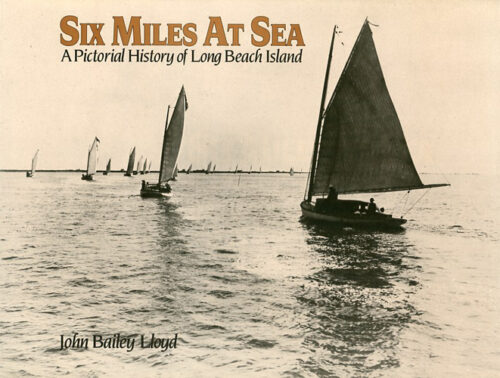 By John Bailey Lloyd: Travel back to Edwardian Beach Haven. You will discover the origins of Barnegat Light House and learn about the fortitude of the men of the U.S. Lifesaving Service. Hurricanes and nor’easters have created “new inlets” and caused the disappearance of Tucker’s Island. You’ll travel the first automobile highways to the Shore—or take the train to one of the grand old hotels and you will find out the origin of that enduring phrase, “Six Miles At Sea”.
-
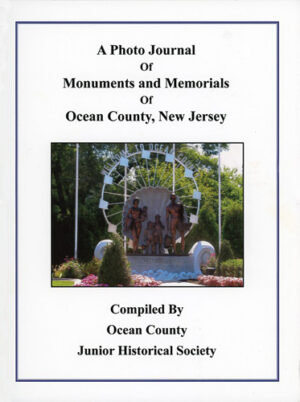 Compiled by Ocean County Junior Historical Society: Under the direction and guidance of retired educator, Barbara Moreau, the Ocean County Junior Historical Society traveled throughout Ocean County to photograph and document over 157 monuments and memorials that they discovered within the County. This booklet will help you to learn about and remember the people and events that these monuments and memorials honored.
-
 By Brian Bovasso: Over a long period of time, Brian Bovasso developed an interest in the Ortley family and the Cranberry Inlet. While writing his first two local history books, he realized what a dramatic influence the Cranberry Inlet and the Ortley family had on the history of this section of the barrier island. This 148 page, illustrated book provides answers to many questions about this area of the barrier island of Ocean County.
-
 By Margaret Thomas Buchholz: Island Album depicts the island and its people from the late 1800s to the present. It includes many images that disappeared into attics generations ago have never been seen before by the public. Both an oral and pictorial history of the 18-mile sandbar at the center of the Jersey Shore, the book is an ode to a pioneering way of life that vanished long ago.
-
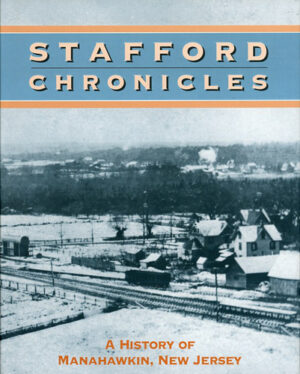 Stafford Chronicles—A History of Manahawkin, N.J.: This pictorial history explores a shore town whose coastal traditions and roots go back to before the Revolutionary War. Readers will relive the days of the Tuckerton and Long Beach Railroads: visit with world-renowned decoy carver Hurley Conklin; and discover the 3 “Docs”—Cramer, Hillard, and Lane. The book contains a remarkable collection of essays, reminiscences, memories, and photographs.
-
Out of stock
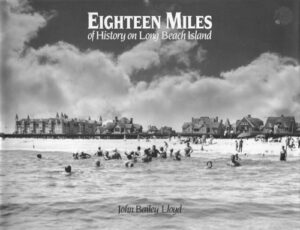 By John Bailey Lloyd: Rediscover Tucker’s Island and the lost resort of Sea Haven; ride the Tuckerton and Long Beach railroads to the new resort of Beach Haven and stroll along its elegant boardwalk. Experience the fear of the famous 1916 shark attacks, visit the early gunning and yacht clubs. Read about whalers, watch the pound fisherman haul in boats brimming with fish caught just off the beach. This is the book that resurrected Island history.
-
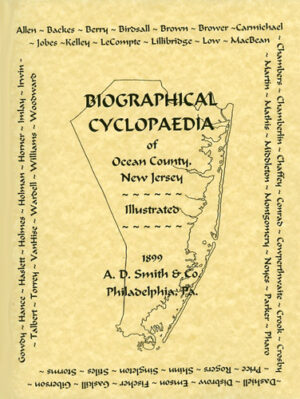 By William H. Fischer, owner and publisher of the New Jersey Courier: This is a reprint of the original work which relates history as written by those who lived just 34 years after the Civil War and 116 years after the American Revolution. Included are more than sixty biographies of men (no women!) who were prominent in the county and descriptions of some communities.
-
 Compiled by E. P. Groot: The material in this book contains the contents of thirty-nine reports from the U.S. Life-Saving Service from 1876 to 1914. Of particular interest are descriptions of the individual stations, their personnel, and their activities. There are narratives describing the services provided by crewmen. Another section is devoted entirely to accidents. Find out about rescues and/or salvage of a particular ship and/or its crew and passengers as well as the many miscellaneous services that were provided.
-
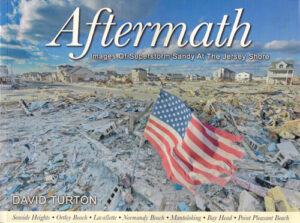 By David Turton: The book covers the Ocean County barrier island towns of Seaside Heights, Ortley Beach, Lavallette, Normandy Beach, Mantoloking, Bay Head, and Point Pleasant Beach. The original, never before published photographs preserve not only the aftereffects of the Superstorm in this region but also describe David Turton’s personal journey through his beloved and now destroyed Jersey Shore. With more than 200 historic photographs, this important book records and preserves what happened to this region for future generations lest they forget the unfathomable power of the sea.
-
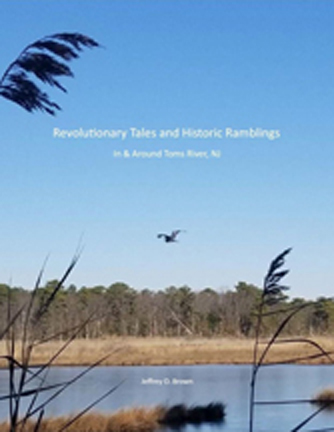 Jeffrey Otis Brown is an Ocean County native and descendant of some of the earliest European settlers. He took an interest in his ancestors at a young age and through many years of research developed a deep passion for local history. Jeff has produced numerous genealogical works and historical sketches over the years. In this book you will learn about the rich history of Ocean County and the many interesting characters and sites that contributed to the County's legacy.
-
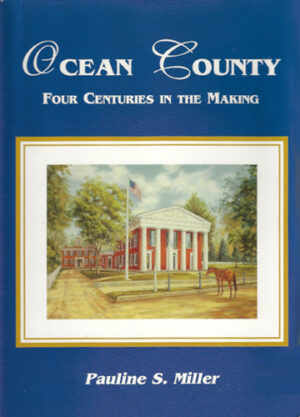 By Pauline S. Miller: The four centuries of Ocean County are divided into three distinct sections that help define the time periods of growth. Part I: 1614-1850 covers those years of the Native American occupation, activities of the whalers, smugglers, and privateers; the ventures of the early settlers building their sawmills and homes in the pines and along the streams; the beginning of the pinelands industries, and the War of 1812. Part II: 1850-1950 reveals, for the first time, the founding father of Ocean County, Joel Haywood. It records the development of the county government, the creation of townships and boroughs, the expansion of the barrier island, the impact of the railroad era, the Civil War, World War I, the Ku Klux Klan, the Great Depression, and World War II. Part III: 1950-2000 deals with the county’s renaissance, growth of county government, schools, churches, and higher education, chicken farms giving way to housing developments, the state’s first nuclear power plant, the impact of big industries located in the county, the population surge, medical care and the effect of local women on the county’s political scene. An extensive index is part of this book.
Call Us Today! (732) 341-1880