-
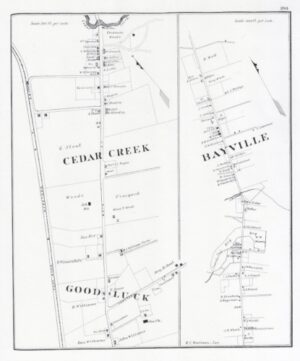 1878 Communities of Ocean County from Atlas of Historical and Biographical New Jersey Coast by Woolman and Rose
 -
 By Ellen V. Fayer, Stan Fayer, & Walter A. Brower: Chatsworth, a small village in the New Jersey Pinelands, was known as Shamong until 1901. The community traces its beginning to the early 1700s, when settlers mined and forged bog iron to make cannonballs for the American Revolution, and farming was the primary source of income. In the mid-1800s, Chatsworth was a popular stopping point for stagecoach travelers to the Jersey Shore. The arrival of the railroad removed the remoteness of the village and captured the attention of people throughout the country. Prince Mario Ruspoli de Poggio-Suasa, an attaché of the Italian embassy in Washington, D.C., built an elegant villa at the lake. Soon after, the exquisite Chatsworth Country Club was built and counted among its membership a sitting vice president of the United States. It was during this period that Chatsworth played a dominant role in the development of the cranberry industry and began attracting hunters and others seeking recreational opportunities in the Pinelands. The cultivated blueberry industry also had its beginnings in Chatsworth in the 1930s.
 -
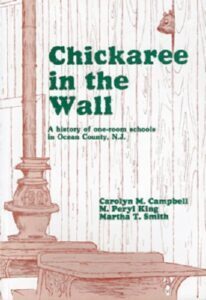 By Carolyn M. Campbell, M. Peryl King, Martha T. Smith: The story of one-room schools moves from the mid 1800’s, when schools were in such disrepair that chickarees (squirrels) nested in the walls, to 1943 when the last one-room school was closed. Over 100 photos and maps, interviews with teachers and pupils, and quotations from the time emphasize the changes that have occurred in education during this century. Specific information about the county’s 76 one-room and 8 multiroom schools is given in the directory.
 -
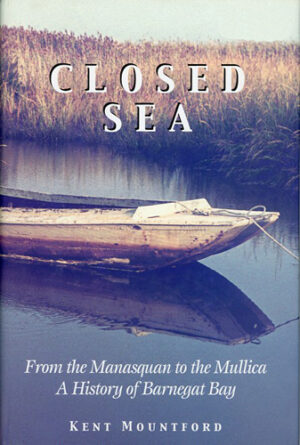 By Kent Mountford : A history of New Jersey's Barnegat Bay region, Closed Sea weaves a colorful tale of whalers and pirates, Revolutionary patriots and loyalists, fishermen and loggers, iron masters and lifesaving crews, sportsmen and holiday makers. Filled with historical anecdote and keen observations of sea and shore, it is a compelling portrait of Barnegat Bay and its history. With a naturalist's eye and a sailor's experience, environmental historian Kent Mountford describes the history of the Bay and its people, from the Lenni Lenape to 20th century summer vacationers. He opens our eyes to the Shore's past, its shifting inlets, disappearing islands, dangerous tides and shoals. Moving inland, he documents the Pinelands environment and the industries it has supported over the centuries. Closed Sea tells the remarkable history of a fascinating place, a place of great beauty, danger and opportunity, a place that has cast its spell on generations of people.
 -
 Compiled by Carolyn M. Campbell: Two books containing five hundred individual funeral records for the period 1900 to 1918 were kept by David R. Anderson, undertaker, in Bayville, New Jersey. The complete records of sixteen of the five hundred who died are included to illustrate the kinds of information contained in each report. The records of the remaining five hundred deaths have been abbreviated for this publication and only the most pertinent information has been included. This a great genealogical resource for family research.
 -
 By Adelia Goble: This is a 2000 Ocean County Historical Society publication. If you have ever wondered what the life of a servant was like, this book will answer all of your questions. The book contains Adelia Goble’s personal writing about her life as a maid for Presbyterian Minister Rev. Spencer C. Dickson and his family from 1902 to 1908. Some of her diary’s entries are harsh, but the reader will come away with a better sense of the life of a servant in the beginning of the twentieth century.
 -
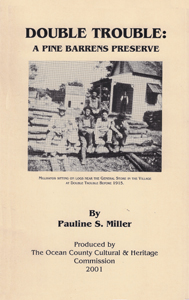 By Pauline S. Miller: This booklet about the historic village of Double Trouble is a brief informational guide to take you through the long history of a pinelands industrial village nestled in the Pine Barrens of New Jersey. This “gem” of a historic site and its unique botanical plants of native New Jersey flora is one of the best kept secrets in the state. Its isolation from any nearby town or village has kept this site in pristine native condition, except for the natural deterioration of buildings in the village. The old saw mill once again hums as it saws local cedar and cedar shingles. The cranberry sorting house and tiny one room school along with other building have been stabilized. Double Trouble State Park is located within the New Jersey Coastal Heritage Trail.
 -
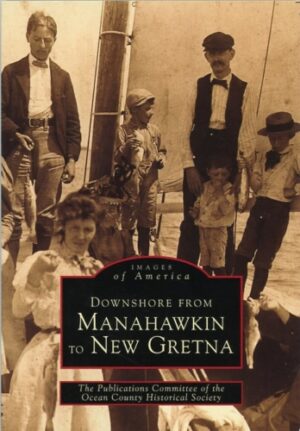 By Ocean County Historical Society: A unique area exists along the western shores of Little Egg Harbor Bay and Great Bay between the communities of Manahawkin and New Gretna. These towns, located in the southern coastal section of New Jersey have a rich and charming history. From the beginning, the region was rich in natural resources, providing fish, clams, oysters, lumber, and cranberries for early settlers. The communities also enjoyed a temperate climate and navigable harbors, leading to the development of shipbuilding and trading as early industries. Because of the isolation of the Tuckerton area from the larger population centers of the state, its small-town flavor and way of life were allowed to endure. Many of the occupations of the settlers of the early 1700s survive to this day. Downshore from Manahawkin to New Gretna seeks to capture the charm of the little towns in this region, the character of the people who settled here, many of whose families still remain, and the lifestyle lived in harmony with this pastoral environment during the nineteenth and early twentieth centuries.
 -
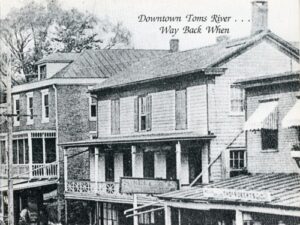 Compiled by William A. King, Jr. and Adolph Wooley: Late 19th century and early 20th century downtown Toms River is depicted in 56 pages of many photos never before published. Photos include Washington Street, Water Street, Main Street and various other locations.
 -
 Locally produced recreation of the Toms River Blockhouse Battle of March 1782 narrated by former OCHS President Robert L. Garthwaite.
 -
 By William S. Dewey: Discover a wealth of information about the Pineland communities of Manchester, Whiting, and Lakehurst. A resident of the areas, Mr. Dewey has done extensive research into the development of industries in the area and the people who brought those industries to life. Included are a description of railroad development, two railroad maps, and two early railroad timetables.
 -
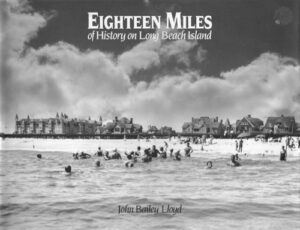 By John Bailey Lloyd: Rediscover Tucker’s Island and the lost resort of Sea Haven; ride the Tuckerton and Long Beach railroads to the new resort of Beach Haven and stroll along its elegant boardwalk. Experience the fear of the famous 1916 shark attacks, visit the early gunning and yacht clubs. Read about whalers, watch the pound fisherman haul in boats brimming with fish caught just off the beach. This is the book that resurrected Island history.
Call Us Today! (732) 341-1880