-
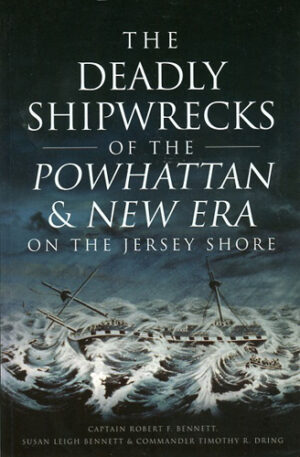 By Captain Robert Bennett, Susan Leigh Bennett, & Commander Timothy R. Dring: In 1854, two horrendous shipwrecks took place off the New Jersey coast. The Powhattan and the New Era were both American-flag sailing packet ships carrying hopeful European immigrants to new lives in America. The ships ran aground on the offshore sandbars along the shoreline between Sandy Hook and Little Egg Inlet, claiming the lives of many passengers and crew. The staggering casualties finally prompted calls from the public and politicians for reforms to the system for rescues that the federal government had in place. The tragedies ultimately resulted in changes that prevented countless similar deaths. This unique and gripping account offers minute-by-minute details of the deadly wrecks, their causes and their final outcomes.
 -
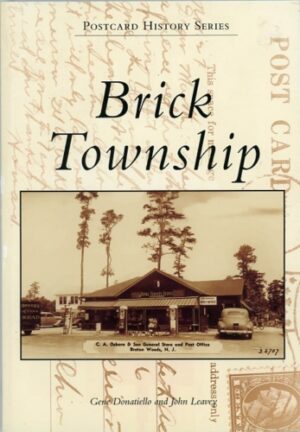 By Gene Donatiello & John Leavey: In 1850, the New Jersey Legislature created Ocean County and Brick Township, naming it for Joseph W. Brick, the industrious owner of Bergen Iron Works. At the beginning of the 20th century, Brick Township was a rural community. Up until the 1920s, postcards of the township were primarily architectural images. Brick Township contains updated images of familiar names and places: Emma Havens Young, for whom an elementary school has been named; the very popular Red Lion Tavern, later called the Red Lion Inn; the progression of four bridges crossing Barnegat Bay to the peninsula area of Brick Township; and Traders Cove Marina as it looked in the 1950s when it was called Pleasure Cove Marina. There are postcards from summer camps, such as Camp NEJECHO and Metedeconk Summer Camp, and from summer resorts, such as Breton Woods, Riviera Beach, and Normandy Beach.
 -
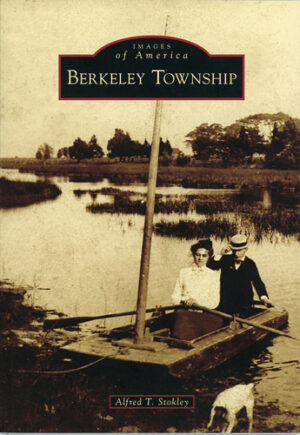 By Alfred T. Stokley: Incorporated in 1875, Berkeley Township was settled along the Barnegat Bay shoreline, dotted with homesteads and fishermen's shanties. The Central Railroad first brought summer tourists to the area for recreation in the late 19th century, and in the years to follow, many new attractions were established, including B.W. Sangor's lavish Royal Pines Hotel. Edward Crabbe established the village of Double Trouble in 1903 for lumber and cranberry production, and Sutton's Pavilion became Bayville's first fishing camp in 1905. Also in this era, George C. Crossly mined clay for terra-cotta products, using a narrow-gauge spur of the Pennsylvania Railroad. In 1928, Rudy Korman opened his restaurant and picnic grove, soon known as Korman's Corner. By the 1930s, Clover Cream Top Dairy was the largest in Bayville. In 1932, Dino the Dinosaur was built for a Sinclair Service Station and became a landmark. Historic Route 9 was used heavily through the middle of the 20th century, featuring roadside stands and tourist cabins. Berkeley Township showcases these landmarks and the rich recreational and commercial history of this Ocean County community.
 -
 Locally produced recreation of the Toms River Blockhouse Battle of March 1782 narrated by former OCHS President Robert L. Garthwaite.
 -
Out of stock
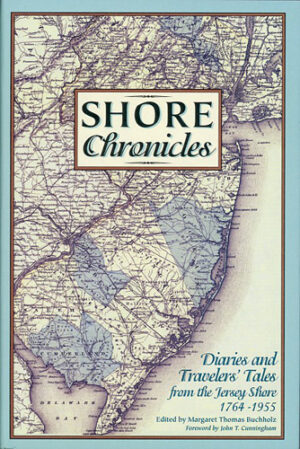 Edited by Margaret Thomas Bucholz: Covering the period from 1764 to 1955, this book contains a collection of personal accounts of visits to the Jersey Shore. Included are writings by John J. Audubon, Walt Whitman, Robert Louis Stevenson, and Arthur Conan Doyle.
 -
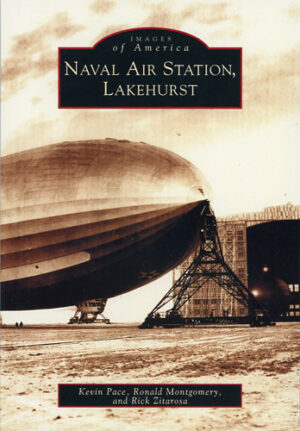 By Kevin Pace, Ronald Montgomery, & Rick Zitarosa: The naval air station in Lakehurst, New Jersey, has a rich and bittersweet history steeped in success and tainted with tragedy. The area evolved from a gas warfare proving ground during World War I to the focal point of lighter-than-air operations in the United States. Labeled one of the world's first international airports, Lakehurst quickly became a hub of lighter-than-air activity. Although the dirigibles are no longer active, it remains crucial in the operational support of naval aviation as the Naval Air Engineering Station, Lakehurst. Rare photographs and material from the archives of the Navy Lakehurst Historical Society chronicle more than eighty-five years of base activity. Offering a unique glimpse of the people, the machines, and the background against which it has all unfolded, this volume examines Lakehurst's vital contributions to the development of aviation and national defense. Naval Air Station, Lakehurst explores the construction of the giant hangars and support buildings for the airships of the U.S. Navy and the glory days of the German Zeppelin visits. The blimp programs from World War II through 1962 and the various schools and tenant commands turned the air station into a key component of naval aviation.
 -
 By Pauline S. Miller: This booklet about the historic village of Double Trouble is a brief informational guide to take you through the long history of a pinelands industrial village nestled in the Pine Barrens of New Jersey. This “gem” of a historic site and its unique botanical plants of native New Jersey flora is one of the best kept secrets in the state. Its isolation from any nearby town or village has kept this site in pristine native condition, except for the natural deterioration of buildings in the village. The old saw mill once again hums as it saws local cedar and cedar shingles. The cranberry sorting house and tiny one room school along with other building have been stabilized. Double Trouble State Park is located within the New Jersey Coastal Heritage Trail.
 -
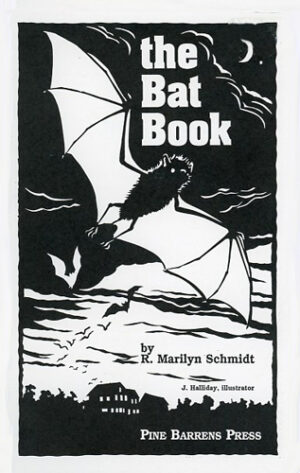 By R. Marilyn Schmidt: Find out about the types of bats that live in the northeastern United States. The book tells how to solve bat problems, as well as how to remove them from inside a house and bat proof a home. Want to cut down on insects? Installing a bat house may be a safe and non-chemical way to get results. The author has included a list of sources to locate more information about bats.
 -
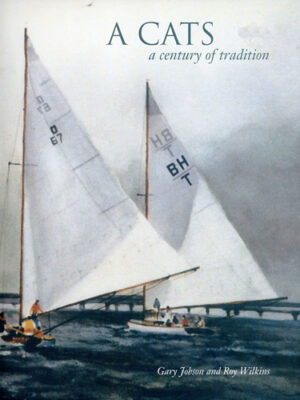 By Gary Jobson and Roy Wilkins: The mighty A Cats have sailed and raced on Barnegat Bay since the 1920s. These sturdy boats link the generations. Along with the tales of 40 sailors, over 200 photographs and illustrations showcase the past and the present.
 -
 Compiled by Elizabeth Ann Grant: Information in this booklet stems from materials about the Soper family in Ocean County, New Jersey collected by James Wilson Soper before 1904. A genealogy written by the Reverend Clarence Woodmansee of Barnegat, New Jersey about the Soper genealogy as it related to the Woodmansee family is the basis for this compilation. The Reverend Woodmansee was known throughout Ocean County, New Jersey as the “Pastor of the Pines”. Other research, documentation and statistics are included.
 -
Out of stock
 Compiled by Elizabeth Ann Grant: These marriages, ranging from approximately the 1740s to the 1960s, were compiled from many different sources. The source for each marriage is listed in the book. The resources used are available at the Ocean County Historical Society Research Center. The purpose of this compilation was to gather all these many resources into one long date base that would enable the researcher to search with ease for any ancestor’s marriage record.
 -
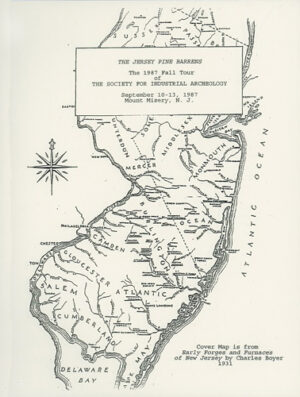 The 1987 Fall Tour of The Society For Industrial Archeology: The booklet provides an overview of the various industries which formed the culture of South Jersey. The first area covered of the southern part of New Jersey is the coastal area; fishing, oystering, and boat building. This includes the Atlantic shore and the Delaware Bay, which contain vast reaches of tidal marshes. The second area of investigation is that part of the outer coastal plain known as the Pine Barrens. A tract of at least 650,00 acres which supplied the mill seats and raw materials for iron, paper, glass, blueberries, and cranberries. In addition, the people who followed the bay, who worked the iron plantations; and who in later years became known as “Pineys” are included. Learn about at least three generations of the William Richards family who helped to create much of South Jersey’s history.
Call Us Today! (732) 341-1880