-
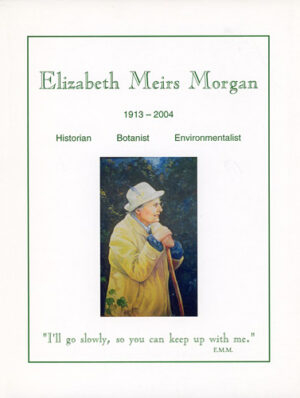 By Ocean County Historical Society: The Ocean County Historical Society is proud to present this collection of writings by and about Elizabeth Meirs Morgan. Within its pages you will find the story of a life dedicated to preserving the history and natural environment of Ocean County for future generations and to inform today’s population of the treasures that abound in Ocean County. Elizabeth wrote about the things she knew, the causes that she supported, topics that led her to further research—in essence, anything that interested her or that we (the reader and public) needed to know about.
 -
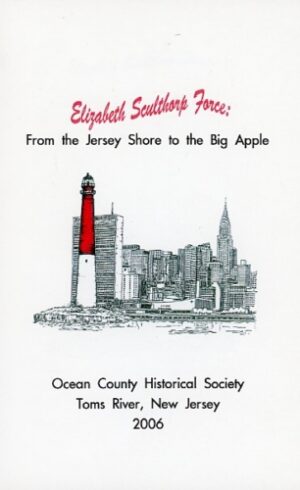 By Ocean County Historical Society: A compilation of facts and personal quotes and remembrances of Elizabeth Sculthorpe Force. She grew up in the house that is now Ocean County Historical Society’s residence. The home is listed on the National Register of Historic Places and the New Jersey Register of Historic Places.
 -
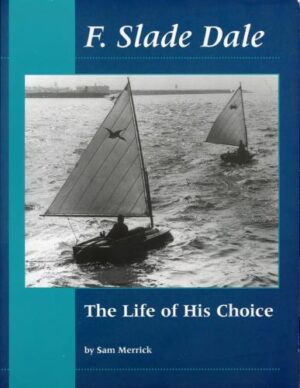 By Samuel Vaughn Merrick: A combination of Sam Merrick’s biography of F, Slade Dale and Dale’s own writings about his nautical exploits throughout his life. An unusual gentleman, Dale developed his love of boats in the waters of Ocean County.
 -
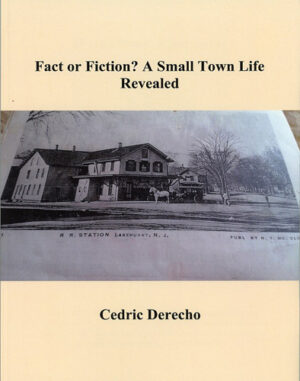 By Cedric Derecho: A companion book to A Small Town Life, the author separates the facts about William Foulks and his family from fiction. Included are over 80 Historical Photos from Lakehurst, New Jersey that trace William Foulks life.
 -
Out of stock
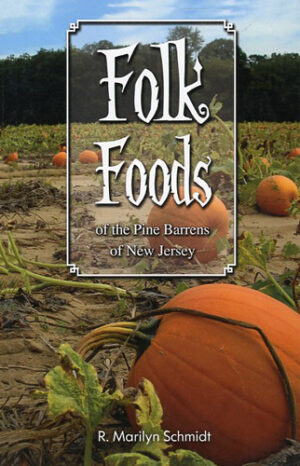 By R. Marilyn Schmidt: Because of their often perceived or actual isolated location, Pine Barrens folk grew much of their food, particularly fruits and vegetables. People of the pines knew how to live off the land. During the Great Depression, these residents suffered little hardship. Gardens supplied vegetables which were eaten fresh, dried or canned in contrast to today’s freezing. Root cellars, a rarity today, enabled folks to keep potatoes, cabbages, carrots, beets, squash, and other vegetables and fruits to provide food throughout the winter. Little food was purchased. Necessities such as sugar, molasses, salt, pepper, flour, and cornmeal were available at the local general store. Today many people in the pines continue the old traditions. Cakes are still baked from scratch, gardens are maintained and yes, some people still keep chickens. The traditions of yesteryear continue today. Recipes included here are historic and interesting dishes including products commonly available or locally grown. They are culled from old time literature, - magazines, newspapers, books - and friends both old and new. Many were handed down from generation to generation. Enjoy these dishes and have them become a part of your history, as well.
 -
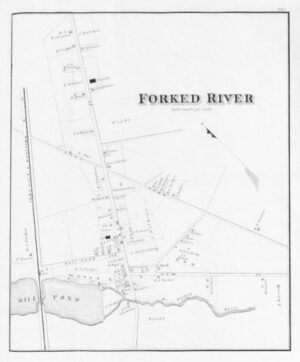 1878 Communities of Ocean County from Atlas of Historical and Biographical New Jersey Coast by Woolman and Rose
 -
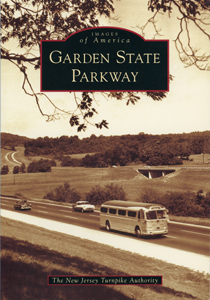 By The New Jersey Turnpike Authority: The Garden State Parkway has transformed the lives of New Jersey residents since opening in 1954. Spanning 173 miles from Cape May to the New York State line, it has fostered tourism to the Jersey Shore and given commuters an easier way to get to work. Gov. Alfred E. Driscoll had envisioned the impact a new highway could have on the state, and a large team of planners, engineers, and contractors made it happen. In 1952, the legislature created the New Jersey Highway Authority to ensure the funding and completion of the $330-million parkway and to self-sufficiently operate the roadway through toll revenue. Garden State Parkway shows how this iconic roadway gained its place in history and continues to combine safe transportation in a parklike setting with the scenic beauty of New Jersey.
 -
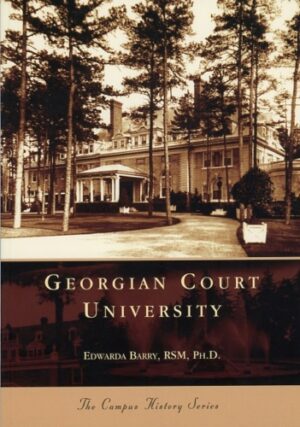 By Edwarda Barry, RSM, Ph.D.: Georgian Court University is a pictorial history of the university from its founding in 1908 by the Sisters of Mercy under the title College of Mount St. Mary. Originally located in Plainfield, the school relocated in 1924 to a former country estate of millionaire George Jay Gould in Lakewood. Retaining the estate title at the request of the Gould family, the Sisters of Mercy renamed the school Georgian Court College. With continuous growth of enrollment, programs, technology, and personnel, the college was designated Georgian Court University by the state in 2004. This centennial book, using the mission of the university as its theme, captures the traditional commitments of the university: a comprehensive liberal arts program in the Roman Catholic tradition; an environment conducive to the cultural, social, and spiritual growth of the entire university community; the core values of justice, respect, integrity, compassion, and service; and a special concern for women.
 -
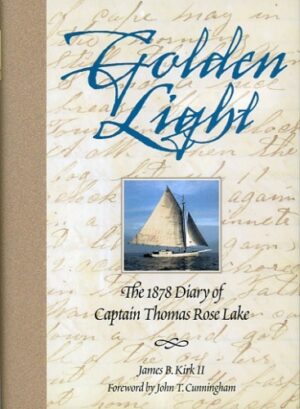 Edited by James B. Kirk II: A vanished world and an example of a “good life” lived through a single year of a Jersey Shore sea captain is revealed in this fascinating interpreted account.
 -
 Compiled by Elizabeth Ann Grant: The church and burying ground are located in Lacey Township, Ocean County, New Jersey on the east side of Route 9 in the Murray Grove section of Lanoka Harbor, just north of Forked River. Many of the old settlers in and around Cedar Creek are buried here. The book contains an alphabetical listing of the stones in the cemetery. The list was compiled in June 1970 and includes the older section of the cemetery. There is background information about Good Luck (Potter’s) Churchyard and Cemetery, excerpts from Rose Grover Garthwaite’s Good Luck Settlement, and excerpts from Kobbe’s Jersey Coast and Pines, pages 70-71 (Original printing 1889 Gustave Kobbe).
 -
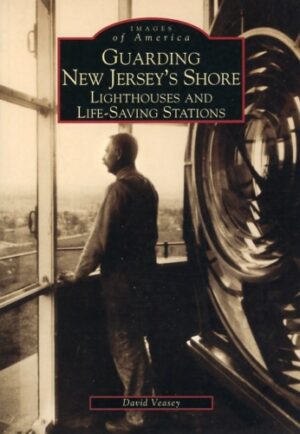 By David Veasey: From the seventeenth to the twentieth century, New Jersey's low-lying, sandy coast has been the site of thousands of shipwrecks as ships bound for New York City or Philadelphia foundered on its offshore shoals. As coastal and international trade dramatically increased after the War of 1812, the federal government was forced to increase safety aids to mariners. To ensure their safe passage, a series of lighthouses was built and the U.S. Life-Saving Service was created. More than two centuries of the history of New Jersey's treacherous coast are preserved in Guarding New Jersey's Shore: Lighthouses and Life-Saving Stations. Gathered from a wide array of sources, more than 200 historic photographs and fascinating, documented text combine to create the only illustrated history of the state's thirty-eight lighthouses and forty-one life-saving stations. Sandy Hook, built in 1764, is the nation's oldest operating lighthouse. Navesink's Twin Lights was the first lighthouse to use electricity and was the home of Marconi's early radio experiments. From the Statue of Liberty in New York Harbor, which once served as a lighthouse, to Cape May Point, and up the Delaware Bay and River, the fascinating story of protecting mariners from perils "Down the Shore" is presented and preserved in Guarding New Jersey's Shore: Lighthouses and Life-Saving Stations.
 -
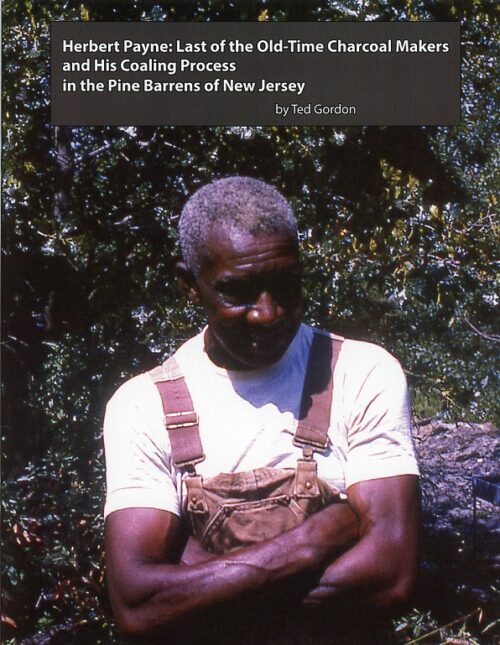 By Ted Gordon: Charcoal making was a major industry in the Pine Barrens. Herbert Payne was one of the last Charcoal Makers in the area. Learn about Mr. Payne as well as the history of this amazing industry through photos and text.
Call Us Today! (732) 341-1880