-
 By Margaret Thomas Buchholz: During World War I, before women had the right to vote in America, a young Josephine Lehman Thomas answered the patriotic call from Washington, D.C. and became one of the pioneering ''government girls”. leaving her home in Michigan for adventure in the nation's capital. Through explored diaries and letters, her daughter, Margaret Thomas Buchholz, gives us an amazing chronicle of a trailblazing woman. Josephine worked for legendary journalist Lowell Thomas and traveled the world until the Great Depression dropped her and her new family, struggling to get by, on an island off the coast of New Jersey. This fascinating personal history reveals the optimism of the early 20th Century, the emerging professional woman, the thrill of travel and a sense of success, followed by the crash of the economy, losing everything, and ultimately happiness in a simple life by the sea.
 -
 By Cedric Derecho and Erik Juan: The village of Manchester began life as a railroad town founded by William Torrey. By the early 20th century, the village had become the borough of Lakehurst and the surrounding community broke off into what is currently Manchester Township, consisting of the areas of Whiting, Ridgeway, and Pine Lake.
 -
 By Scott M. Kozelnik: Lakewood's location close to the Atlantic Ocean via the Metedeconk River sparked an early rise in enterprise in the vicinity. Some of the earliest businesses in Lakewood included a lumber mill, bog iron mining operations, and a blast iron furnace. During the latter half of the nineteenth and into the early twentieth century, Lakewood served as one of the premier winter resorts in the United States. The hotel industry in Lakewood was comprised of several elaborate architectural masterpieces, some of which were believed to be the grandest in the world at the time. Lakewood's reputation as a "winter sanitarium" attracted the rich and famous from far and wide. Lakewood is an in-depth pictorial history of the metamorphosis from sleepy mill town, to spectacular resort and entertainment haven, to a bustling industrial center. Lakewood is a journey to places that have disappeared and an introduction to residents and visitors who have long gone. John D. Rockefeller, whose estate later became Ocean County Park, and George Jay Gould, who resided at a two-hundred-acre estate called Georgian Court, are just two of the prominent townspeople of Lakewood. The heroism of firefighters during the 1967 Laurel in the Pines fire, Jimmy Foxx and the 1934 Philadelphia Athletics in action at Princeton Avenue, and a look back at the early days of the annual Ocean County Fair give the reader an awe-inspiring view of Lakewood's past.
 -
 1878 Communities of Ocean County from Atlas of Historical and Biographical New Jersey Coast by Woolman and Rose
 -
 By Karen F. Rilley, Andrew Coulis, & Peter H. Stemmer: Our country's first national reserve, the Pine Barrens, harbors a wonderful secret unknown to most outsiders. This 1.1-million-acre treasure trove of pitch pine and sugar sand is home to many rare species and almost 17 trillion gallons of the purest water on earth. It was in this forest that men like Leland Champion logged trees and built sawmills. It was along these waterways that craftsmen like Gary Giberson made prized decoys. And it was in these woods that Stanley Switlik built a tower from which Amelia Earhart jumped, testing his parachute so it could be used in World War II. These woods yielded inventors whose products we enjoy today. They include cultivated blueberries, cranberry sauce, and Welch's grape juice. It was here that Bob Buchanan reached for the mooring lines as the Hindenburg ended its final, fatal voyage. It was here in Buzby's General Store that John McPhee penned his classic book.
 -
 By Steven M. Gillon: The exhilarating, inspiring story of Len Lomell, an Army Ranger who, on D-Day, almost single-handedly knocked out the big German guns before they could fire on the American invasion force, and whose later exploits spanned the most dramatic battles of World War II. In this stirring, action-packed book, Steven Gillon details the incredibly heroic actions on D-Day—and throughout World War II—that ultimately won Len Lomell the Distinguished Service Cross, a Silver Star, and a Bronze Star. Lomell was later praised by Stephen Ambrose as the single most important person in the success of D-Day after General Eisenhower.
 -
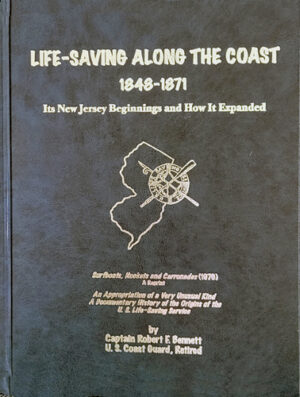 By Captain Robert F. Bennett—U.S. Coast Guard, Retired: This book contains two works. The first is a reprint of Surfboats, Rockets, and Carronades. It was originally published by the United States Coast Guard in 1976 and was long out of print. The second part is a researched chronological presentation of official correspondence and documents relating to the funding and creation of the early life-saving stations. Information is included about the tools and equipment provided by the federal government as well as the early station-keepers. Also referenced are some of the notable shipwrecks of the period from 1848 to 1871.
 -
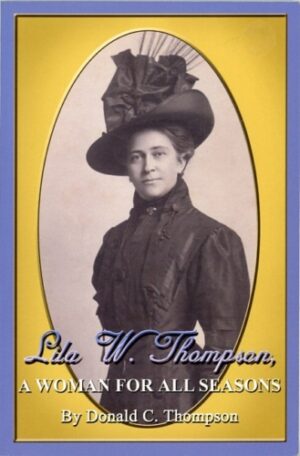 By Donald Thompson: A New Jersey farm girl, one of sixteen children, became known as 'The Mother of the Legislature." Follow her career in politics, election campaigns, service in the New Jersey Legislature and beyond, while nurturing her family and involving herself in lodges, church, and community. Lila was a ground breaker. She celebrated many firsts at a time when women had just begun to exercise their right to vote. Yet her life full of accolades and tributes ended in tragedy. Although his grandmother died before he was born, Donald Thompson always felt her powerful legacy and spirit to be guiding forces in his life. In researching material for this book, he realized he did not have to create a famous grandmother, as the public records and living witnesses proved she was all that and more. Anyone interested in women's leadership in the early days of women's suffrage will find this book filled with down to earth details.
 -
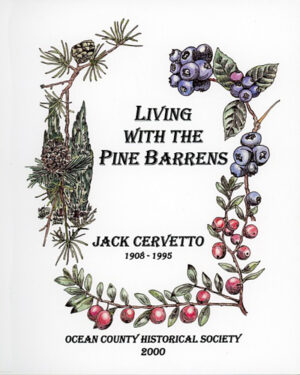 By Jack Cervetto—1908-1995: Jack Cervetto was not unique to having made a living in the pine barrens of New Jersey. What distinguishes him from hundreds of others is the fact that he reflected on his life in his later years and recorded his memories. He set goals for himself and his community, provided the leadership that was needed to accomplish a desired end, and was well-liked and respected by his associates, whether leading a deer hunt or debating an issue at a meeting of the Stafford Township Board of Education.
 -
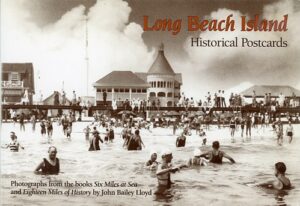 By John Bailey Lloyd: The companion books by John Bailey Lloyd—Eighteen Miles of History, Six Miles At Sea, and Two Centuries of History—contain hundreds of photographs, illustrations and maps of the Island’s past. Here in large postcards are selections of 22 of the most compelling photographs from those books. Within these images you will find a unique shore resort that is wider, more innocent, less developed and perhaps more romantic—the perfect Long Beach Island of collective memory.
 -
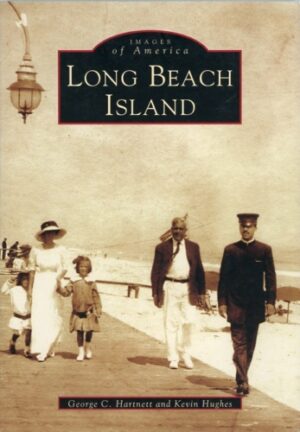 By George C. Hartnett & Kevin Hughes: Long Beach Island stretches for eighteen miles alongside the southern New Jersey mainland. A barrier island, it has a vivid history that includes wild game and bountiful fish, early whalers and tragic shipwrecks, paddle-wheel steamboats and grand hotels. With its rare and previously unpublished images, Long Beach Island portrays the unforgettable place that today is known for its white sandy beaches, fresh seafood, and bright red and white lighthouse. Shown are islanders engaged in pound fishing and salt hay harvesting, and, later, visitors crossing Barnegat Bay to the island resorts called Barnegat City and Beach Haven.
 -
 Edited by Margaret Thomas Buchholz: In this curated selection of great writing from "The Sandpaper", "The Beachcomber", and other publications, the shared experience that is LBI is presented for locals and visitors alike.
Call Us Today! (732) 341-1880