-
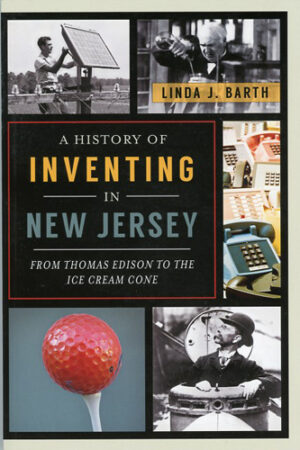 By Linda Barth: Many Americans are familiar with Thomas Edison's "invention factory" in Menlo Park, where he patented the phonograph, the light bulb and more than one thousand other items. New Jerseyans brought sound and music to movies and built the very first drive-in theater. In addition to the first cultivated blueberry, tasty treats like ice cream cones and M&Ms are also Jersey natives. Iconic aspects of American life, like the batting cage, catcher's mask and even professional baseball itself, started in New Jersey. Life would be a lot harder without the vacuum cleaner, plastic and Band-Aids, and many important advances in medicine and surgery were also developed here. Join author Linda Barth as she explores groundbreaking, useful, fun and even silly inventions and their New Jersey roots.
 -
 By Ellen V. Fayer, Stan Fayer, & Walter A. Brower: Chatsworth, a small village in the New Jersey Pinelands, was known as Shamong until 1901. The community traces its beginning to the early 1700s, when settlers mined and forged bog iron to make cannonballs for the American Revolution, and farming was the primary source of income. In the mid-1800s, Chatsworth was a popular stopping point for stagecoach travelers to the Jersey Shore. The arrival of the railroad removed the remoteness of the village and captured the attention of people throughout the country. Prince Mario Ruspoli de Poggio-Suasa, an attaché of the Italian embassy in Washington, D.C., built an elegant villa at the lake. Soon after, the exquisite Chatsworth Country Club was built and counted among its membership a sitting vice president of the United States. It was during this period that Chatsworth played a dominant role in the development of the cranberry industry and began attracting hunters and others seeking recreational opportunities in the Pinelands. The cultivated blueberry industry also had its beginnings in Chatsworth in the 1930s.
 -
Out of stock
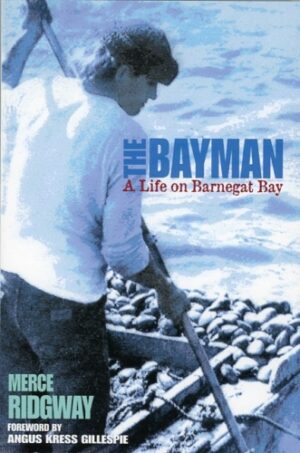 By Merce Ridgway: A native son of Barnegat Bay shares an insider’s chronicle of a culture that has all but disappeared. It is a story that celebrates the Shore and the Pine Barrens with music, folklore, philosophy and a genuine and deeply felt sensitivity.
 -
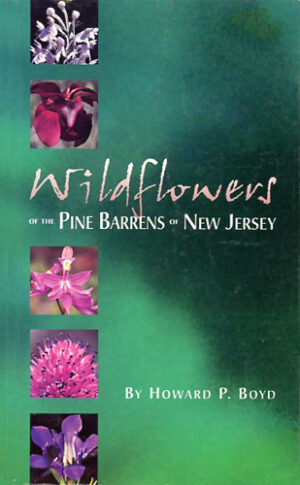 By Howard Boyd: A beautiful book containing color photographs of the most commonly seen wild flowers in the Pine Barrens. You will develop an ability to identify many of the unique flora of this unique area of Newl Jersey.
 -
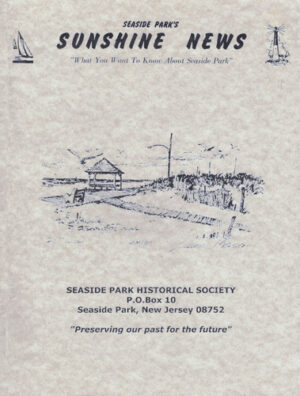 By Seaside Park Historical Society: Travel back in time to 1948 and enjoy a glimpse at Seaside Park at that time. This book is a compilation of Seaside Park’s Sunshine News, the local newspaper. You’ll read the articles about the events that happened during 1948. Discover what was making news in this local seaside town. The business advertisements are a treat to explore.
 -
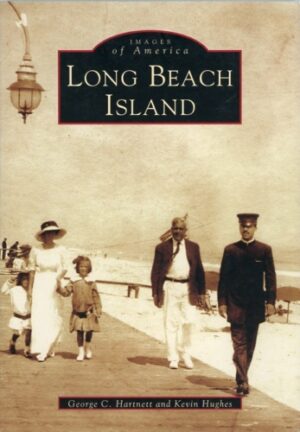 By George C. Hartnett & Kevin Hughes: Long Beach Island stretches for eighteen miles alongside the southern New Jersey mainland. A barrier island, it has a vivid history that includes wild game and bountiful fish, early whalers and tragic shipwrecks, paddle-wheel steamboats and grand hotels. With its rare and previously unpublished images, Long Beach Island portrays the unforgettable place that today is known for its white sandy beaches, fresh seafood, and bright red and white lighthouse. Shown are islanders engaged in pound fishing and salt hay harvesting, and, later, visitors crossing Barnegat Bay to the island resorts called Barnegat City and Beach Haven.
 -
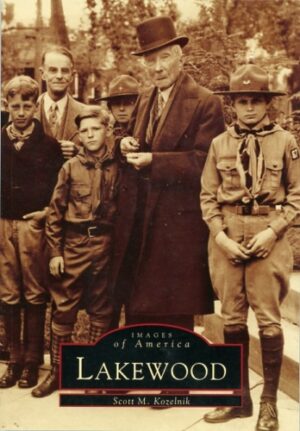 By Scott M. Kozelnik: Lakewood's location close to the Atlantic Ocean via the Metedeconk River sparked an early rise in enterprise in the vicinity. Some of the earliest businesses in Lakewood included a lumber mill, bog iron mining operations, and a blast iron furnace. During the latter half of the nineteenth and into the early twentieth century, Lakewood served as one of the premier winter resorts in the United States. The hotel industry in Lakewood was comprised of several elaborate architectural masterpieces, some of which were believed to be the grandest in the world at the time. Lakewood's reputation as a "winter sanitarium" attracted the rich and famous from far and wide. Lakewood is an in-depth pictorial history of the metamorphosis from sleepy mill town, to spectacular resort and entertainment haven, to a bustling industrial center. Lakewood is a journey to places that have disappeared and an introduction to residents and visitors who have long gone. John D. Rockefeller, whose estate later became Ocean County Park, and George Jay Gould, who resided at a two-hundred-acre estate called Georgian Court, are just two of the prominent townspeople of Lakewood. The heroism of firefighters during the 1967 Laurel in the Pines fire, Jimmy Foxx and the 1934 Philadelphia Athletics in action at Princeton Avenue, and a look back at the early days of the annual Ocean County Fair give the reader an awe-inspiring view of Lakewood's past.
 -
 1616 New Jersey Hendrick’s Map This is an early Dutch map of the Jersey Coast and reflects the first exploration of Barnegat Bay. It shows early Indian settlements, the rivers feeding into the bay and locations like Little Egg Harbor, the Barnegat Inlet, and Sandy Hook. These locations, as we know them today, were recorded by Hendrick’s over 400 years ago 24" x 36"
 -
 By Louise Ann Barton & Donna Lee Sharp Albertson: Join the authors for an old-fashioned Christmas in the Pine Barrens as this book takes you to the famous Albertson’s Farm for Christmas Dinner. Try you hand at these authentic Piney Signature Recipes for your own table. Lovers of poetry will enjoy reading the Piney Poems and those who enjoy tall tales will not be disappointed.
 -
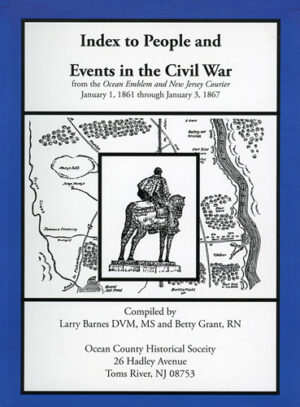 From the Ocean Emblem and New Jersey Courier January 1, 1861 thru January 3, 1867 Compiled by Larry Barnes DVM, MS & Betty Grant, RN: This is an alphabetical index to people and events in the Civil War. The people and events reference Ocean, Monmouth, and Burlington County residents found in local newspapers on file at Ocean County Historical Society Research Center.
 -
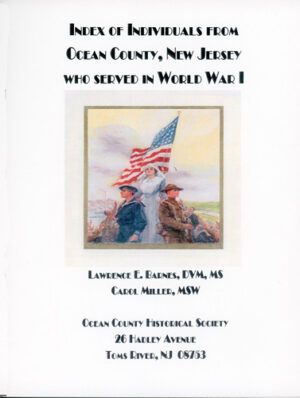 Indexed by Lawrence E. Barnes, DVM, MS & Carol Miller, MSW: This index is divided into four sections. Section I contains entries from the New Jersey Courier, January 1917 to December 26, 1919. Section II contains entries from Ocean County Leader and The Beacon, Point Pleasant, New Jersey, January 4, 1918 to December 20, 1918. Section III is an Appendix of Personal Photographs published in Ocean County Leader and The Beacon on December 20, 1918. Section IV is an Index Code: Military Branch or Notation, and Index Code for Towns of Ocean County.
 -
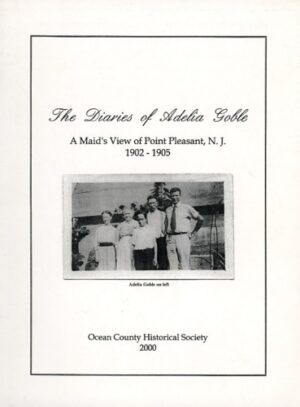 By Adelia Goble: This is a 2000 Ocean County Historical Society publication. If you have ever wondered what the life of a servant was like, this book will answer all of your questions. The book contains Adelia Goble’s personal writing about her life as a maid for Presbyterian Minister Rev. Spencer C. Dickson and his family from 1902 to 1908. Some of her diary’s entries are harsh, but the reader will come away with a better sense of the life of a servant in the beginning of the twentieth century.
Call Us Today! (732) 341-1880