-
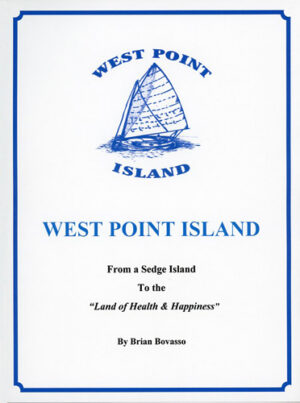 By Brian Bovasso: Once a mosquito-infested marshland lying fifty-five feet west of the Lavallette mainland, West Point Island is now one of the most desirable locations on the Jersey Shore. Marketing the island is a realtor’s delight. You can own “your own piece of paradise”, in this “exclusive West Point Island Beach community”, enjoying “breathtaking views of Barnegat Bay”, in a “tranquil Bayfront setting”. The purpose of the book is to describe the people and events that made West Point Island’s history so different from that of its neighboring sedge islands.
 -
 By Samuel Vaughn Merrick: A combination of Sam Merrick’s biography of F, Slade Dale and Dale’s own writings about his nautical exploits throughout his life. An unusual gentleman, Dale developed his love of boats in the waters of Ocean County.
 -
 By Ronald Edward Negra: Agnes Joan Negra played a role during World War II that helped families to learn the fate of their relatives missing in action. Read the numerous post cards and letters that Mrs. Negra received from numerous loved ones.
 -
 Once Upon A Time in Tuckerton An Historical Novel By Kathleen Cortese: Preserving local history is the reason Kathleen Cortese gives for writing Once Upon a Time in Tuckerton. She was hooked on the town from the moment she heard “Tucker’s Island was the first summer resort at the Jersey Shore”, and that in the late eighteenth century, Tuckerton, New Jersey was one of the largest shipbuilding towns in America. It was not until she heard whispers surrounding the mysterious activities going on at the German-built wireless radio station on Hickory Island, that she decided to write about the era from 1912 to 1925 in Tuckerton’s rich history. This novel contains information and photos about actual locations and residents who lived in Tuckerton during the mysterious activities at the German-built wireless radio tower.
 -
 By Ocean County Historical Society: A unique area exists along the western shores of Little Egg Harbor Bay and Great Bay between the communities of Manahawkin and New Gretna. These towns, located in the southern coastal section of New Jersey have a rich and charming history. From the beginning, the region was rich in natural resources, providing fish, clams, oysters, lumber, and cranberries for early settlers. The communities also enjoyed a temperate climate and navigable harbors, leading to the development of shipbuilding and trading as early industries. Because of the isolation of the Tuckerton area from the larger population centers of the state, its small-town flavor and way of life were allowed to endure. Many of the occupations of the settlers of the early 1700s survive to this day. Downshore from Manahawkin to New Gretna seeks to capture the charm of the little towns in this region, the character of the people who settled here, many of whose families still remain, and the lifestyle lived in harmony with this pastoral environment during the nineteenth and early twentieth centuries.
 -
 By Eugene E. Donatiello & John G. Leavey: In 1850, when the New Jersey Legislature created Ocean County, they also created Brick Township among a region of virgin woodlands. The new township was named after its most prominent resident, Joseph W. Brick, the industrious and successful owner of Bergen Iron Works. As his and other local industries expanded, more and more people began to call Brick their home. Brick Township records these founders and the events and places that helped them shape our community. By 1920, parts of the new township had declared their independence, and the remaining parts of Brick began to evolve into a resort community. The summer tourists, farmers, home builders and shipbuilders, anglers, hunters, tavern and innkeepers, merchants, and others helped fashion Brick into an intimate but prosperous community. Brick continued to be a quiet, rural, resort area into the 1950s, when the Garden State Parkway opened, and residential and commercial development created dramatic growth in year-round residents, and it became a thriving suburban community. Brick Township captures scenes of life in Brick from 1850 to the 1950s and beyond; from the early European settlers to the suburbanites who now call Brick their home; from the thriving poultry industry to area resorts; from Joseph Brick to our friends and family who live among us today.
 -
 By Edwarda Barry, RSM, Ph.D.: Georgian Court University is a pictorial history of the university from its founding in 1908 by the Sisters of Mercy under the title College of Mount St. Mary. Originally located in Plainfield, the school relocated in 1924 to a former country estate of millionaire George Jay Gould in Lakewood. Retaining the estate title at the request of the Gould family, the Sisters of Mercy renamed the school Georgian Court College. With continuous growth of enrollment, programs, technology, and personnel, the college was designated Georgian Court University by the state in 2004. This centennial book, using the mission of the university as its theme, captures the traditional commitments of the university: a comprehensive liberal arts program in the Roman Catholic tradition; an environment conducive to the cultural, social, and spiritual growth of the entire university community; the core values of justice, respect, integrity, compassion, and service; and a special concern for women.
 -
 By Scott M. Kozelnik: Lakewood's location close to the Atlantic Ocean via the Metedeconk River sparked an early rise in enterprise in the vicinity. Some of the earliest businesses in Lakewood included a lumber mill, bog iron mining operations, and a blast iron furnace. During the latter half of the nineteenth and into the early twentieth century, Lakewood served as one of the premier winter resorts in the United States. The hotel industry in Lakewood was comprised of several elaborate architectural masterpieces, some of which were believed to be the grandest in the world at the time. Lakewood's reputation as a "winter sanitarium" attracted the rich and famous from far and wide. Lakewood is an in-depth pictorial history of the metamorphosis from sleepy mill town, to spectacular resort and entertainment haven, to a bustling industrial center. Lakewood is a journey to places that have disappeared and an introduction to residents and visitors who have long gone. John D. Rockefeller, whose estate later became Ocean County Park, and George Jay Gould, who resided at a two-hundred-acre estate called Georgian Court, are just two of the prominent townspeople of Lakewood. The heroism of firefighters during the 1967 Laurel in the Pines fire, Jimmy Foxx and the 1934 Philadelphia Athletics in action at Princeton Avenue, and a look back at the early days of the annual Ocean County Fair give the reader an awe-inspiring view of Lakewood's past.
 -
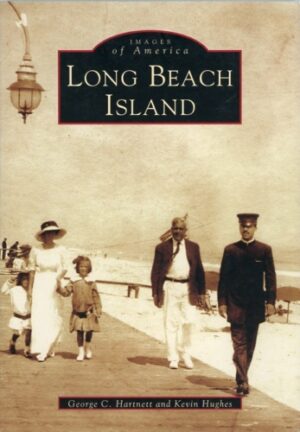 By George C. Hartnett & Kevin Hughes: Long Beach Island stretches for eighteen miles alongside the southern New Jersey mainland. A barrier island, it has a vivid history that includes wild game and bountiful fish, early whalers and tragic shipwrecks, paddle-wheel steamboats and grand hotels. With its rare and previously unpublished images, Long Beach Island portrays the unforgettable place that today is known for its white sandy beaches, fresh seafood, and bright red and white lighthouse. Shown are islanders engaged in pound fishing and salt hay harvesting, and, later, visitors crossing Barnegat Bay to the island resorts called Barnegat City and Beach Haven.
 -
 By Kevin Pace, Ronald Montgomery, & Rick Zitarosa: The naval air station in Lakehurst, New Jersey, has a rich and bittersweet history steeped in success and tainted with tragedy. The area evolved from a gas warfare proving ground during World War I to the focal point of lighter-than-air operations in the United States. Labeled one of the world's first international airports, Lakehurst quickly became a hub of lighter-than-air activity. Although the dirigibles are no longer active, it remains crucial in the operational support of naval aviation as the Naval Air Engineering Station, Lakehurst. Rare photographs and material from the archives of the Navy Lakehurst Historical Society chronicle more than eighty-five years of base activity. Offering a unique glimpse of the people, the machines, and the background against which it has all unfolded, this volume examines Lakehurst's vital contributions to the development of aviation and national defense. Naval Air Station, Lakehurst explores the construction of the giant hangars and support buildings for the airships of the U.S. Navy and the glory days of the German Zeppelin visits. The blimp programs from World War II through 1962 and the various schools and tenant commands turned the air station into a key component of naval aviation.
 -
 By Jerry A. Woolley: Point Pleasant and Point Pleasant Beach have always been two of New Jersey's most dynamic coastal communities. Visit the history and photographs of their pasts. Since the development of photography in the mid-nineteenth century, the camera has been used as a tool of both discovery and preservation. Photographs bring alive our image of the past, and can open a floodgate of memories and nostalgia or inspire curiosity and a sense of history. The scenic beauty and simple charm of the area remains undisturbed today, and it is easy to see why it has been a popular tourist destination for more than two centuries. The last one hundred years have also seen the formation and development of several important industries in the region, including shipbuilding and commercial fishing. This combination of business and recreation, of modern industry and Old World charm is why Point Pleasant and Point Pleasant Beach remain two of the most vivacious and magnetic communities on the coast of New Jersey.
 -
 By Jerry A. Woolley: In Point Pleasant Volume II, historian Jerry Woolley continues the detailed look at Point Pleasant, Point Pleasant Beach, and Bay Head that he began in Volume I. While still maintaining a historical perspective, Woolley has also included more recent photographs to give us a more contemporary view of the area. Bounded by the Manasquan River on the north, the Atlantic Ocean on the east, and Barnegat Bay and Beaver Dam Creek to the south, Point Pleasant's uniquely aquatic environment has long been one of the area's major attractions. Woolley provides the reader with an intriguing look at the many waterfront faces of Point Pleasant.
Call Us Today! (732) 341-1880