-
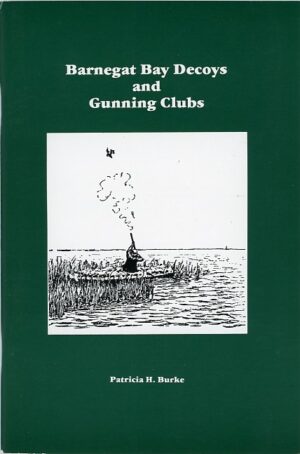 By Patricia H. Burke: The Barnegat Bay area from 1880 to 1920 was home to numerous local decoy carvers. Pictures of the local carvers and their decoys as well as the known gunning clubs in the Barnegat Bay area are included.
 -
 By William Mill Butler: Would you like to live in a beautiful summer resort in the great New Jersey pine belt? Find out about the Who’s Who that helped to develop Beachwood Borough. With a subscription to The New York Tribune subscribers were given the opportunity to “secure a lot at Beautiful Beachwood”.
 -
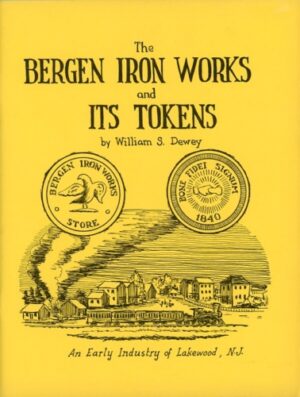 By William S. Dewey: “Bergen Iron Works” can refer both to the nineteenth century manufacturing concern of that name and to the hamlet in which it was situated. It is the story of the bog iron industry and forges and furnaces. The tokens associated with Bergen Iron Works store are a part of the popular series know to numismatists as “Hard Times” tokens or “Jackson Cents”.
 -
 By Carolyn M. Campbell, M. Peryl King, Martha T. Smith: The story of one-room schools moves from the mid 1800’s, when schools were in such disrepair that chickarees (squirrels) nested in the walls, to 1943 when the last one-room school was closed. Over 100 photos and maps, interviews with teachers and pupils, and quotations from the time emphasize the changes that have occurred in education during this century. Specific information about the county’s 76 one-room and 8 multiroom schools is given in the directory.
 -
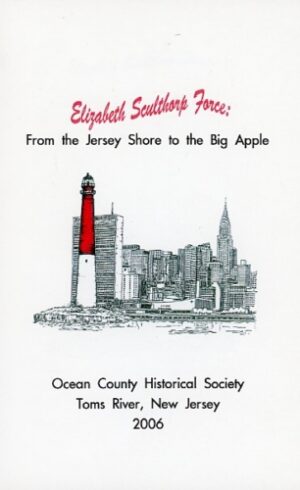 By Ocean County Historical Society: A compilation of facts and personal quotes and remembrances of Elizabeth Sculthorpe Force. She grew up in the house that is now Ocean County Historical Society’s residence. The home is listed on the National Register of Historic Places and the New Jersey Register of Historic Places.
 -
 By Vivian Zinkin: This book is a comprehensive study of place name origins in Ocean County. Place Names of Ocean County sheds light on how various names came to exist. An 1849 Robert E. Horner map of Ocean County is included.
 -
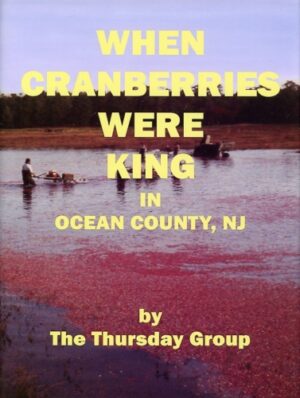 By The Thursday Group: Cranberry growing was a major industry in Ocean County. The history of cranberries begins with the Native Americans and progresses to the more recent growers and families of cranberry farmers. Learn about what a bog is and how to maintain a bog, the families and the locations of their farms as well as how World Wars and the Garden State Parkway effected the growth of the Cranberry industry in Ocean County.
 -
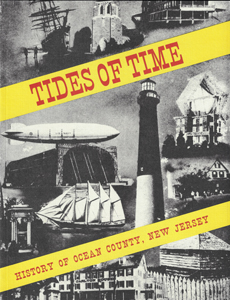 Compiled by the Ocean Conty Principal’s Council: Written by school pupils over a nine-year period and published by the Ocean County Principal’s Council in 1940, the book has a wealth of information about many of the communities in Ocean County, Its style is simple, direct, and concise. One hundred pictures enhance the narrative descriptions of people, places, and events in Ocean County. The book contains an index that will help the reader to locate specific information.
 -
 By Congregation B’nai Israel of Toms River: The egg farming industry owes much of its development in Toms River to the Jewish community. Jewish families share the stories of their immigration from various locations in the United States and Europe to the town of Toms River. Their many contributions added to the growth of the area.
 -
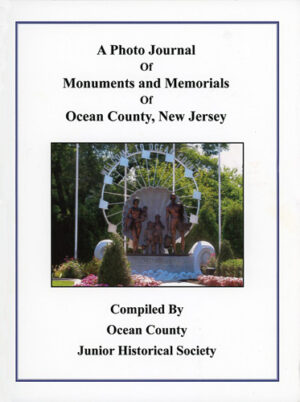 Compiled by Ocean County Junior Historical Society: Under the direction and guidance of retired educator, Barbara Moreau, the Ocean County Junior Historical Society traveled throughout Ocean County to photograph and document over 157 monuments and memorials that they discovered within the County. This booklet will help you to learn about and remember the people and events that these monuments and memorials honored.
 -
 By Brian Bovasso: Once a mosquito-infested marshland lying fifty-five feet west of the Lavallette mainland, West Point Island is now one of the most desirable locations on the Jersey Shore. Marketing the island is a realtor’s delight. You can own “your own piece of paradise”, in this “exclusive West Point Island Beach community”, enjoying “breathtaking views of Barnegat Bay”, in a “tranquil Bayfront setting”. The purpose of the book is to describe the people and events that made West Point Island’s history so different from that of its neighboring sedge islands.
 -
 By Robert Camp: During the years from 1933 to 1968 Toms River High School had many winning sports teams and was known as a sport powerhouse. Learn the names of the stars of those winning teams and the challenges that they faced during their games.
Call Us Today! (732) 341-1880