
The following is a list of publications available from the Ocean County Historical Society. We’re proud that many of the titles available were created and published here. You can either order online, download our book order form and mail your order, or phone us at 732-341-1880. Visa and MasterCard are accepted. All prices are subject to a 6.625% NJ sales tax. Postage and handling on mail orders is $7 for the first item plus $3 for each additional item. Members, please place your order by phone to receive your 10% discount. You can choose books published by O.C.H.S., books published by other publishers, historical maps, and various other items available..
-
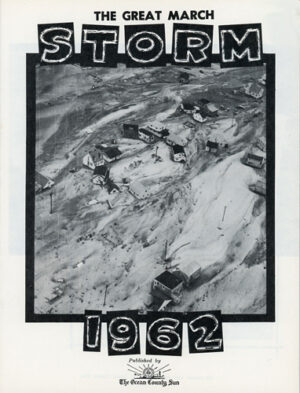 By The Ocean County Sun (newspaper): The New Jersey shore areas are vulnerable to the wrath of nature. This book contains the story and photos of the March 1962 storm that devastated the area.
 -
 By Brian Bovasso: Over a long period of time, Brian Bovasso developed an interest in the Ortley family and the Cranberry Inlet. While writing his first two local history books, he realized what a dramatic influence the Cranberry Inlet and the Ortley family had on the history of this section of the barrier island. This 148 page, illustrated book provides answers to many questions about this area of the barrier island of Ocean County.
 -
 By Patricia H. Burke: The Barnegat Bay area from 1880 to 1920 was home to numerous local decoy carvers. Pictures of the local carvers and their decoys as well as the known gunning clubs in the Barnegat Bay area are included.
 -
 By Brian Bovasso: Once a mosquito-infested marshland lying fifty-five feet west of the Lavallette mainland, West Point Island is now one of the most desirable locations on the Jersey Shore. Marketing the island is a realtor’s delight. You can own “your own piece of paradise”, in this “exclusive West Point Island Beach community”, enjoying “breathtaking views of Barnegat Bay”, in a “tranquil Bayfront setting”. The purpose of the book is to describe the people and events that made West Point Island’s history so different from that of its neighboring sedge islands.
 -
 By Samuel Vaughn Merrick: A combination of Sam Merrick’s biography of F, Slade Dale and Dale’s own writings about his nautical exploits throughout his life. An unusual gentleman, Dale developed his love of boats in the waters of Ocean County.
 -
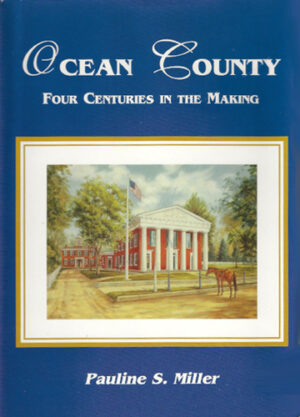 By Pauline S. Miller: The four centuries of Ocean County are divided into three distinct sections that help define the time periods of growth. Part I: 1614-1850 covers those years of the Native American occupation, activities of the whalers, smugglers, and privateers; the ventures of the early settlers building their sawmills and homes in the pines and along the streams; the beginning of the pinelands industries, and the War of 1812. Part II: 1850-1950 reveals, for the first time, the founding father of Ocean County, Joel Haywood. It records the development of the county government, the creation of townships and boroughs, the expansion of the barrier island, the impact of the railroad era, the Civil War, World War I, the Ku Klux Klan, the Great Depression, and World War II. Part III: 1950-2000 deals with the county’s renaissance, growth of county government, schools, churches, and higher education, chicken farms giving way to housing developments, the state’s first nuclear power plant, the impact of big industries located in the county, the population surge, medical care and the effect of local women on the county’s political scene. An extensive index is part of this book.
 -
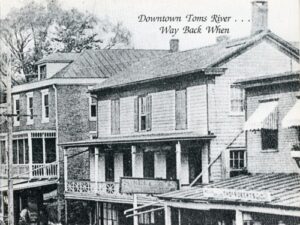 Compiled by William A. King, Jr. and Adolph Wooley: Late 19th century and early 20th century downtown Toms River is depicted in 56 pages of many photos never before published. Photos include Washington Street, Water Street, Main Street and various other locations.
 -
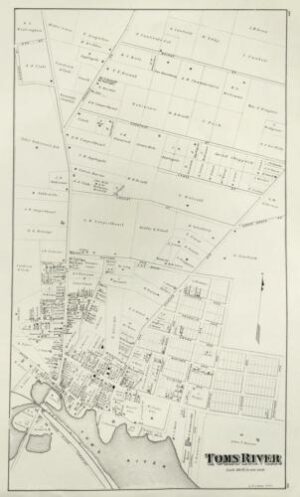 A.P. Irons survey map of Toms River. 1878 Communities of Ocean County from Atlas of Historical and Biographical New Jersey Coast by Woolman and Rose . Each community map is $5
 -
 By Janis Gibson: This is an account of a particular branch of the Giberson family, the Gibersons of Old Dover. It is a compilation of biographical and genealogical facts, the end product of a quest to identify all the Gibersons associated with Dover between 1775-1830 and to understand how they fit together.
 -
Out of stock
 By Patricia Florio: Explore the life and times of John Frederick Peto (1854-1907). Learn about the studio and home he built in Island Heights, New Jersey. The intact home offers intriguing insight into his life as the artist in the red house.
 -
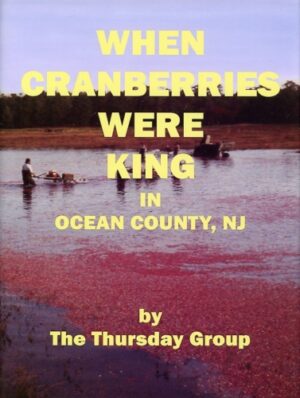 By The Thursday Group: Cranberry growing was a major industry in Ocean County. The history of cranberries begins with the Native Americans and progresses to the more recent growers and families of cranberry farmers. Learn about what a bog is and how to maintain a bog, the families and the locations of their farms as well as how World Wars and the Garden State Parkway effected the growth of the Cranberry industry in Ocean County.
 -
 Compiled by Elizabeth Ann Grant: The church and burying ground are located in Lacey Township, Ocean County, New Jersey on the east side of Route 9 in the Murray Grove section of Lanoka Harbor, just north of Forked River. Many of the old settlers in and around Cedar Creek are buried here. The book contains an alphabetical listing of the stones in the cemetery. The list was compiled in June 1970 and includes the older section of the cemetery. There is background information about Good Luck (Potter’s) Churchyard and Cemetery, excerpts from Rose Grover Garthwaite’s Good Luck Settlement, and excerpts from Kobbe’s Jersey Coast and Pines, pages 70-71 (Original printing 1889 Gustave Kobbe).
 -
 By Vivian Zinkin: This book is a comprehensive study of place name origins in Ocean County. Place Names of Ocean County sheds light on how various names came to exist. An 1849 Robert E. Horner map of Ocean County is included.
 -
Out of stock
 By Lee Gant Thorn: This recipe book and almanac was written to give the reader an insight into the birth several centuries ago of what is now the village of Tuckerton and how it grew. It will introduce you to the forefathers, the history making events, and the struggles that shaped the town. It will tell you of today’s goings-on and the plans for the future. On the most part the gentle mood of nostalgia in this book is true. At times it is presented as witnessed, remembered and related by one John Ortley Tucker, who is a totally fictional character. However, as Mr. Tucker rambles on, the actual tales of Tuckerton and its people are revealed and relived.
 -
 By Ocean County Historical Society: This book is a reproduction of a book originally prepared for an Ocean County Historical Society Museum exhibition in 2003. The book is presented with color photographs, all of which are part of the Ocean County Historical Society collection. Editing was done to correct typographical errors, but phrasing is faithful to the original. Additional items from the Society’s collection have been added at the end of the publication.
 -
 By Eleanor Angott: Written in 1964 as a series of newspaper articles for the New Jersey Tercentenary. The articles have been indexed and copied for this 1992 publication. It contains a comprehensive history of the area beginning in pre-revolutionary war times. The text is rich with family names, many of which are still common in the Brick Township of today. The publication contains an index.
 -
 By Jack Cervetto—1908-1995: Jack Cervetto was not unique to having made a living in the pine barrens of New Jersey. What distinguishes him from hundreds of others is the fact that he reflected on his life in his later years and recorded his memories. He set goals for himself and his community, provided the leadership that was needed to accomplish a desired end, and was well-liked and respected by his associates, whether leading a deer hunt or debating an issue at a meeting of the Stafford Township Board of Education.
 -
 By Joseph G. Bilby, James M. Madden, & Harry Ziegler: Explore the lesser-known stories that make up New Jersey's compelling hidden history. Uncover the meaning of "Jersey Blues", celebrate some of the state's bravest Revolutionary and Civil War soldiers and investigate Jersey City's most infamous ghost. From the inferno that engulfed Asbury Park, to the benevolent side of Frank Hague, to the equestrienne who plunged forty feet into a pool of water on horseback in Atlantic City, rediscover these and many other events from New Jersey's storied past.
 -
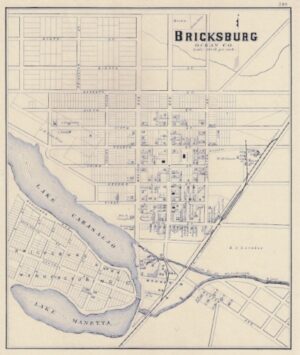 1878 Communities of Ocean County from Atlas of Historical and Biographical New Jersey Coast by Woolman and Rose
 -
 By Pauline S. Miller: The story of a small hamlet in Ocean County. Esther Loveland Kinsley shares her recollections of the town established by her grandfather, John E. Loveland.
 -
 By Robert A. DeSando: South Lakewood Park was an exclusive enclave for socialites and scientists forgotten by history. A deadly pandemic, financial panic, a catastrophic fire, and a devastating tornado combined to extinguish this planned community unlike any other in New Jersey to burning embers.
 -
 By Vivian Zinkin: This book is a comprehensive study of place name origins in Ocean County. Place Names of Ocean County sheds light on how various names came to exist. An 1849 Robert E. Horner map of Ocean County is included.
 -
 By William S. Dewey: “Bergen Iron Works” can refer both to the nineteenth century manufacturing concern of that name and to the hamlet in which it was situated. It is the story of the bog iron industry and forges and furnaces. The tokens associated with Bergen Iron Works store are a part of the popular series know to numismatists as “Hard Times” tokens or “Jackson Cents”.
 -
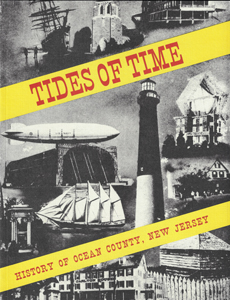 Compiled by the Ocean Conty Principal’s Council: Written by school pupils over a nine-year period and published by the Ocean County Principal’s Council in 1940, the book has a wealth of information about many of the communities in Ocean County, Its style is simple, direct, and concise. One hundred pictures enhance the narrative descriptions of people, places, and events in Ocean County. The book contains an index that will help the reader to locate specific information.
 -
Out of stock
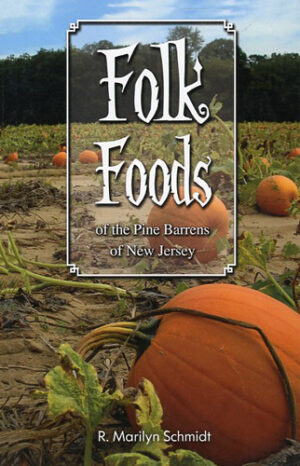 By R. Marilyn Schmidt: Because of their often perceived or actual isolated location, Pine Barrens folk grew much of their food, particularly fruits and vegetables. People of the pines knew how to live off the land. During the Great Depression, these residents suffered little hardship. Gardens supplied vegetables which were eaten fresh, dried or canned in contrast to today’s freezing. Root cellars, a rarity today, enabled folks to keep potatoes, cabbages, carrots, beets, squash, and other vegetables and fruits to provide food throughout the winter. Little food was purchased. Necessities such as sugar, molasses, salt, pepper, flour, and cornmeal were available at the local general store. Today many people in the pines continue the old traditions. Cakes are still baked from scratch, gardens are maintained and yes, some people still keep chickens. The traditions of yesteryear continue today. Recipes included here are historic and interesting dishes including products commonly available or locally grown. They are culled from old time literature, - magazines, newspapers, books - and friends both old and new. Many were handed down from generation to generation. Enjoy these dishes and have them become a part of your history, as well.
 -
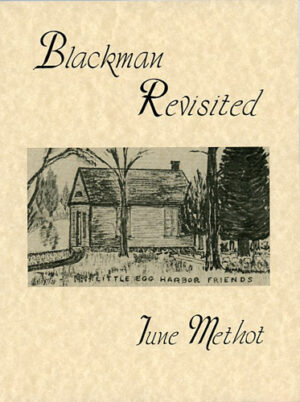 By June Methot: Over one hundred years ago Leah Blackman, a resident of Tuckerton, wrote a history of Little Egg Harbor Township which included genealogical information about numerous early settlers and old families of that area. June Methot, with the many sources available for research today, has updated that genealogical data with additions and corrections. This is an excellent resource for anyone searching for his/her roots in Southern Ocean County. Leah Blackman’s publication, The History of Little Egg Harbor Township, is out of print but may be available in libraries and/or research centers.
 -
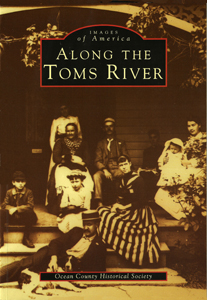 By Ocean County Historical Society: See the people, places and events that have defined the city of Toms River and its surrounding area since the early 1700s. Located on the banks of the river of the same name, Toms River was first settled in the early 1700s by loggers drawn to the dense forests on the river's banks. During the American Revolution, the village was a constant thorn in the side of the British, and it was attacked and burned to the ground in 1783. The arrival of the railroads in the late 1800s ushered in a new age of expansion which, spurred on by the construction of the Garden State Parkway in the decade after World War II, continues to this day. See for yourself how it all came about with over 200 carefully-selected photographs.
 -
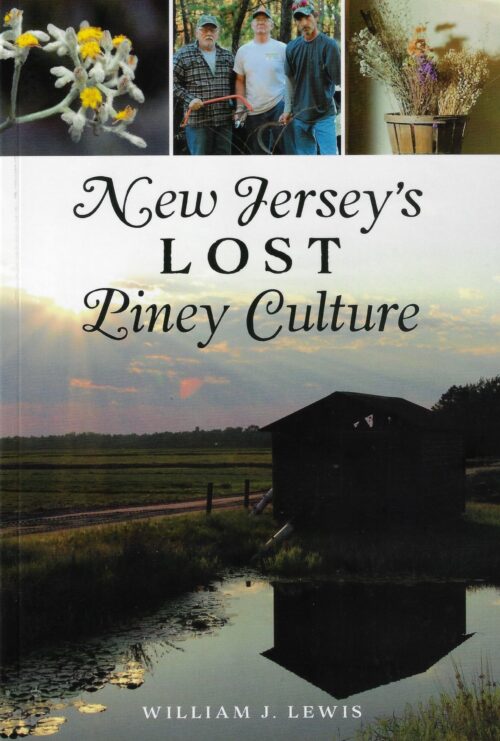 By William J. Lewis: Deep within the heart of the New Jersey Pine Barrens, the Piney people have built a vibrant culture and industry from working the natural landscape around them. Foraging skills learned from the local Lenapes were passed down through generations of Piney families who gathered many of the same wild floral products that became staples of the Philadelphia and New York dried flower markets. Important figures, such as John Richardson, have sought to lift the Pineys from rural poverty by recording and marketing their craftsmanship. As the state government sought to preserve the Pine Barrens and develop the region, Piney culture was frequently threatened and stigmatized. Author and advocate William J. Lewis charts the history of the Pineys, what being a Piney means today and their legacy among the beauty of the Pine Barrens.
 -
Out of stock
 By Ray Fisk & Leslee Ganss: What is the authentic Long Beach Island? With its rich history, family attachments that go back generations, memories of carefree summers, spectacular sunrises and sunsets, beach, ocean and bay, there is so much that is timeless and true. All Things LBI celebrates this bond with vignettes of places, pleasures, and moments past and present and 480 images. The book includes storms, shipwrecks, natural history, nostalgia and the off-season.
 -
Out of stock
 By Cedric Derecho: A work of fiction about William Foulks, a real man who lived in Lakehurst, New Jersey in the late 1800s until 1961. The author writes in the first person with his own style as the voice of the main character growing up in Lakehurst.
 -
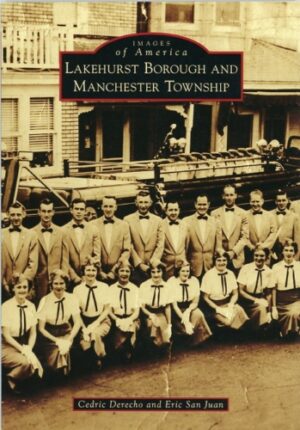 By Cedric Derecho and Erik Juan: The village of Manchester began life as a railroad town founded by William Torrey. By the early 20th century, the village had become the borough of Lakehurst and the surrounding community broke off into what is currently Manchester Township, consisting of the areas of Whiting, Ridgeway, and Pine Lake.
 -
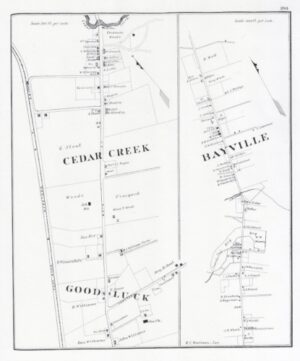 1878 Communities of Ocean County from Atlas of Historical and Biographical New Jersey Coast by Woolman and Rose
 -
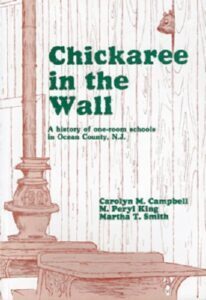 By Carolyn M. Campbell, M. Peryl King, Martha T. Smith: The story of one-room schools moves from the mid 1800’s, when schools were in such disrepair that chickarees (squirrels) nested in the walls, to 1943 when the last one-room school was closed. Over 100 photos and maps, interviews with teachers and pupils, and quotations from the time emphasize the changes that have occurred in education during this century. Specific information about the county’s 76 one-room and 8 multiroom schools is given in the directory.
 -
 By William S. Dewey: Discover a wealth of information about the Pineland communities of Manchester, Whiting, and Lakehurst. A resident of the areas, Mr. Dewey has done extensive research into the development of industries in the area and the people who brought those industries to life. Included are a description of railroad development, two railroad maps, and two early railroad timetables.
 -
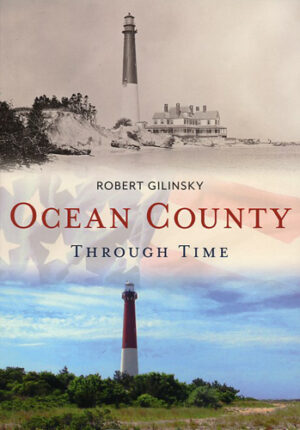 By Robert Gilinsky: Ocean County was born on February 15, 1850 when she was chartered and officially annexed from Monmouth County taking well over half of that county’s land but only a fraction of its population. Ocean County is the second largest county in New Jersey. Over the past several decades, it has led the state in population growth. Long know for its beautiful beaches and pristine pine barrens, it has undergone major changes, some positive and other not so positive.
 -
Out of stock
 By Louise Ann Barton: Does the Jersey Devil really exist or did the legend spring up from tales told around campfires? Did the stories become more embellished with every generation? Read the book and decide for yourself.