The following is a list of publications available from the Ocean County Historical Society. We’re proud that many of the titles available were created and published here. You can either order online, download our book order form and mail your order, or phone us at 732-341-1880. Visa and MasterCard are accepted. All prices are subject to a 6.625% NJ sales tax. Postage and handling on mail orders is $7 for the first item plus $3 for each additional item. Members, please place your order by phone to receive your 10% discount. You can choose books published by O.C.H.S., books published by other publishers, historical maps, and various other items available..
-
 1616 New Jersey Hendrick’s Map This is an early Dutch map of the Jersey Coast and reflects the first exploration of Barnegat Bay. It shows early Indian settlements, the rivers feeding into the bay and locations like Little Egg Harbor, the Barnegat Inlet, and Sandy Hook. These locations, as we know them today, were recorded by Hendrick’s over 400 years ago 24" x 36"
 -
1850 New Jersey by Robert Horner: This map shows the Cranberry Inlet closed, Dillons Island (now Island Heights), the Toms River, Forked River Mountains and many creeks. Cedar Creek was called Williamsburg and Manasquan is shown as Howell Township. 25" x 40"
-
1888 Bay Head, Ocean County This is an interesting Land Development map made for the developers of Bay Head at that time. Mount, Howe, and Harris are streets named after prominent people. 24"x34"
-
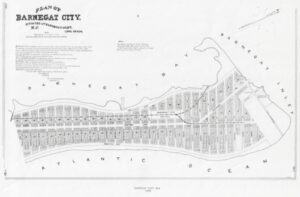 Barnegat City map, 1888. 12" x 17"
 -
1913 New Jersey Railroads This is a great map for Railroad buffs. It shows the many railroads that criss-crossed Ocean County and New Jersey in 1913, as well as the towns and mills that they served. The number designations shown in the railroad listing in the lower righthand corner appear within the map. 24" x 30"
-
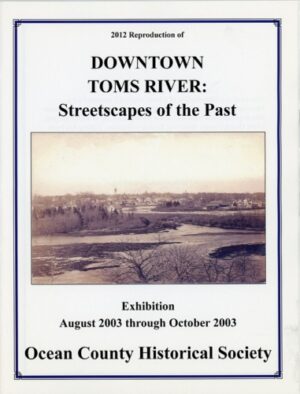 By Ocean County Historical Society: This book is a reproduction of a book originally prepared for an Ocean County Historical Society Museum exhibition in 2003. The book is presented with color photographs, all of which are part of the Ocean County Historical Society collection. Editing was done to correct typographical errors, but phrasing is faithful to the original. Additional items from the Society’s collection have been added at the end of the publication.
 -
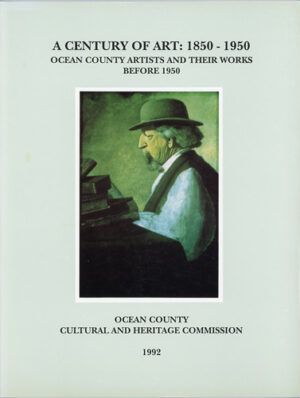 By Pauline S. Miller & Marilyn R. Kralik: At least seventy noteworthy artists lived and worked in Ocean County between 1850 and 1950. The book serves as an introduction to some of those artists. In some cases, there is documentation on the artist but examples of their work could not be located. In other cases, the authors have included works by known artists but could locate little or no information about the creator of the work. Included are both professional and amateur artists.
 -
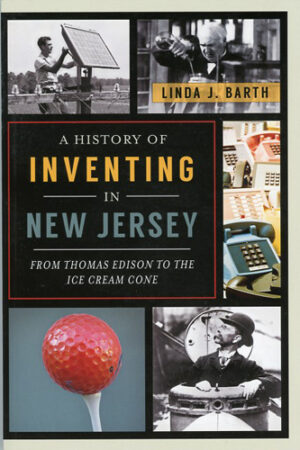 By Linda Barth: Many Americans are familiar with Thomas Edison's "invention factory" in Menlo Park, where he patented the phonograph, the light bulb and more than one thousand other items. New Jerseyans brought sound and music to movies and built the very first drive-in theater. In addition to the first cultivated blueberry, tasty treats like ice cream cones and M&Ms are also Jersey natives. Iconic aspects of American life, like the batting cage, catcher's mask and even professional baseball itself, started in New Jersey. Life would be a lot harder without the vacuum cleaner, plastic and Band-Aids, and many important advances in medicine and surgery were also developed here. Join author Linda Barth as she explores groundbreaking, useful, fun and even silly inventions and their New Jersey roots.
 -
 By Congregation B’nai Israel of Toms River: The egg farming industry owes much of its development in Toms River to the Jewish community. Jewish families share the stories of their immigration from various locations in the United States and Europe to the town of Toms River. Their many contributions added to the growth of the area.
 -
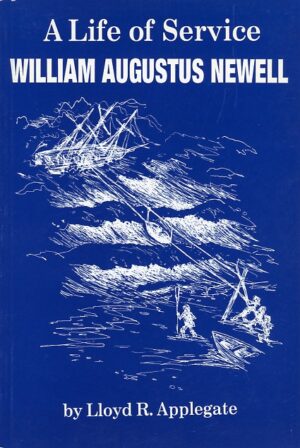 By Lloyd R. Applegate: During his varied political career, William Augustus Newell served as governor of both New Jersey (1857-1860) and the Territory of Washington (1880-1884). His interests and talents ranged from medicine and agriculture to several terms in Congress. He was a friend of the Lincolns, and was appointed as an Indian inspector in the northwest. Of greatest benefit to those of us along the Jersey coast was his persistence in bringing about legislation that established life-saving stations along our coast.
 -
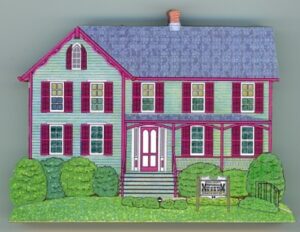 Painted wood cut of the historic Elizabeth Sculthorp Force House, currently the home of the Ocean County Historical Society.
 -
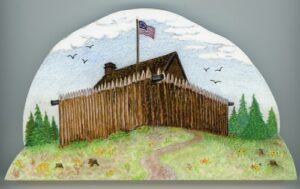 The Toms River Blockhouse (c1776-1782) was situated on a hill overlooking the harbor in the village of Toms River.
 -
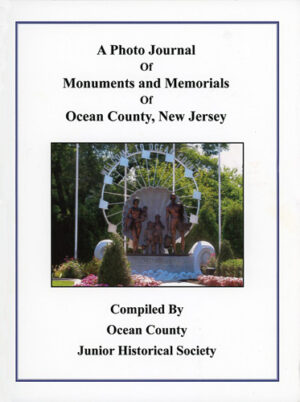 Compiled by Ocean County Junior Historical Society: Under the direction and guidance of retired educator, Barbara Moreau, the Ocean County Junior Historical Society traveled throughout Ocean County to photograph and document over 157 monuments and memorials that they discovered within the County. This booklet will help you to learn about and remember the people and events that these monuments and memorials honored.
 -
Out of stock
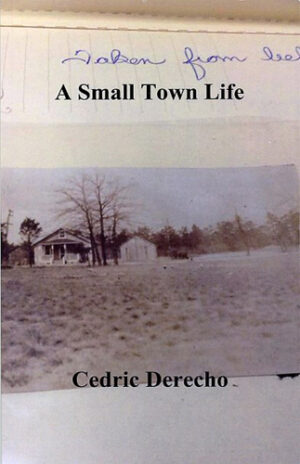 By Cedric Derecho: A work of fiction about William Foulks, a real man who lived in Lakehurst, New Jersey in the late 1800s until 1961. The author writes in the first person with his own style as the voice of the main character growing up in Lakehurst.
 -
Out of stock
 By Gail and Roni Goodhart: A delightful children’s book about the adventures of Double Trouble, the tree frog who hates trees. He searches for a new home among his animal friends without success. Learn which of the animals saves the day for Double Trouble. Photos and text are the work of the authors.
 -
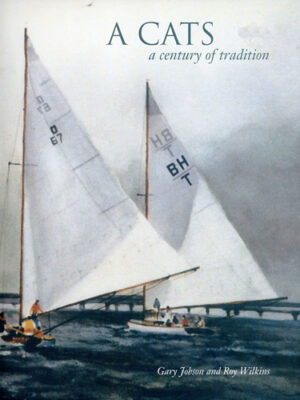 By Gary Jobson and Roy Wilkins: The mighty A Cats have sailed and raced on Barnegat Bay since the 1920s. These sturdy boats link the generations. Along with the tales of 40 sailors, over 200 photographs and illustrations showcase the past and the present.
 -
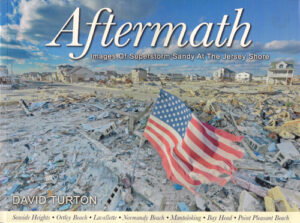 By David Turton: The book covers the Ocean County barrier island towns of Seaside Heights, Ortley Beach, Lavallette, Normandy Beach, Mantoloking, Bay Head, and Point Pleasant Beach. The original, never before published photographs preserve not only the aftereffects of the Superstorm in this region but also describe David Turton’s personal journey through his beloved and now destroyed Jersey Shore. With more than 200 historic photographs, this important book records and preserves what happened to this region for future generations lest they forget the unfathomable power of the sea.
 -
 By Linda J. Barth: This is the story of Alice Paul’s failures and success to reach the goal of convincing President Woodrow Wilson, the U.S. Congress, and the state legislatures to finally pass the 19th amendment.
 -
Out of stock
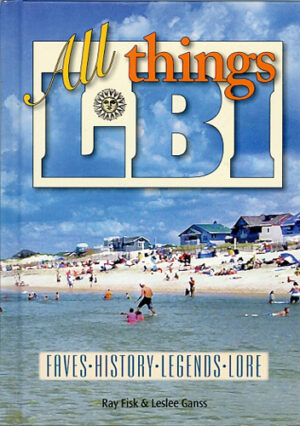 By Ray Fisk & Leslee Ganss: What is the authentic Long Beach Island? With its rich history, family attachments that go back generations, memories of carefree summers, spectacular sunrises and sunsets, beach, ocean and bay, there is so much that is timeless and true. All Things LBI celebrates this bond with vignettes of places, pleasures, and moments past and present and 480 images. The book includes storms, shipwrecks, natural history, nostalgia and the off-season.
 -
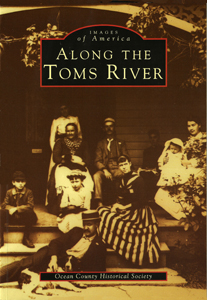 By Ocean County Historical Society: See the people, places and events that have defined the city of Toms River and its surrounding area since the early 1700s. Located on the banks of the river of the same name, Toms River was first settled in the early 1700s by loggers drawn to the dense forests on the river's banks. During the American Revolution, the village was a constant thorn in the side of the British, and it was attacked and burned to the ground in 1783. The arrival of the railroads in the late 1800s ushered in a new age of expansion which, spurred on by the construction of the Garden State Parkway in the decade after World War II, continues to this day. See for yourself how it all came about with over 200 carefully-selected photographs.
 -
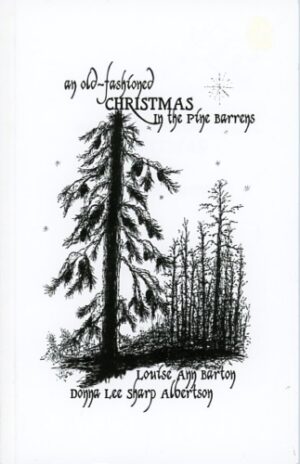 By Louise Ann Barton & Donna Lee Sharp Albertson: Join the authors for an old-fashioned Christmas in the Pine Barrens as this book takes you to the famous Albertson’s Farm for Christmas Dinner. Try you hand at these authentic Piney Signature Recipes for your own table. Lovers of poetry will enjoy reading the Piney Poems and those who enjoy tall tales will not be disappointed.
 -
Out of stock
 By Patricia Florio: Explore the life and times of John Frederick Peto (1854-1907). Learn about the studio and home he built in Island Heights, New Jersey. The intact home offers intriguing insight into his life as the artist in the red house.
 -
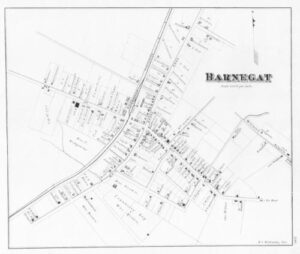 1878 Communities of Ocean County from Atlas of Historical and Biographical New Jersey Coast by Woolman and Rose
 -
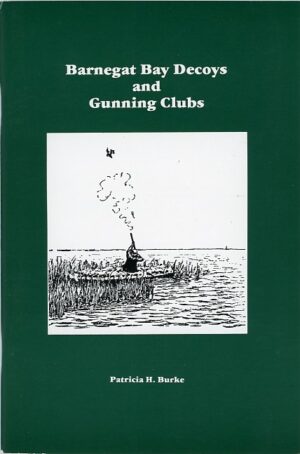 By Patricia H. Burke: The Barnegat Bay area from 1880 to 1920 was home to numerous local decoy carvers. Pictures of the local carvers and their decoys as well as the known gunning clubs in the Barnegat Bay area are included.
 -
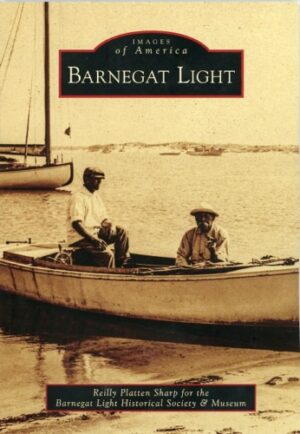 By Reilly Platten Sharp: At the mouth of Barnegat Inlet, Native Americans, whalers, pirates, fisherman, and revolutionaries once fished, fought, and died on Barnegat Light’s shores. Before the current lighthouse was designed in 1856 by Gettysburg General George Meade, the dangerous offshore shoals claimed many lives.
 -
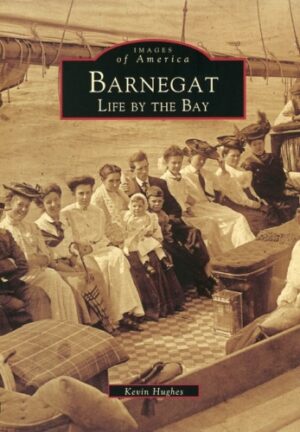 By Kevin Hughes: Learn about life by the bay as the historic residents of Barnegat come alive through the use of images and photographs.
 -
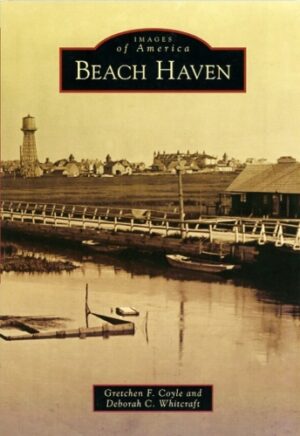 By Gretchen F. Coyle & Deborah C. Whitcraft (Images of America): Founded in 1874, Beach Haven was designed as one of the first summer seashore resorts for wealthy Philadelphians. Beach Haven’s boardwalk was one and a quarter miles long. A steamboat, connected with the Tuckerton Railroad, brought visitors to the island.
 -
 By William Mill Butler: Would you like to live in a beautiful summer resort in the great New Jersey pine belt? Find out about the Who’s Who that helped to develop Beachwood Borough. With a subscription to The New York Tribune subscribers were given the opportunity to “secure a lot at Beautiful Beachwood”.
 -
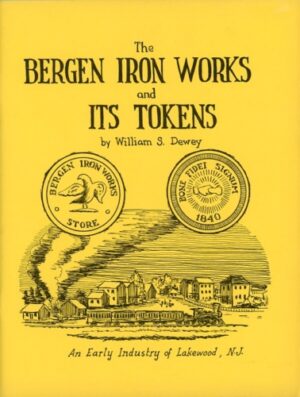 By William S. Dewey: “Bergen Iron Works” can refer both to the nineteenth century manufacturing concern of that name and to the hamlet in which it was situated. It is the story of the bog iron industry and forges and furnaces. The tokens associated with Bergen Iron Works store are a part of the popular series know to numismatists as “Hard Times” tokens or “Jackson Cents”.
 -
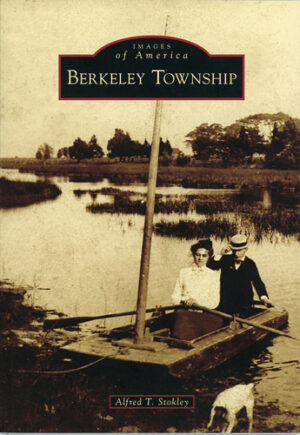 By Alfred T. Stokley: Incorporated in 1875, Berkeley Township was settled along the Barnegat Bay shoreline, dotted with homesteads and fishermen's shanties. The Central Railroad first brought summer tourists to the area for recreation in the late 19th century, and in the years to follow, many new attractions were established, including B.W. Sangor's lavish Royal Pines Hotel. Edward Crabbe established the village of Double Trouble in 1903 for lumber and cranberry production, and Sutton's Pavilion became Bayville's first fishing camp in 1905. Also in this era, George C. Crossly mined clay for terra-cotta products, using a narrow-gauge spur of the Pennsylvania Railroad. In 1928, Rudy Korman opened his restaurant and picnic grove, soon known as Korman's Corner. By the 1930s, Clover Cream Top Dairy was the largest in Bayville. In 1932, Dino the Dinosaur was built for a Sinclair Service Station and became a landmark. Historic Route 9 was used heavily through the middle of the 20th century, featuring roadside stands and tourist cabins. Berkeley Township showcases these landmarks and the rich recreational and commercial history of this Ocean County community.
 -
 By William H. Fischer, owner and publisher of the New Jersey Courier: This is a reprint of the original work which relates history as written by those who lived just 34 years after the Civil War and 116 years after the American Revolution. Included are more than sixty biographies of men (no women!) who were prominent in the county and descriptions of some communities.
 -
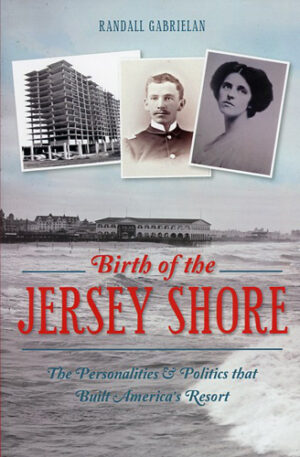 By Randall Gabrielan: The recounting of the development of the Jersey Shore of today from agrarian and maritime communities of days gone by to the bustling area that exists in modern times. Photographs and descriptions trace the events that shaped today’s Jersey Shore.
 -
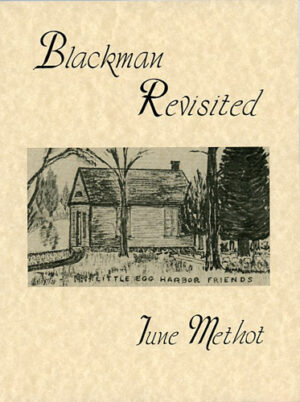 By June Methot: Over one hundred years ago Leah Blackman, a resident of Tuckerton, wrote a history of Little Egg Harbor Township which included genealogical information about numerous early settlers and old families of that area. June Methot, with the many sources available for research today, has updated that genealogical data with additions and corrections. This is an excellent resource for anyone searching for his/her roots in Southern Ocean County. Leah Blackman’s publication, The History of Little Egg Harbor Township, is out of print but may be available in libraries and/or research centers.
 -
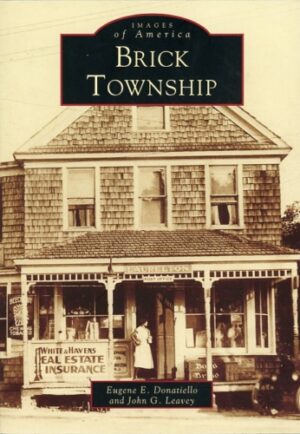 By Eugene E. Donatiello & John G. Leavey: In 1850, when the New Jersey Legislature created Ocean County, they also created Brick Township among a region of virgin woodlands. The new township was named after its most prominent resident, Joseph W. Brick, the industrious and successful owner of Bergen Iron Works. As his and other local industries expanded, more and more people began to call Brick their home. Brick Township records these founders and the events and places that helped them shape our community. By 1920, parts of the new township had declared their independence, and the remaining parts of Brick began to evolve into a resort community. The summer tourists, farmers, home builders and shipbuilders, anglers, hunters, tavern and innkeepers, merchants, and others helped fashion Brick into an intimate but prosperous community. Brick continued to be a quiet, rural, resort area into the 1950s, when the Garden State Parkway opened, and residential and commercial development created dramatic growth in year-round residents, and it became a thriving suburban community. Brick Township captures scenes of life in Brick from 1850 to the 1950s and beyond; from the early European settlers to the suburbanites who now call Brick their home; from the thriving poultry industry to area resorts; from Joseph Brick to our friends and family who live among us today.
 -
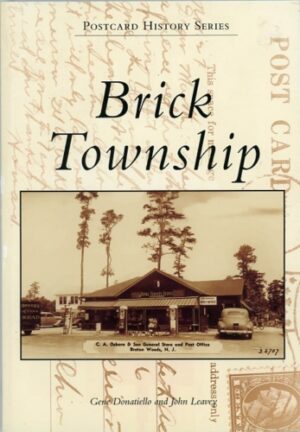 By Gene Donatiello & John Leavey: In 1850, the New Jersey Legislature created Ocean County and Brick Township, naming it for Joseph W. Brick, the industrious owner of Bergen Iron Works. At the beginning of the 20th century, Brick Township was a rural community. Up until the 1920s, postcards of the township were primarily architectural images. Brick Township contains updated images of familiar names and places: Emma Havens Young, for whom an elementary school has been named; the very popular Red Lion Tavern, later called the Red Lion Inn; the progression of four bridges crossing Barnegat Bay to the peninsula area of Brick Township; and Traders Cove Marina as it looked in the 1950s when it was called Pleasure Cove Marina. There are postcards from summer camps, such as Camp NEJECHO and Metedeconk Summer Camp, and from summer resorts, such as Breton Woods, Riviera Beach, and Normandy Beach.
 -
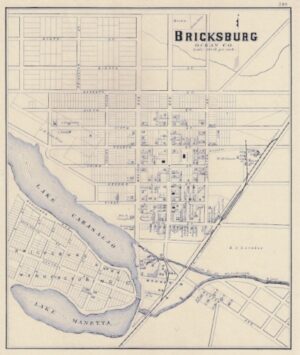 1878 Communities of Ocean County from Atlas of Historical and Biographical New Jersey Coast by Woolman and Rose