-
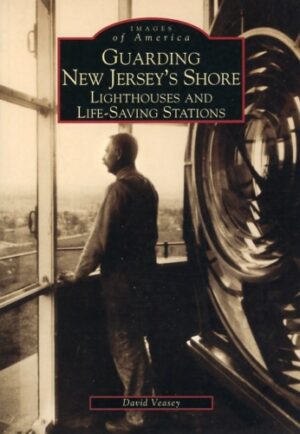 By David Veasey: From the seventeenth to the twentieth century, New Jersey's low-lying, sandy coast has been the site of thousands of shipwrecks as ships bound for New York City or Philadelphia foundered on its offshore shoals. As coastal and international trade dramatically increased after the War of 1812, the federal government was forced to increase safety aids to mariners. To ensure their safe passage, a series of lighthouses was built and the U.S. Life-Saving Service was created. More than two centuries of the history of New Jersey's treacherous coast are preserved in Guarding New Jersey's Shore: Lighthouses and Life-Saving Stations. Gathered from a wide array of sources, more than 200 historic photographs and fascinating, documented text combine to create the only illustrated history of the state's thirty-eight lighthouses and forty-one life-saving stations. Sandy Hook, built in 1764, is the nation's oldest operating lighthouse. Navesink's Twin Lights was the first lighthouse to use electricity and was the home of Marconi's early radio experiments. From the Statue of Liberty in New York Harbor, which once served as a lighthouse, to Cape May Point, and up the Delaware Bay and River, the fascinating story of protecting mariners from perils "Down the Shore" is presented and preserved in Guarding New Jersey's Shore: Lighthouses and Life-Saving Stations.
 -
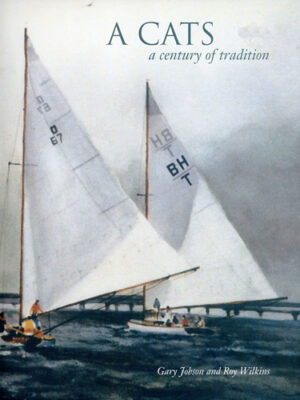 By Gary Jobson and Roy Wilkins: The mighty A Cats have sailed and raced on Barnegat Bay since the 1920s. These sturdy boats link the generations. Along with the tales of 40 sailors, over 200 photographs and illustrations showcase the past and the present.
 -
 By Louise Ann Barton & Donna Lee Sharp Albertson: Join the authors for an old-fashioned Christmas in the Pine Barrens as this book takes you to the famous Albertson’s Farm for Christmas Dinner. Try you hand at these authentic Piney Signature Recipes for your own table. Lovers of poetry will enjoy reading the Piney Poems and those who enjoy tall tales will not be disappointed.
 -
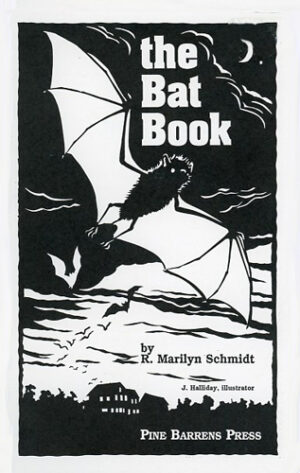 By R. Marilyn Schmidt: Find out about the types of bats that live in the northeastern United States. The book tells how to solve bat problems, as well as how to remove them from inside a house and bat proof a home. Want to cut down on insects? Installing a bat house may be a safe and non-chemical way to get results. The author has included a list of sources to locate more information about bats.
 -
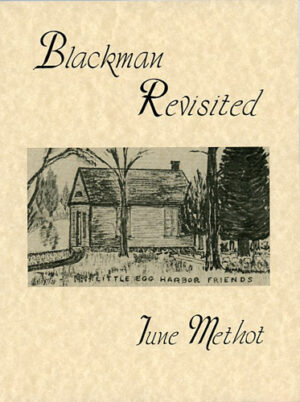 By June Methot: Over one hundred years ago Leah Blackman, a resident of Tuckerton, wrote a history of Little Egg Harbor Township which included genealogical information about numerous early settlers and old families of that area. June Methot, with the many sources available for research today, has updated that genealogical data with additions and corrections. This is an excellent resource for anyone searching for his/her roots in Southern Ocean County. Leah Blackman’s publication, The History of Little Egg Harbor Township, is out of print but may be available in libraries and/or research centers.
 -
 Compiled by Carolyn M. Campbell: Two books containing five hundred individual funeral records for the period 1900 to 1918 were kept by David R. Anderson, undertaker, in Bayville, New Jersey. The complete records of sixteen of the five hundred who died are included to illustrate the kinds of information contained in each report. The records of the remaining five hundred deaths have been abbreviated for this publication and only the most pertinent information has been included. This a great genealogical resource for family research.
 -
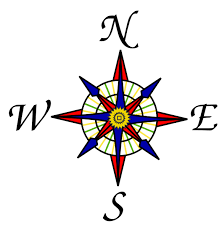 1616 New Jersey Hendrick’s Map This is an early Dutch map of the Jersey Coast and reflects the first exploration of Barnegat Bay. It shows early Indian settlements, the rivers feeding into the bay and locations like Little Egg Harbor, the Barnegat Inlet, and Sandy Hook. These locations, as we know them today, were recorded by Hendrick’s over 400 years ago 24" x 36"
 -
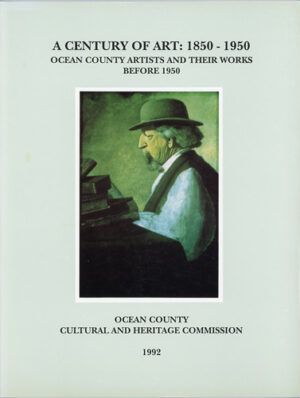 By Pauline S. Miller & Marilyn R. Kralik: At least seventy noteworthy artists lived and worked in Ocean County between 1850 and 1950. The book serves as an introduction to some of those artists. In some cases, there is documentation on the artist but examples of their work could not be located. In other cases, the authors have included works by known artists but could locate little or no information about the creator of the work. Included are both professional and amateur artists.
 -
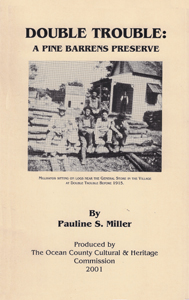 By Pauline S. Miller: This booklet about the historic village of Double Trouble is a brief informational guide to take you through the long history of a pinelands industrial village nestled in the Pine Barrens of New Jersey. This “gem” of a historic site and its unique botanical plants of native New Jersey flora is one of the best kept secrets in the state. Its isolation from any nearby town or village has kept this site in pristine native condition, except for the natural deterioration of buildings in the village. The old saw mill once again hums as it saws local cedar and cedar shingles. The cranberry sorting house and tiny one room school along with other building have been stabilized. Double Trouble State Park is located within the New Jersey Coastal Heritage Trail.
 -
Out of stock
 By R. Marilyn Schmidt: Because of their often perceived or actual isolated location, Pine Barrens folk grew much of their food, particularly fruits and vegetables. People of the pines knew how to live off the land. During the Great Depression, these residents suffered little hardship. Gardens supplied vegetables which were eaten fresh, dried or canned in contrast to today’s freezing. Root cellars, a rarity today, enabled folks to keep potatoes, cabbages, carrots, beets, squash, and other vegetables and fruits to provide food throughout the winter. Little food was purchased. Necessities such as sugar, molasses, salt, pepper, flour, and cornmeal were available at the local general store. Today many people in the pines continue the old traditions. Cakes are still baked from scratch, gardens are maintained and yes, some people still keep chickens. The traditions of yesteryear continue today. Recipes included here are historic and interesting dishes including products commonly available or locally grown. They are culled from old time literature, - magazines, newspapers, books - and friends both old and new. Many were handed down from generation to generation. Enjoy these dishes and have them become a part of your history, as well.
 -
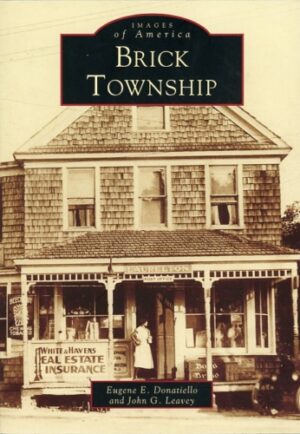 By Eugene E. Donatiello & John G. Leavey: In 1850, when the New Jersey Legislature created Ocean County, they also created Brick Township among a region of virgin woodlands. The new township was named after its most prominent resident, Joseph W. Brick, the industrious and successful owner of Bergen Iron Works. As his and other local industries expanded, more and more people began to call Brick their home. Brick Township records these founders and the events and places that helped them shape our community. By 1920, parts of the new township had declared their independence, and the remaining parts of Brick began to evolve into a resort community. The summer tourists, farmers, home builders and shipbuilders, anglers, hunters, tavern and innkeepers, merchants, and others helped fashion Brick into an intimate but prosperous community. Brick continued to be a quiet, rural, resort area into the 1950s, when the Garden State Parkway opened, and residential and commercial development created dramatic growth in year-round residents, and it became a thriving suburban community. Brick Township captures scenes of life in Brick from 1850 to the 1950s and beyond; from the early European settlers to the suburbanites who now call Brick their home; from the thriving poultry industry to area resorts; from Joseph Brick to our friends and family who live among us today.
 -
 By Lawrence E. Barnes. DVM. MS & Carol Miller, MSW: This is an index from the New Jersey Courier, Toms River, New Jersey. It contains a listing of personnel engaged in the military forces of the United States from January 1, 1897 through December 1990. The index was completed in March 2006.
Call Us Today! (732) 341-1880