-
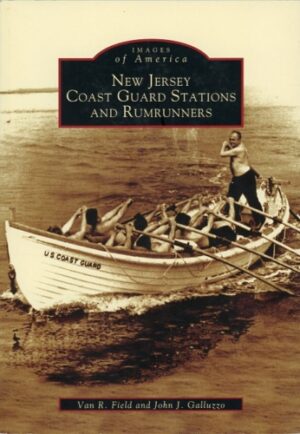 By Van R. Field & John J. Galluzzo: With its many inlets, points, and coves, the coast of New Jersey stood out as a haven for rumrunners brazenly thumbing their nose at the federal government during Prohibition. New Jersey was also recognized as the birthplace of the federal government's shore-based units of the United States Coast Guard, the organization charged at that time with stopping the flow of "demon rum" into America. With its vivid images, New Jersey Coast Guard Stations and Rumrunners revives the days when New Jersey's "coasties" stood toe-to-toe with the rumrunners of the 1920s and 1930s.
 -
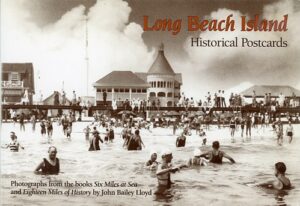 By John Bailey Lloyd: The companion books by John Bailey Lloyd—Eighteen Miles of History, Six Miles At Sea, and Two Centuries of History—contain hundreds of photographs, illustrations and maps of the Island’s past. Here in large postcards are selections of 22 of the most compelling photographs from those books. Within these images you will find a unique shore resort that is wider, more innocent, less developed and perhaps more romantic—the perfect Long Beach Island of collective memory.
 -
 By Karen F. Rilley, Andrew Coulis, & Peter H. Stemmer: Our country's first national reserve, the Pine Barrens, harbors a wonderful secret unknown to most outsiders. This 1.1-million-acre treasure trove of pitch pine and sugar sand is home to many rare species and almost 17 trillion gallons of the purest water on earth. It was in this forest that men like Leland Champion logged trees and built sawmills. It was along these waterways that craftsmen like Gary Giberson made prized decoys. And it was in these woods that Stanley Switlik built a tower from which Amelia Earhart jumped, testing his parachute so it could be used in World War II. These woods yielded inventors whose products we enjoy today. They include cultivated blueberries, cranberry sauce, and Welch's grape juice. It was here that Bob Buchanan reached for the mooring lines as the Hindenburg ended its final, fatal voyage. It was here in Buzby's General Store that John McPhee penned his classic book.
 -
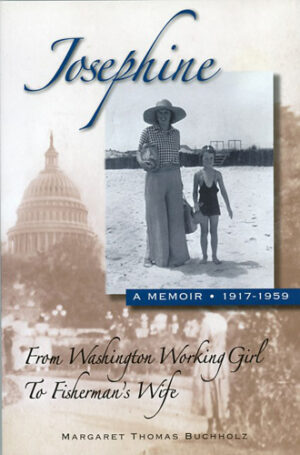 By Margaret Thomas Buchholz: During World War I, before women had the right to vote in America, a young Josephine Lehman Thomas answered the patriotic call from Washington, D.C. and became one of the pioneering ''government girls”. leaving her home in Michigan for adventure in the nation's capital. Through explored diaries and letters, her daughter, Margaret Thomas Buchholz, gives us an amazing chronicle of a trailblazing woman. Josephine worked for legendary journalist Lowell Thomas and traveled the world until the Great Depression dropped her and her new family, struggling to get by, on an island off the coast of New Jersey. This fascinating personal history reveals the optimism of the early 20th Century, the emerging professional woman, the thrill of travel and a sense of success, followed by the crash of the economy, losing everything, and ultimately happiness in a simple life by the sea.
 -
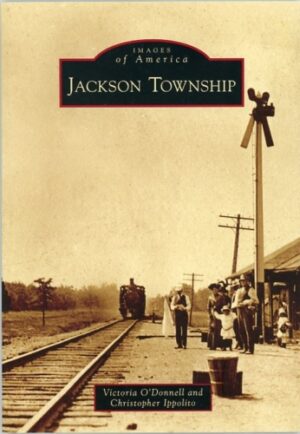 By Victoria O’Donnell & Christopher Ippolito: Jackson Township was named after the legendary "Old Hickory," Pres. Andrew Jackson. For many years, the township was largely recognized by its small villages. Each of these villages had similar features--a church, general store, tavern, mill, and iconic one-room schoolhouse--which nurtured the small community and formed the foundation of modern Jackson. Mills, small farms, and horse breeding in the 19th century transitioned to cranberry bogs and chicken farms in the first half of the 20th century. As transportation became more advanced after World War II, people began to travel outside of town for work, and the once-thriving villages of industry disappeared. Today, Jackson Township, covering 100.4 square miles, is the largest municipality in Ocean County and the third largest in the state of New Jersey.
 -
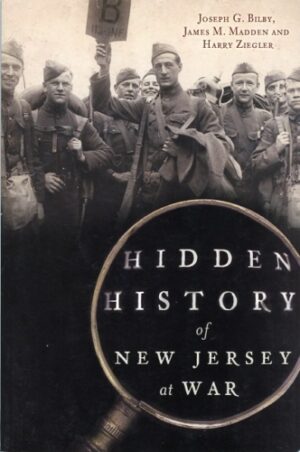 By Joseph G. Bilby, James M. Madden and Harry Ziegler: This book is a series of essays that deal with various little-known aspects of the state’s military experience, beginning with Henry Hudson’s first contact with New Jersey’s Native Americans in 1609 through the War for Independence up to and including the Cold War. There are tales of generals and privates, soldiers and civilians, heroism and blundering, on the war front and the home front, that capture how the state’s citizens coped with the struggles of war.
 -
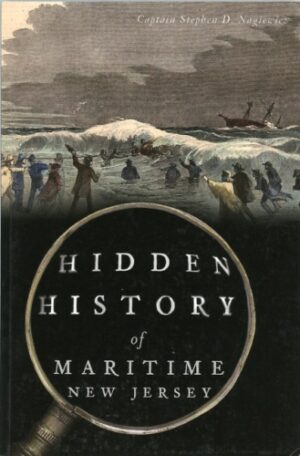 By Captain Stephen J. Nagiewicz: An estimated three thousand shipwrecks lie off the coast of New Jersey - but these icy waters hold more mysteries than sunken hulls. Ancient arrowheads found on the shoreline of Sandy Hook reveal Native American settlement before the land was flooded by melting glaciers. In 1854, 240 passengers of the New Era clipper ship met their fate off Deal Beach. Nobody knows what happened to two hydrogen bombs the United States Air Force lost near Atlantic City in 1957. Lessons from such tragic wrecks and dangerous missteps urged the development of safer ships and the U.S. Coast Guard. Captain Stephen D. Nagiewicz uncovers curious tales of storms, heroism and oddities from New Jersey's maritime past.
 -
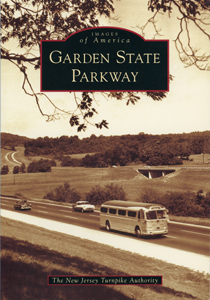 By The New Jersey Turnpike Authority: The Garden State Parkway has transformed the lives of New Jersey residents since opening in 1954. Spanning 173 miles from Cape May to the New York State line, it has fostered tourism to the Jersey Shore and given commuters an easier way to get to work. Gov. Alfred E. Driscoll had envisioned the impact a new highway could have on the state, and a large team of planners, engineers, and contractors made it happen. In 1952, the legislature created the New Jersey Highway Authority to ensure the funding and completion of the $330-million parkway and to self-sufficiently operate the roadway through toll revenue. Garden State Parkway shows how this iconic roadway gained its place in history and continues to combine safe transportation in a parklike setting with the scenic beauty of New Jersey.
 -
 By Donna Lee Sharp Albertson & Louise Ann Barton: Discover why the Pine Barrens is such a wonderful place for both summer and winter vacation experiences. Try your hand at original Piney recipes or enjoy reading some Piney poetry and Piney tall tales. Learn about the many vacation activities and cultural events. Discover where mermaids keep their tea cups and what it takes to be born “a REAL Piney”.
 -
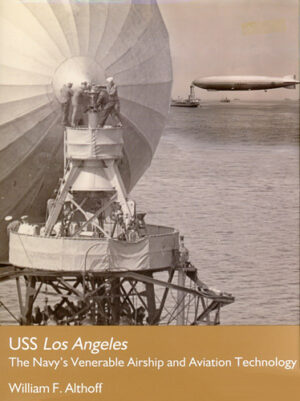 By William F. Althoff: This is a comprehensive history of an important airship that recorded 300 flights and 4,000 hours of flying. Learn about the unique contributions and technical developments in lighter than air travel made by the USS Los Angeles.
 -
 Colporteur Reports to the American Tract Survey 1841-1846: This is a transcription of the early church records of New Jersey. It can give insight into early church activities.
 -
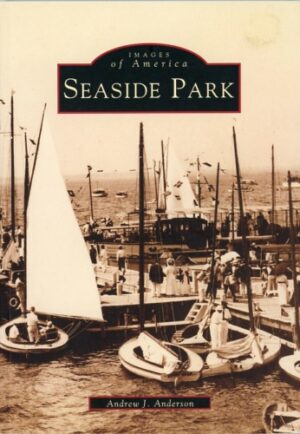 By Andrew J. Anderson: Seaside Park, located on the Barnegat Barrier Island in Ocean County, New Jersey, was incorporated in 1898. Experience the rich history of Seaside Park through the enchanting images within this pictorial history to take you back in time to the Seaside Park of long ago. Many of Seaside Park’s over 200 images have never before been seen by the public. Stroll by the grand hotels representative of the late gilded age, once the main attraction for vacationers from Philadelphia and New York. Ride the long-forgotten Pennsylvania Railroad, which carried passengers and freight into Seaside Park from 1881 until the end of World War II.
Call Us Today! (732) 341-1880