-
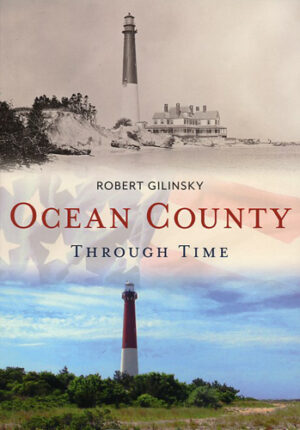 By Robert Gilinsky: Ocean County was born on February 15, 1850 when she was chartered and officially annexed from Monmouth County taking well over half of that county’s land but only a fraction of its population. Ocean County is the second largest county in New Jersey. Over the past several decades, it has led the state in population growth. Long know for its beautiful beaches and pristine pine barrens, it has undergone major changes, some positive and other not so positive.
 -
 By Marcia Dente: This beloved shore town of Seaside Heights was battered by Superstorm Sandy in October 2012, and one year later, in 2013, it suffered a major fire that destroyed the south end of the boardwalk. Notwithstanding these challenges, recovery is strong and the future of Seaside Heights grows brighter as each day passes. The boardwalk was re-built stronger than the one that Sandy splintered and rises slowly from the ashes of the horrific fire. After Governor Chris Christie visited the site of the destruction, he said, “We’ll rebuild it.” However, for those who recall the way things were, it won’t be the same, as many iconic structures that made it what it was are now gone and washed in the ocean. With characteristic resilience and strength, Seaside Heights did rebuild, and came back stronger. “Confronting a storm is like fighting God. All the powers in the universe seem to be against you and in an extraordinary way, your irrelevance is at the same time both humbling and exalting.”—Francoise LeGrande, The Quotable Sailor.
 -
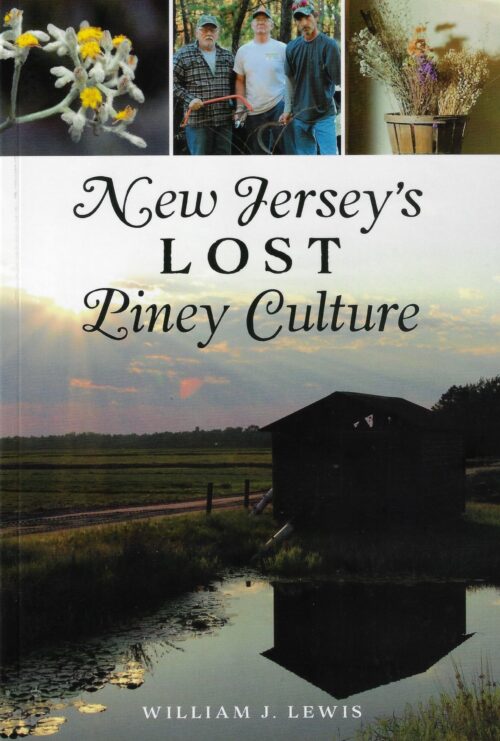 By William J. Lewis: Deep within the heart of the New Jersey Pine Barrens, the Piney people have built a vibrant culture and industry from working the natural landscape around them. Foraging skills learned from the local Lenapes were passed down through generations of Piney families who gathered many of the same wild floral products that became staples of the Philadelphia and New York dried flower markets. Important figures, such as John Richardson, have sought to lift the Pineys from rural poverty by recording and marketing their craftsmanship. As the state government sought to preserve the Pine Barrens and develop the region, Piney culture was frequently threatened and stigmatized. Author and advocate William J. Lewis charts the history of the Pineys, what being a Piney means today and their legacy among the beauty of the Pine Barrens.
 -
 By Ocean County Historical Society: See the people, places and events that have defined the city of Toms River and its surrounding area since the early 1700s. Located on the banks of the river of the same name, Toms River was first settled in the early 1700s by loggers drawn to the dense forests on the river's banks. During the American Revolution, the village was a constant thorn in the side of the British, and it was attacked and burned to the ground in 1783. The arrival of the railroads in the late 1800s ushered in a new age of expansion which, spurred on by the construction of the Garden State Parkway in the decade after World War II, continues to this day. See for yourself how it all came about with over 200 carefully-selected photographs.
 -
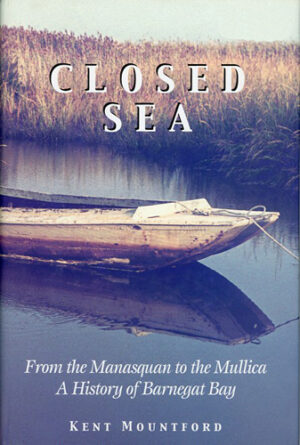 By Kent Mountford : A history of New Jersey's Barnegat Bay region, Closed Sea weaves a colorful tale of whalers and pirates, Revolutionary patriots and loyalists, fishermen and loggers, iron masters and lifesaving crews, sportsmen and holiday makers. Filled with historical anecdote and keen observations of sea and shore, it is a compelling portrait of Barnegat Bay and its history. With a naturalist's eye and a sailor's experience, environmental historian Kent Mountford describes the history of the Bay and its people, from the Lenni Lenape to 20th century summer vacationers. He opens our eyes to the Shore's past, its shifting inlets, disappearing islands, dangerous tides and shoals. Moving inland, he documents the Pinelands environment and the industries it has supported over the centuries. Closed Sea tells the remarkable history of a fascinating place, a place of great beauty, danger and opportunity, a place that has cast its spell on generations of people.
 -
 1616 New Jersey Hendrick’s Map This is an early Dutch map of the Jersey Coast and reflects the first exploration of Barnegat Bay. It shows early Indian settlements, the rivers feeding into the bay and locations like Little Egg Harbor, the Barnegat Inlet, and Sandy Hook. These locations, as we know them today, were recorded by Hendrick’s over 400 years ago 24" x 36"
 -
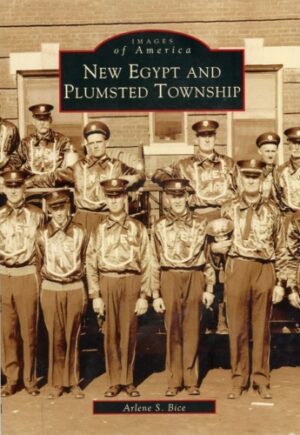 By Arlene S. Bice: New Egypt and Plumsted Township is a collection of unique vintage photographs, many of which have never before been published. Beginning with Quaker Clement Plumstead of London, who was granted twenty-seven hundred acres in 1699, this history shows the progression of the township to the mid-1900s. At the end of the nineteenth century, railroad transportation brought visitors to New Egypt, which blossomed with hotels, guesthouses, the Isis Theatre, and carnivals on Oakford Lake. Among the images are views of Harker's Grove, a favorite spot for picnics and dancing on the pavilion; Sunday concerts held by local talent in New Egypt; and the open space that has made hunting, fishing, and other outdoor activities popular pastimes for locals and visitors alike.
 -
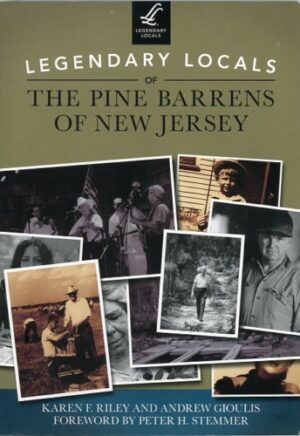 By Karen F. Rilley, Andrew Coulis, & Peter H. Stemmer: Our country's first national reserve, the Pine Barrens, harbors a wonderful secret unknown to most outsiders. This 1.1-million-acre treasure trove of pitch pine and sugar sand is home to many rare species and almost 17 trillion gallons of the purest water on earth. It was in this forest that men like Leland Champion logged trees and built sawmills. It was along these waterways that craftsmen like Gary Giberson made prized decoys. And it was in these woods that Stanley Switlik built a tower from which Amelia Earhart jumped, testing his parachute so it could be used in World War II. These woods yielded inventors whose products we enjoy today. They include cultivated blueberries, cranberry sauce, and Welch's grape juice. It was here that Bob Buchanan reached for the mooring lines as the Hindenburg ended its final, fatal voyage. It was here in Buzby's General Store that John McPhee penned his classic book.
 -
 By Robert Camp: During the years from 1933 to 1968 Toms River High School had many winning sports teams and was known as a sport powerhouse. Learn the names of the stars of those winning teams and the challenges that they faced during their games.
 -
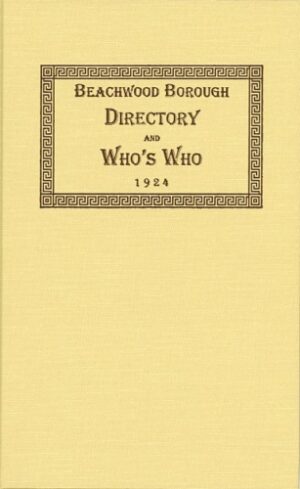 By William Mill Butler: Would you like to live in a beautiful summer resort in the great New Jersey pine belt? Find out about the Who’s Who that helped to develop Beachwood Borough. With a subscription to The New York Tribune subscribers were given the opportunity to “secure a lot at Beautiful Beachwood”.
 -
1913 New Jersey Railroads This is a great map for Railroad buffs. It shows the many railroads that criss-crossed Ocean County and New Jersey in 1913, as well as the towns and mills that they served. The number designations shown in the railroad listing in the lower righthand corner appear within the map. 24" x 30"
-
1850 New Jersey by Robert Horner: This map shows the Cranberry Inlet closed, Dillons Island (now Island Heights), the Toms River, Forked River Mountains and many creeks. Cedar Creek was called Williamsburg and Manasquan is shown as Howell Township. 25" x 40"
Call Us Today! (732) 341-1880